

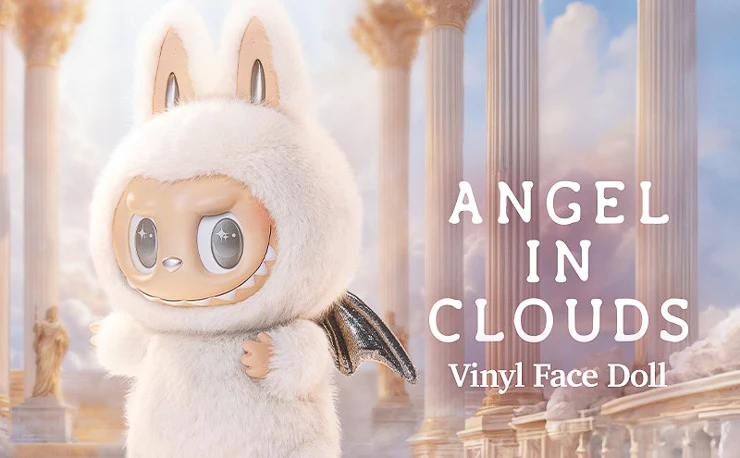
In the evolving landscape of designer toys and modern collectible art, few characters have managed to capture global fascination quite like Labubu. At first glance, Labubu appears like a creature pulled from the pages of a surreal fairy tale—neither entirely cute nor fully eerie, but something intriguingly in between. This duality is precisely what makes Labubu so compelling. It challenges the conventional boundaries of “adorable” design and replaces them with something more emotionally layered: a character that feels alive with personality, mischief, and a slightly chaotic charm.
Labubu is not just a toy figure; it is a narrative fragment, a design philosophy, and a cultural signal all at once. In a world saturated with polished perfection, Labubu thrives on imperfection and expressive oddity. That is why collectors across continents are drawn to it—not merely as an object, but as a character that feels like it has a story continuing beyond the shelf it sits on.
Origins: The Imagination Behind the Monster-Cute Aesthetic
The origins of Labubu trace back to the creative mind of artist Kasing Lung, whose artistic universe often blends fairy-tale innocence with unsettling undertones. La bubu was born as part of this imaginative ecosystem, where creatures are not confined to traditional definitions of beauty or behavior. Instead, they exist in a liminal space—half dream, half folklore.
Labubu’s design reflects this philosophy clearly. Its exaggerated grin, wide eyes, and slightly chaotic expression suggest both friendliness and mischief. It does not try to comfort the viewer in a traditional sense. Instead, it invites curiosity. This is a deliberate artistic choice, rooted in the idea that emotional connection does not always come from perfection, but from personality.
Over time, Labubu transitioned from illustrated concept into a three-dimensional collectible figure through collaborations with toy companies such as POP MART. This transformation allowed the character to step out of the page and into physical reality, where fans could hold, display, and interact with it in a more tangible way.
Design Language: The Beauty of Controlled Chaos
What makes Labubu visually distinctive is its intentional imbalance. The character’s facial proportions are slightly exaggerated, its teeth are unevenly expressive, and its posture often suggests motion even when standing still. This design language breaks away from symmetry-driven aesthetics commonly found in mainstream character merchandise.
Rather than aiming for universal cuteness, Labubu embraces what could be described as “controlled chaos.” The character looks as if it is always on the verge of doing something unpredictable—laughing too loudly, sneaking into trouble, or reacting to something only it can see. This gives it an emotional depth that resonates with collectors who are tired of overly sanitized designs.
The color variations across different Labubu editions also play a significant role. Some versions emphasize earthy tones, enhancing its woodland-creature origins, while others explore vibrant palettes that amplify its mischievous energy. Each variation feels like a different emotional state of the same character, almost like chapters in an ongoing visual story.
Personality: A Mischief Spirit with Emotional Depth
Labubu’s personality is one of its strongest defining traits. It is often interpreted as a mischievous forest spirit—playful, unpredictable, and slightly chaotic, but not malicious. This balance is crucial because it allows audiences to project their own interpretations onto the character.
Some see Labubu as a trickster archetype, similar to folklore beings that exist to disrupt order and provoke change. Others view it as a representation of inner emotional complexity—the part of oneself that is playful but misunderstood, expressive but not always socially aligned.
This psychological openness is part of what makes Labubu so engaging. It does not impose a single narrative. Instead, it acts as a mirror for the viewer’s imagination. A collector might see joy in its grin one day and mischief the next, depending on mood and context. That fluidity makes it more than a static object; it becomes a dynamic emotional companion.
Cultural Rise: From Niche Art Toy to Global Phenomenon
The rise of Labubu reflects a broader shift in global collectible culture. In the past, collectibles were often tied to franchises, cartoons, or media universes. Today, characters like Labubu demonstrate that original art-driven designs can achieve equal or greater cultural impact without traditional storytelling platforms.
Social media has played a significant role in this transformation. Platforms filled with collectors showcasing shelves, blind box openings, and artistic photography have turned Labubu into a recognizable visual icon. Its unique silhouette makes it instantly identifiable even in crowded visual feeds.
Additionally, the element of surprise in blind box distribution models has contributed to its popularity. Collectors often do not know which version of Labubu they will receive, turning each purchase into an emotional experience. This unpredictability aligns perfectly with Labubu’s own chaotic personality, reinforcing the character’s identity through the act of collecting itself.
Emotional Attachment: Why People Connect Deeply with Labubu
At the heart of Labubu’s popularity lies emotional resonance. Unlike mass-produced characters designed purely for commercial appeal, Labubu feels personal. Its imperfections make it relatable in a way that polished mascots often fail to achieve.
Collectors often describe a sense of companionship with their figures. Labubu, with its expressive face and quirky presence, fits naturally into this dynamic. It is not uncommon for collectors to assign personalities or narratives to their individual figures, treating them as part of a living display rather than static objects.
There is also a therapeutic aspect to this connection. In a fast-paced and often overstimulating digital world, Labubu offers a small, physical anchor of imagination. It invites pause, interpretation, and emotional engagement. That quiet interaction can feel grounding, even comforting, without being overly sentimental.
Artistic Significance: Redefining Cute Through Imperfection
Labubu also plays an important role in redefining what “cute” can mean in modern design culture. Traditional cuteness often relies on symmetry, softness, and predictability. Labubu disrupts this formula by introducing asymmetry, sharp expressions, and unpredictable emotional cues.
This shift reflects a broader trend in contemporary art and design where authenticity is valued over perfection. Imperfection becomes a source of identity rather than a flaw. In this sense, Labubu represents a new aesthetic philosophy: one where emotional complexity is more important than visual simplicity.
Artists and designers studying the success of Labubu often point to its narrative ambiguity as a key strength. Because it does not explain itself fully, it remains open to reinterpretation. That openness allows it to remain relevant even as trends shift, because it is not tied to a single fixed meaning.





















Leave a Reply