Buying a used luxury vehicle can be both exciting and risky especially when it comes to a brand like Mercedes-Benz. Known for precision engineering, advanced electronics, and premium comfort, Mercedes vehicles demand a much more detailed inspection process than standard cars.
Whether you are a buyer or simply researching how dealerships evaluate trade-ins, understanding the mercedes used car inspection process can save you from expensive mistakes and unexpected repairs.
In this guide, we break down exactly what Mercedes dealers check, how their inspection process works, and what you should look for before buying a used Mercedes.
You will also find a practical dealer-style checklist, common hidden issues, and expert buying advice based on real-world Mercedes pre-purchase checks and used luxury car checks.
Why Mercedes Used Cars Require Specialized Inspection
Mercedes-Benz vehicles are engineered with complex mechanical systems and advanced electronics. Unlike regular cars, even minor issues can become expensive if ignored.
Dealers perform strict evaluations because:
- Luxury cars have higher repair costs
- Electronics are highly sensitive
- Maintenance history impacts long-term reliability
- Performance systems require diagnostic accuracy
A standard visual inspection is never enough. Dealers rely heavily on Mercedes diagnostic testing tools to uncover hidden faults that are not visible to the naked eye.
Step 1: Exterior Condition Inspection
The first stage of any Mercedes used car inspection is a detailed exterior check. Dealers look beyond scratches and dents.
Key areas they evaluate:
- Paint consistency and repaint signs
- Panel alignment and gaps
- Rust under trims and wheel arches
- Headlight clarity and moisture inside lamps
- Windshield cracks or repairs
- Tire condition and uneven wear
Even minor inconsistencies can indicate past accidents or poor repairs. Dealers are trained to identify repaint blending issues that suggest hidden structural damage.
Step 2: Interior Quality and Wear Analysis
Luxury buyers expect perfection, so interior condition is a major factor in valuation.
Dealers inspect:
- Seat leather wear and cracking
- Dashboard fading or peeling
- Button and control responsiveness
- Air conditioning performance
- Sunroof operation
- Electrical features (windows, mirrors, seats)
They also check for signs of water damage such as:
- Damp carpet smell
- Foggy interior windows
- Electrical glitches
A well-maintained interior significantly increases resale value.
Step 3: Engine and Mechanical Evaluation
The heart of any Mercedes is its engine. Dealers perform a thorough mechanical inspection focusing on performance, noise, and efficiency.
Common checks include:
- Engine startup smoothness
- Unusual knocking or ticking sounds
- Oil leaks around seals and gaskets
- Coolant condition and leaks
- Turbocharger response (if applicable)
- Exhaust smoke color
Even small issues can indicate expensive future repairs. For example, oil leaks in Mercedes engines often lead to gasket replacement costs that are not cheap.
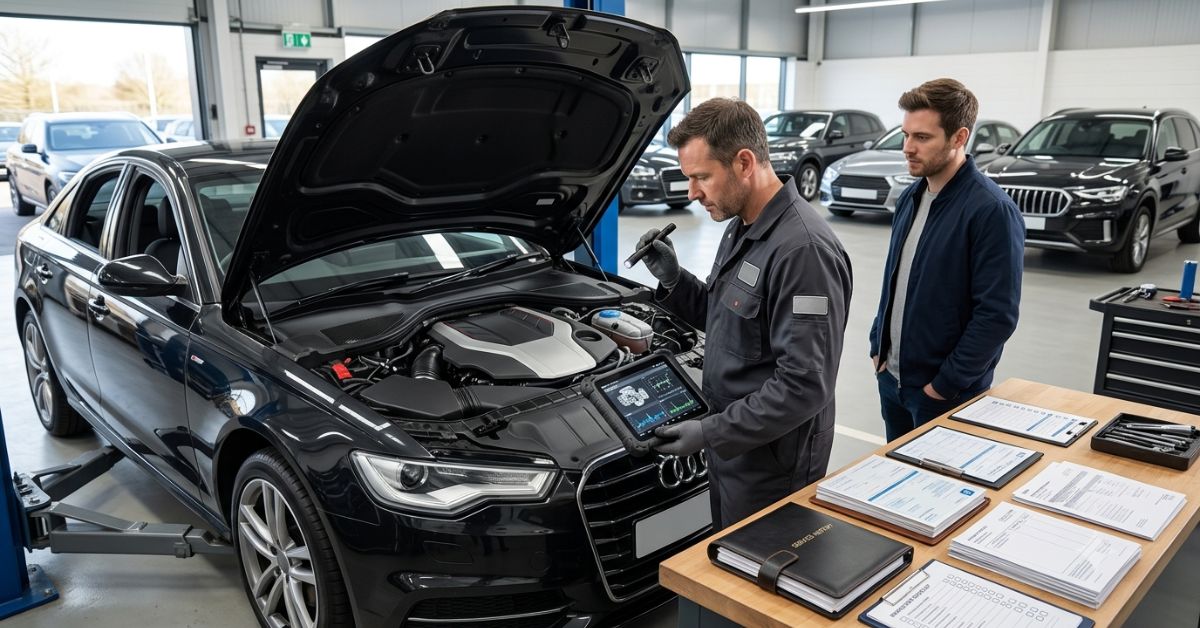
Step 4: Mercedes Diagnostic Testing (Computer Scan)
Modern Mercedes vehicles rely heavily on onboard computers. This is where Mercedes diagnostic testing becomes critical.
Dealers plug the car into specialized systems like Mercedes STAR diagnostics to check:
- Engine fault codes
- Transmission errors
- Airbag system status
- ABS and stability control systems
- Sensor malfunctions
- Battery health and voltage stability
What makes this step important is that many issues do not show visible symptoms but still appear in the system logs.
Hidden electronic faults are one of the biggest risks in used luxury cars.
Step 5: Transmission and Driving Performance
A smooth driving experience is essential in Mercedes vehicles. Dealers test drive the car under different conditions.
They evaluate:
- Gear shifting smoothness
- Acceleration response
- Jerking or delay in transmission
- Steering alignment and feedback
- Suspension comfort on rough roads
- Brake responsiveness
Automatic transmissions in Mercedes cars are highly advanced but expensive to repair. Any hesitation or rough shifting is a red flag.
Step 6: Suspension and Underbody Inspection
Luxury vehicles like Mercedes often use air suspension or advanced damping systems.
Dealers carefully inspect:
- Shock absorbers and struts
- Air suspension leaks (if equipped)
- Underbody rust or damage
- Exhaust system condition
- Oil leaks from below the engine
A weak suspension system can drastically affect ride comfort and cost a significant amount to repair.
Step 7: Service History and Mileage Verification
No Mercedes pre-purchase checks are complete without verifying maintenance records.
Dealers check:
- Full service history from authorized centers
- Oil change intervals
- Transmission service records
- Mileage consistency
- Ownership history
A missing or inconsistent service history can reduce trust in the vehicle’s condition.
Step 8: Hidden Vehicle Faults Dealers Watch Closely
One of the most important parts of a used luxury car checks process is identifying hidden issues.
Common hidden faults include:
- Electrical system glitches
- ECU software problems
- Odometer tampering
- Cooling system weaknesses
- Early transmission wear
- Suspension air leaks
- Previous accident repairs not disclosed
These issues often do not appear during a simple inspection but can become expensive after purchase.
Dealer Inspection Checklist
Here is a simplified version of what Mercedes dealers typically follow:
- Exterior body and paint check
- Interior wear and electronics test
- Engine performance and leak inspection
- Full diagnostic scan
- Test drive evaluation
- Suspension and underbody check
- Service history verification
- Tire and brake condition check
This structured process ensures no major issue is overlooked.
What Buyers Should Learn From Dealers
If you are planning to buy a used Mercedes, you should adopt the same mindset as a dealer.
Key takeaways:
- Never skip diagnostic scanning
- Always test drive in multiple conditions
- Check service records carefully
- Inspect underbody and suspension
- Look for signs of repaint or accident repair
- Avoid cars with missing history
Spending a little time on inspection can save you from major financial loss later.
Common Mistakes Buyers Make
Many buyers focus only on appearance or price. This leads to costly mistakes such as:
- Ignoring warning lights
- Not checking transmission behavior
- Overlooking small oil leaks
- Trusting verbal service history only
- Skipping professional inspection
Luxury cars demand attention to detail, not assumptions.
Why Professional Inspection Is Worth It
Even if you are experienced with cars, a Mercedes requires specialized tools for accurate evaluation.
A professional inspection provides:
- Full electronic scan report
- Accurate mechanical assessment
- Hidden issue detection
- Market value comparison
- Repair cost estimation
This is especially useful for older or high-mileage vehicles.
Final Thoughts
A Mercedes is more than just a car, it is a highly engineered machine that requires careful evaluation before purchase. Understanding the Mercedes used car inspection process helps you think like a dealer and avoid costly surprises.
By following proper Mercedes pre-purchase checks, reviewing diagnostic data, and paying attention to hidden vehicle faults, you can confidently choose a reliable used luxury car that delivers long-term value.
FAQs:
- What is included in a Mercedes used car inspection?
It includes exterior checks, engine evaluation, diagnostic scanning, test drive, suspension inspection, and service history review.
- Why is Mercedes diagnostic testing important?
It detects hidden electronic and mechanical faults that are not visible during physical inspection.
- How do dealers check for hidden vehicle faults?
They use diagnostic tools, test drives, and detailed mechanical inspections to uncover issues like ECU errors or transmission problems.
- What are common problems in used Mercedes cars?
Common issues include oil leaks, suspension wear, electrical faults, and transmission hesitation.
- Should I always get a pre-purchase inspection?
Yes, especially for luxury cars. It reduces risk and ensures fair pricing.
- How important is service history?
Very important. It shows how well the car was maintained and predicts future reliability.
- Can mileage be trusted in used Mercedes cars?
Not always. Dealers verify mileage through ECU data and service records.
- What is the biggest risk when buying a used Mercedes?
Hidden electronic faults and expensive transmission or suspension repairs.