

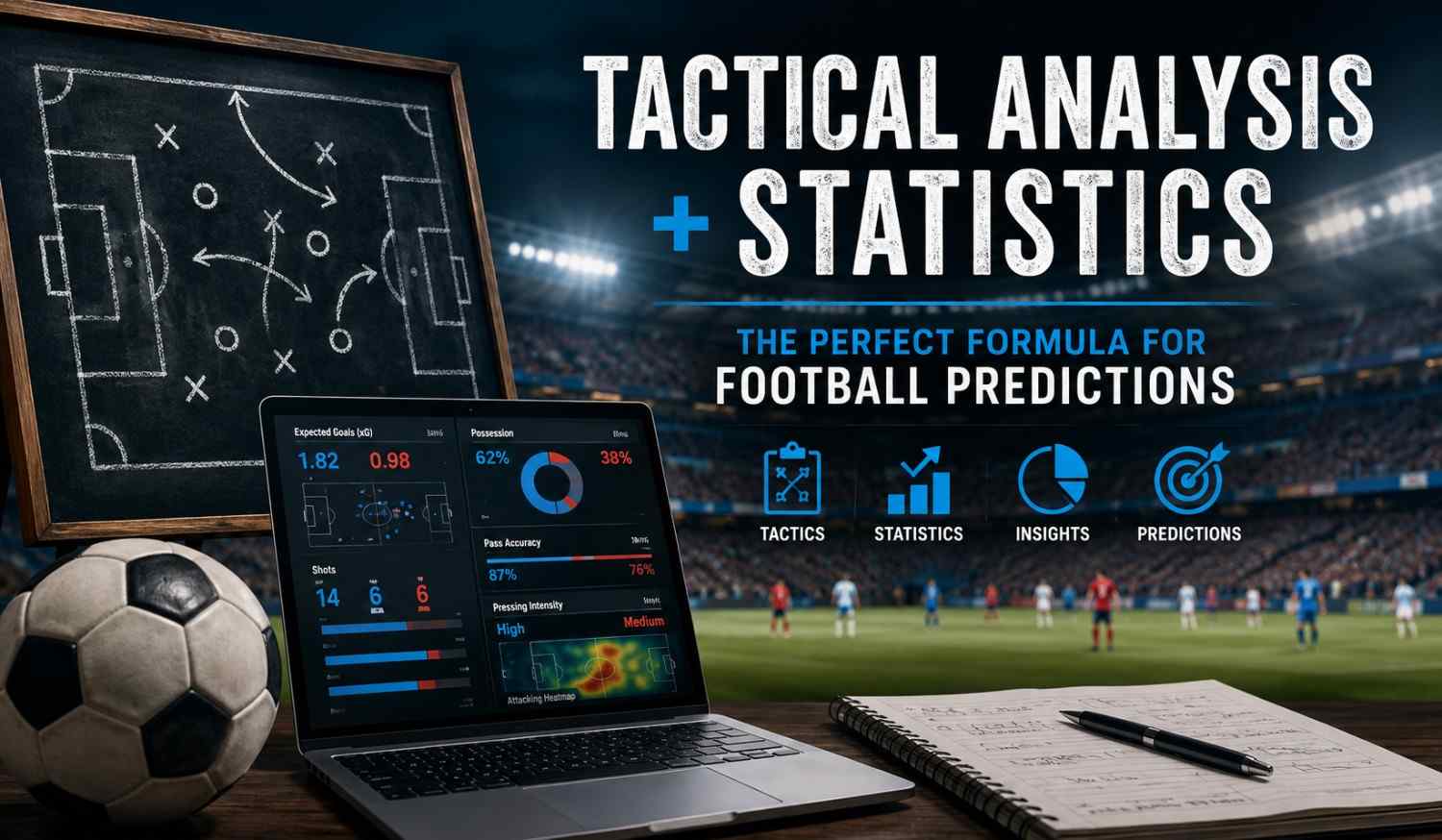
Football predictions have become a strange mixture of numbers, tactics, team news, and educated guesswork. One minute we are studying expected goals; the next, we are wondering why a team with 65% possession managed three shots on target. Football, naturally, refuses to behave like a spreadsheet.
The best analysis combines statistical evidence with tactical understanding. Statistics reveal patterns in performance, while tactical analysis helps explain why those patterns exist. When the two are considered together, predictions become more informed and realistic. This is where Best Previews approaches football analysis — not by pretending to predict the future, but by understanding the factors most likely to shape it.
What Is Tactical Analysis in Football?
Tactical analysis examines how teams actually play rather than simply looking at their final results. Formations, pressing structures, defensive blocks, possession patterns, transitions, passing routes, and attacking movements all form part of the picture.
A 4-3-3 formation, for example, can mean very different things depending on the manager’s approach. One team may use it to dominate possession, while another may use the wide forwards to launch rapid counter-attacks.
A memorable observation from watching football is that the formation graphic before kick-off often looks wonderfully organised — and approximately five minutes into the match, everyone has moved somewhere else.
That is precisely why tactical context matters.
What Do Football Statistics Tell Us?
Statistics provide measurable evidence about team performance. Goals scored and conceded remain important, but modern football analysis goes considerably deeper.
Expected goals (xG), shots, shots on target, possession, passing accuracy, pressing numbers, defensive actions, set-piece performance, and shot locations can reveal useful trends.
For example, a team may have scored four goals across two matches but produced only a modest amount of attacking quality. Another side might have scored twice while consistently generating high-quality chances.
Numbers can therefore tell us what happened. The challenge is understanding why it happened — and whether the same pattern is likely to appear again.
Why Tactical Context Makes Statistics More Useful
Statistics become much more valuable when tactical context is added.
Consider possession. A team enjoying 70% possession might appear dominant, but if most of that possession occurs in safe areas, the number tells only part of the story. Conversely, a counter-attacking side could have 35% possession while creating the more dangerous opportunities.
This is where Football match Insights become particularly valuable. The objective is not simply to collect numbers but to interpret them within the tactical circumstances of a fixture.
The same statistic can mean something completely different depending on the opponent, formation, game state, and tactical instructions.
How Tactical Analysis and Statistics Work Together
The process becomes more useful when statistics and tactical observations are connected step by step.
First, recent performance data provides an initial picture. Next, tactical patterns help identify whether those numbers are sustainable. Team strengths and weaknesses are then compared with the opponent’s style.
For example, a team producing strong attacking numbers against low defensive blocks may struggle against an aggressive pressing side. Likewise, a team with impressive possession statistics could become vulnerable if its defenders are uncomfortable playing against a high press.
This combination creates the foundation for expert football match predictions. Rather than relying on one statistic or one tactical observation, the analysis considers several pieces of evidence together.
Key Statistical Metrics for Tactical Predictions
Several statistics are particularly useful when studying tactical matchups.
Expected Goals (xG) can indicate the quality of chances created and conceded.
Shots and shot locations can reveal whether attacking possession is actually producing dangerous opportunities.
Possession and territory help identify which team is controlling different areas of the pitch.
Progressive passes and carries show how effectively teams move the ball toward dangerous areas.
Pressing statistics provide clues about how aggressively a team attempts to regain possession.
Set-piece numbers can reveal another potential route to goal, particularly when open-play opportunities are limited.
None of these statistics should operate alone. Their real value appears when they are connected to the way a team plays.
Reading Tactical Matchups Through Data
One of the most useful applications of statistics is identifying potential tactical mismatches.
A high-pressing team may cause problems for an opponent that struggles to build from the back. A low-block defence could frustrate a side that relies heavily on central combinations. A team using a high defensive line might become vulnerable against quick forwards attacking the space behind the defence.
Data can highlight these tendencies, while tactical analysis explains how they could appear during the match.
This is particularly important because football is rarely just Team A versus Team B. It is often one tactical idea colliding with another — with everyone hoping their idea survives the collision.
Using Recent Form Without Falling Into the Trap
Recent form matters, but it should never be treated as unquestionable evidence.
A five-match winning run looks impressive until the quality of the opposition is examined. Similarly, three defeats do not necessarily indicate a team in crisis if those matches came against significantly stronger opponents.
Home and away performance, injuries, tactical changes, fixture difficulty, and match circumstances should all be considered.
The strongest best football prediction tips therefore involve looking beneath the results. The question is not simply whether a team has won recently, but whether its performances suggest that the results are sustainable.
Team News, Injuries and Tactical Adjustments
Team news can completely change the statistical and tactical picture.
Losing a prolific striker affects finishing and attacking threat. Losing a defensive midfielder may have an even wider impact because that player could be responsible for pressing, covering defenders, progressing possession, and controlling transitions.
Predicted lineups should therefore be assessed by role rather than reputation alone.
A replacement player may have similar overall statistics but completely different tactical characteristics. That difference can influence how a team builds attacks, defends space, or responds to pressure.
In other words, one missing player can sometimes create several new problems.
Turning Data and Tactics Into a Football Prediction
A practical prediction process can follow several stages:
- Assess recent performance — look beyond wins and losses.
- Study the tactical systems — understand formations and playing styles.
- Review important statistics — especially chance creation and defensive quality.
- Compare home and away performances — context matters.
- Check team news — injuries and suspensions can alter the entire tactical picture.
- Identify key battles — midfield control, wide areas, pressing, and defensive transitions.
- Build realistic scenarios — consider what happens if either team scores first.
The final prediction should emerge from the combined evidence.
That does not make football predictable. Nothing could possibly be that generous. It simply makes the reasoning behind the prediction stronger.
Common Mistakes When Combining Statistics and Tactics
There are several traps worth avoiding.
Relying entirely on possession can produce misleading conclusions. Treating xG as a guaranteed scoreline is another common mistake. Head-to-head records can also be overvalued, especially when managers, players, and tactical systems have changed.
Small statistical samples can exaggerate trends. Recent form can hide fixture difficulty. Injuries can make historical data less relevant.
The biggest mistake, however, is searching for one magic statistic that supposedly predicts everything. Football has spent decades proving that no such statistic exists.
How Experts Build More Reliable Match Predictions
Better predictions come from combining multiple evidence points rather than searching for certainty.
Statistical trends should be compared with tactical observations. Team news should be considered alongside historical performance. Recent form should be tested against opposition quality. Key matchups should be examined before drawing conclusions.
This approach makes analysis more balanced because it recognises both measurable performance and the tactical reasons behind it.
At Best Previews, the goal is to turn these elements into practical football analysis — identifying what could happen, why it could happen, and which factors may influence the final result.
Conclusion
Tactical analysis and statistics work best when they are treated as teammates rather than competitors. Statistics provide the evidence; tactics provide the explanation. Together, they create a much clearer picture of how a football match could unfold.
There will still be surprises, of course. A beautifully researched prediction can survive ninety minutes of tactical logic only to be defeated by a deflected cross and a goalkeeper having an afternoon best described as “creative.”
That is football.
The objective is not to eliminate uncertainty. It is to understand it better — and that is what makes combining data with tactical analysis such a powerful part of modern football prediction.
FAQs
How do tactics improve football predictions?
Tactical analysis explains how teams are likely to attack, defend, press, and transition. It helps identify strengths, weaknesses, and potential mismatches that statistics alone may not reveal.
Which statistics are most useful for football predictions?
Expected goals, shots, shot quality, pressing data, possession, defensive numbers, and recent performance are among the most useful indicators. Their value increases when they are interpreted within tactical context.
Is xG enough to predict a football match?
No. xG is a valuable measure of chance quality, but it does not account for every tactical, psychological, or match-specific factor. It should be combined with other evidence.
Why should statistics be combined with team news?
Injuries, suspensions, and lineup changes can alter a team’s tactical structure. A missing key player can affect several areas of performance simultaneously.
Can tactical analysis predict the exact score?
Tactical analysis can help estimate likely match scenarios, but it cannot guarantee an exact score. Football contains too many variables and unexpected moments for certainty.
What makes a football prediction more reliable?
A stronger prediction considers multiple factors — tactical systems, statistics, recent form, team news, home advantage, key player matchups, and likely game scenarios rather than relying on one metric.

























Leave a Reply