

Introduction
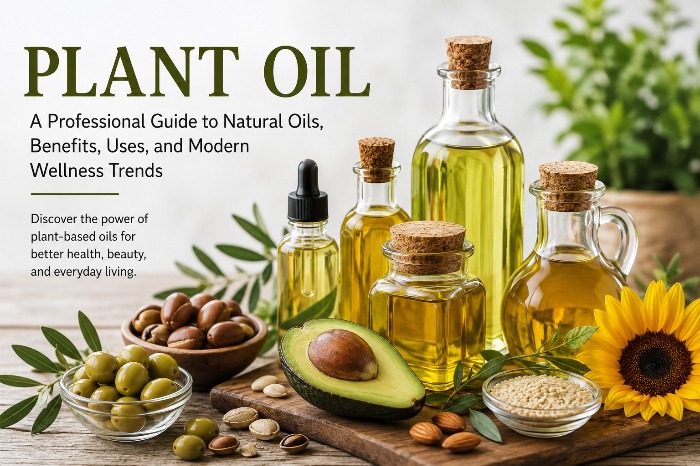
Plant oil has become a familiar part of modern kitchens, skincare routines, haircare products, wellness practices, and personal-care formulations. Extracted from seeds, fruits, nuts, grains, or other plant materials, these oils contain naturally occurring fats and other compounds that can serve different nutritional, cosmetic, and practical purposes.
The term plant oil covers a very broad category. Olive oil, sunflower oil, coconut oil, sesame oil, avocado oil, and many other products are all plant-derived, yet their nutritional profiles, textures, aromas, and applications can be completely different. Some are mainly used as foods, while others are designed for cosmetic or aromatic purposes.
As interest in natural and plant-based products continues to grow, consumers are paying closer attention to how oils are produced, where they come from, and what they can realistically offer. Understanding the differences between various types can help people make informed choices instead of relying on exaggerated claims.
What Is Plant Oil?
Plant oil is a lipid-rich substance obtained from botanical sources. Most edible varieties are extracted from seeds, fruits, or nuts. Depending on the source, they may contain different proportions of monounsaturated, polyunsaturated, or saturated fatty acids.
The production process can vary considerably. Mechanical pressing, expeller pressing, cold pressing, solvent extraction, refining, and other techniques may be used depending on the raw material and intended application.
The final characteristics of an oil are influenced by its plant source, growing conditions, harvesting practices, extraction process, refinement, and storage. These factors can affect flavor, aroma, color, nutritional composition, shelf life, and performance in cosmetic applications.
This is why it is difficult to describe all botanical oils as having the same benefits. Each one has its own chemical profile and practical uses.
How Are Botanical Oils Produced?
Oil production begins with selecting suitable plant material. Seeds, fruits, or nuts are cleaned and prepared before extraction.
Mechanical pressing is one traditional method. In this process, pressure is used to release the oil from the plant material. Cold-pressed products are produced under conditions designed to limit excessive heat during processing, although the exact standards can differ depending on the product and market.
Refining is another common approach. Refining can remove certain impurities, pigments, odors, and other components, creating an oil with a more neutral taste, color, or aroma. Whether refined or unrefined is preferable depends on the intended use.
For consumers, the most important point is that extraction method alone does not determine overall quality. Freshness, raw-material quality, processing controls, packaging, storage, and appropriate labeling all matter.
Why Are Plant Oils So Popular?
The popularity of botanical oils is connected to several major consumer trends. People are increasingly interested in recognizable ingredients, plant-based foods, natural personal care, and simpler beauty routines.
At the same time, manufacturers use these oils because they can perform practical functions. Some provide dietary fats, while others act as emollients, carriers, moisturizers, texture enhancers, or fragrance components.
The growing market can also be linked to increased awareness of ingredient labels. Consumers want to understand whether a product contains plant-derived ingredients and how those ingredients fit into their lifestyle.
Current Plant Oil Trends
Several trends are currently shaping interest in botanical oils:
- Plant-based lifestyles: Consumers continue to explore foods and personal-care products derived from botanical sources.
- Minimalist skincare: Simple oil-based routines are popular among people who prefer fewer cosmetic ingredients.
- Natural haircare: Botanical oils are widely used to condition dry hair and improve manageability.
- Clean-label interest: Shoppers increasingly examine ingredient lists and production claims.
- Sustainable sourcing: Attention is growing around responsible farming, packaging, and supply chains.
- Traditional ingredients: Familiar oils are being rediscovered alongside modern nutritional and cosmetic research.
These trends explain the growing interest in plant-derived oils, but a natural origin does not automatically mean an ingredient is appropriate for every person or purpose.
Nutritional Role of Edible Oils
Many edible botanical oils provide dietary fat, which is an essential part of a balanced diet. Dietary fats provide energy and help the body absorb fat-soluble vitamins.
The nutritional characteristics of an oil depend largely on its fatty-acid composition. Oils rich in unsaturated fats are often viewed differently from those containing higher proportions of saturated fats. However, the overall dietary pattern is more important than treating one oil as universally superior.
Olive, canola, sunflower, soybean, sesame, and other edible oils can all have different roles in cooking and food preparation. Flavor, cooking method, nutritional profile, and personal dietary requirements can influence which one is most appropriate.
Portion size also matters because oils are energy-dense. Even a nutritionally useful oil should be consumed in reasonable quantities as part of an overall balanced diet.
Plant Oil for Skin Care
Botanical oils are widely used in skincare because many contain lipids that can soften and condition the skin. They may help improve the feeling of dryness by supporting the skin’s surface and reducing moisture loss.
Different oils behave differently. Some feel lightweight and absorb relatively quickly, while others create a richer, more protective layer. Choosing between them depends on skin type, climate, formulation, and personal preference.
For example, oils derived from fruits, seeds, and nuts can provide different combinations of fatty acids and naturally occurring compounds. Some may be better suited to dry skin, while others may feel more comfortable for people who dislike heavier textures.
However, natural skincare requires realistic expectations. An oil is not automatically a treatment for acne, eczema, infection, pigmentation, or other medical conditions. People with persistent skin concerns should seek professional evaluation rather than depending exclusively on home remedies.
Benefits for Hair and Scalp Care
Plant-derived oils are also popular in haircare. They can coat the hair surface, improve softness, reduce the feeling of roughness, and make strands easier to manage.
Some oils may also help reduce friction during grooming, which can be useful for dry or textured hair. Their performance depends on the specific oil and the condition of the hair.
Hair oiling has a long history in different cultures, and modern consumers continue to incorporate it into weekly or occasional routines. A small amount may be applied to the lengths or ends of the hair, while some people prefer scalp massage.
However, claims that a particular oil guarantees hair growth should be approached cautiously. Hair loss can have many underlying causes, and cosmetic conditioning should not be confused with medical treatment.
As interest in natural beauty and wellness continues to grow, plant oil has become a popular choice for skincare, haircare, massage, and personal-care routines. Different botanical oils offer different textures and properties, so choosing the right one depends on your specific needs and intended use.
Plant Oils and Essential Oils Are Not the Same
A common source of confusion is the assumption that all plant oils are interchangeable. They are not.
A fixed or carrier oil, such as olive or sunflower oil, is primarily composed of nonvolatile fats. These oils can often be used as food ingredients or as carriers for cosmetic applications.
Essential oils are different. They are highly concentrated aromatic substances containing volatile plant compounds. They are usually used in very small quantities and may require dilution before topical application.
The fact that both products originate from plants does not make them equivalent. Consumers should always check the product’s intended use and ingredient information before applying or consuming it.
Choosing the Right Oil
Choosing the right product begins with understanding why you need it. An oil intended for cooking should be evaluated according to its flavor, nutritional profile, cooking application, freshness, and storage requirements.
For cosmetic use, consider skin compatibility, texture, intended formulation, and whether the product is designed for topical application.
A few practical factors deserve attention:
Source and Ingredients
A transparent label should clearly identify the plant source and other ingredients. Products containing additional fragrances, preservatives, or blends should be evaluated according to the intended application.
Processing Method
Cold-pressed, expeller-pressed, refined, and unrefined oils can have different characteristics. The best option depends on how the oil will be used rather than on one processing label alone.
Freshness
Plant fats can oxidize over time. Heat, light, oxygen, and moisture may accelerate quality deterioration. Buying appropriately sized quantities and following storage recommendations can help maintain freshness.
Packaging
Dark or protective packaging can help reduce exposure to light. Containers that minimize unnecessary air exposure can also be useful, particularly for oils that are more susceptible to oxidation.
Safety Considerations
Although many plant oils are commonly used, natural origin does not guarantee universal safety.
Topical products can cause irritation or allergic reactions in sensitive individuals. Oils derived from nuts may require particular caution for people with relevant allergies. A small patch test can be a sensible precaution before using a new cosmetic oil extensively.
Essential oils require additional care because of their concentrated nature. They should not be treated like ordinary cooking oils.
Edible oils should only be consumed when they are clearly intended for food use. A cosmetic oil should never be assumed to be suitable for ingestion simply because it comes from an edible plant.
People with medical conditions, allergies, or dietary concerns should seek appropriate professional advice when necessary.
Sustainability and Responsible Sourcing
The popularity of plant-derived ingredients has also increased discussion about sustainability. Producing botanical oils requires agricultural land, water, energy, processing, transportation, and packaging.
The environmental impact varies considerably depending on the crop and production system. Responsible farming practices, efficient processing, reduced waste, recyclable packaging, and transparent supply chains can all contribute to better environmental outcomes.
Consumers interested in sustainability should look beyond the word “natural.” A plant-derived ingredient is not automatically environmentally friendly. Responsible sourcing requires consideration of the complete production chain.
Plant Oils in Modern Beauty and Wellness
The beauty and wellness industries continue to explore botanical ingredients because consumers often associate plant-derived products with simplicity and authenticity.
Oil-based cleansers, hair treatments, body oils, massage blends, moisturizers, and other formulations have become increasingly common. Botanical oils can provide texture, conditioning, and emollient properties while also allowing formulators to create products with different sensory experiences.
However, effective skincare does not necessarily require a large collection of oils. In many cases, a simple routine based on a person’s skin type and specific needs can be more practical than constantly adding new ingredients.
The same principle applies to haircare. A suitable oil can improve cosmetic appearance and manageability, but it should not be expected to solve every scalp or hair problem.
How to Store Plant Oil Properly
Storage has a significant effect on oil quality. Many oils are sensitive to heat, light, and oxygen, which can contribute to oxidation.
Most products should be kept in a cool, dry place away from direct sunlight. Containers should be closed securely after use to reduce unnecessary air exposure.
Consumers should also pay attention to changes in smell, flavor, appearance, or texture. A noticeably rancid odor or unusual change in quality may indicate that an oil is no longer suitable for its intended purpose.
Following the storage instructions provided for the specific product is always preferable because different oils have different stability characteristics.
Common Questions About Plant Oil
What is plant oil mainly used for?
Plant oils have many applications. Edible varieties are used in cooking and nutrition, while cosmetic oils are used for skincare, haircare, massage, and personal-care formulations.
Is every plant oil safe for the skin?
No. Different oils have different properties, and some people may experience irritation or allergies. A product’s intended cosmetic use and individual skin sensitivity should always be considered.
Can plant oil improve hair growth?
Some oils can condition hair and improve softness, but conditioning is not the same as stimulating hair growth. Strong claims about guaranteed regrowth should be treated cautiously.
Are plant oils healthier than animal fats?
There is no single answer for every oil or dietary pattern. Nutritional value depends on fatty-acid composition, quantity, overall diet, and individual dietary needs.
What is the difference between carrier oil and essential oil?
Carrier oils are generally fixed vegetable oils rich in fatty acids. Essential oils are concentrated aromatic extracts containing volatile compounds. Their uses and safety requirements are different.
Does cold-pressed always mean better?
Not necessarily. Cold pressing can preserve certain characteristics, but overall quality also depends on raw materials, freshness, processing controls, packaging, and storage.
Final Thoughts
Plant oil is a broad and useful category that reaches far beyond the kitchen. From nutrition and cooking to skincare, haircare, massage, and cosmetic formulation, botanical oils have become an important part of everyday life.
Their popularity is supported by versatility and growing consumer interest in plant-based ingredients. However, the best way to choose and use an oil is to focus on its specific properties rather than assuming that every natural oil offers the same benefits.
Quality begins with the botanical source and continues through extraction, processing, packaging, storage, and final use. Consumers should also distinguish between edible oils, carrier oils, and concentrated essential oils because their purposes and safety considerations can differ significantly.
As natural beauty and wellness trends continue to evolve, informed choices will become increasingly important. A plant-derived ingredient can be valuable without being a miracle solution. By considering evidence, intended use, quality, freshness, safety, and sustainability, consumers can make practical decisions and enjoy the benefits that different botanical oils can realistically provide.




















Leave a Reply