

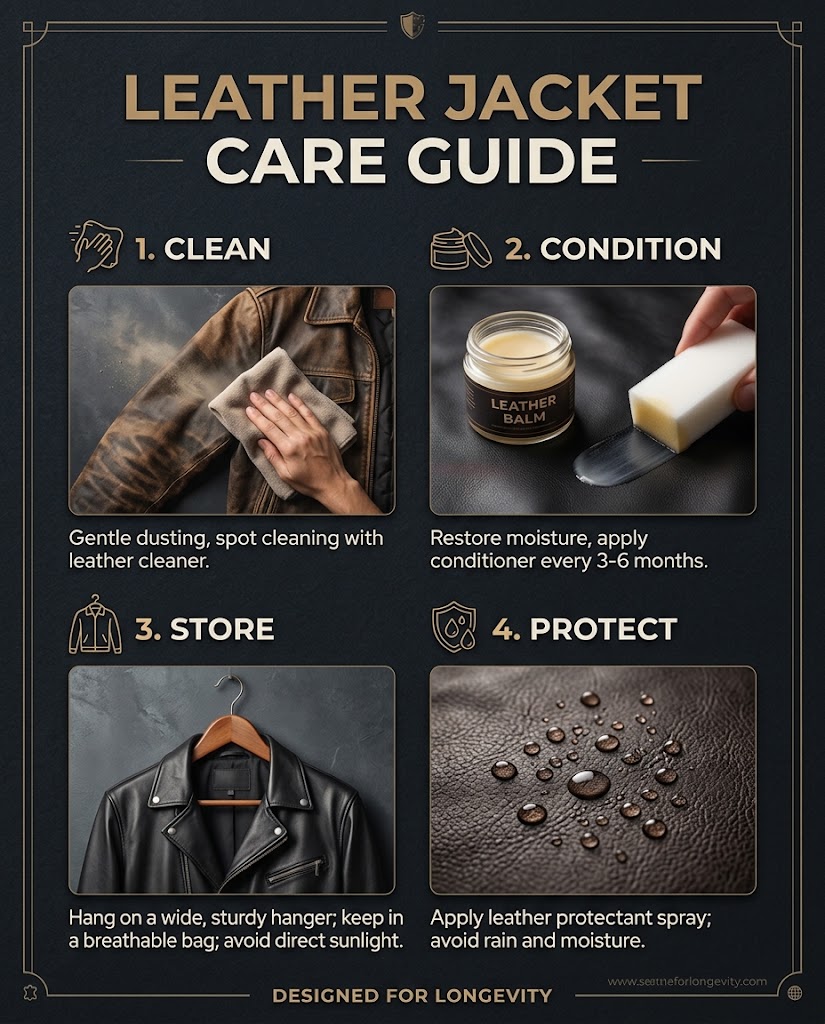
Leather Jacket Care Guide: Keep Your Jacket Looking Its Best
A quality leather jacket can become a long-term wardrobe favorite when it receives the right attention. Proper leather jacket care helps protect the material from dryness, stains, moisture, and everyday wear while keeping its original character intact. With a few simple habits, you can help your jacket stay comfortable, attractive, and ready for many seasons.
Understand Your Leather Before Cleaning It
Before applying any product, identify what type of leather your jacket is made from. Smooth leather, suede, nubuck, and distressed leather can react differently to cleaners and conditioners.
Check the care label first. If the manufacturer provides specific instructions, follow those recommendations instead of using a general leather product. When you’re unsure, test any cleaner or conditioner on a small hidden area before treating the visible surface.
This simple step can prevent unwanted discoloration, marks, or changes in texture.
Remove Dust and Surface Dirt Regularly
Leather does not need to be cleaned aggressively after every wear. In most cases, a soft, dry cloth is enough to remove dust and light surface particles.
Gently wipe the jacket from top to bottom. Pay attention to collars, cuffs, pockets, and seams because these areas can collect more dirt through regular use.
Avoid rough brushes or abrasive cloths on smooth leather. They may leave scratches that are difficult to repair.
How to Deal With Small Spills
Accidental spills happen, but quick action can make a major difference.
If water or another liquid lands on your jacket, gently blot the area with a clean, absorbent cloth. Do not rub the spot because friction can push the liquid deeper into the material.
Allow the jacket to dry naturally at room temperature. Keep it away from radiators, hair dryers, heaters, and direct high heat. Rapid drying can cause leather to become stiff or develop cracks.
For oil, ink, paint, or stubborn stains, avoid experimenting with household chemicals. A professional leather cleaner is usually a safer choice.
Conditioning: Keep Leather From Becoming Dry
Leather can gradually lose moisture and flexibility, especially when exposed to dry air or frequent use. A suitable leather conditioner can help maintain a softer feel.
Apply a small amount using a clean cloth and spread it evenly in a thin layer. Too much conditioner can make the surface greasy or alter its appearance.
Always choose a conditioner designed for your particular leather type. Suede and nubuck generally require different care products from smooth finished leather.
Maintenance: Small Habits Make a Big Difference
Good maintenance is less about occasional deep cleaning and more about consistent habits.
After wearing your jacket, give it a little time to air out before putting it away. Use a wide, sturdy hanger that supports the shoulders and helps preserve the jacket’s shape. Avoid wire hangers because they can create unwanted pressure points.
Keep the jacket away from prolonged sunlight, excessive humidity, and strong sources of heat. If you notice loose stitching, damaged hardware, or a small tear, address it early rather than allowing the problem to become larger.
Another useful habit is rotating your outerwear. Wearing the same leather jacket every day can increase friction and stress on frequently used areas.
How to Store a Leather Jacket Properly
Storage becomes especially important when your jacket will not be worn for several weeks or months.
Choose a cool, dry, and well-ventilated wardrobe. Place the jacket on a broad hanger and give it enough space so the leather is not compressed between other garments.
Avoid storing leather inside airtight plastic bags. The trapped environment can encourage moisture buildup and unpleasant odors. A breathable garment cover is a better option.
Before long-term storage, make sure the jacket is completely dry and free from dirt. Never fold it tightly for extended periods, as permanent creases can develop.
What to Avoid When Caring for Leather
Some common cleaning habits can cause more harm than good. Avoid washing a leather jacket in a regular washing machine unless the care instructions specifically allow it.
Do not use bleach, strong detergents, household disinfectants, or alcohol-based cleaners on leather. These substances may strip the finish or change the color.
You should also avoid soaking the jacket. Leather can tolerate occasional moisture, but excessive water exposure can affect its texture and shape.
Most importantly, never use direct heat to speed up drying.
When Should You Take Your Jacket to a Professional?
Professional cleaning is worth considering when the jacket has a serious stain, strong odor, mold growth, extensive water damage, or noticeable color changes.
A specialist can also help with repairs such as torn seams, damaged zippers, worn cuffs, and deeper surface damage. Professional treatment is particularly useful for expensive, vintage, delicate, or heavily finished leather.
Rather than repeatedly trying different household remedies, professional care can reduce the risk of permanent damage.
Seasonal Care Tips
Different seasons can create different challenges for leather.
During rainy months, protect your jacket from prolonged exposure to water and allow it to dry naturally if it becomes damp. In hot weather, avoid leaving it inside a hot car because high temperatures can affect the leather and finish.
During colder months, wipe away road dust and moisture when necessary and allow the jacket to air out after wearing it outdoors.
A quick inspection at the beginning and end of each season can help you notice small problems before they become expensive repairs.
FAQs
1. How do I clean and store leather?
For everyday cleaning, gently wipe smooth leather with a soft, slightly damp cloth when appropriate, then allow it to dry naturally. Use products specifically made for leather if deeper cleaning is necessary. For storage, keep the jacket on a broad hanger in a cool, dry, ventilated place and use a breathable garment cover rather than sealed plastic.
2. Can I wear my leather jacket in light rain?
A small amount of rain usually does not mean your jacket is ruined, but prolonged exposure to water should be avoided. If it becomes wet, gently blot away moisture and let it dry naturally. Never place it directly against a heater or use a hair dryer.
3. Why does my leather jacket feel stiff after being stored?
Leather can become stiff when it loses moisture or is stored in unsuitable conditions. Once you’ve checked the care label, a suitable leather conditioner may help restore flexibility. Apply it sparingly and test it on an inconspicuous area first.
Final Thoughts
A leather jacket does not need complicated treatment to remain in good condition. Regular dusting, careful handling, suitable conditioning, proper storage, and quick attention to spills can make a noticeable difference over time. Before buying or maintaining any jacket, using a reliable measuring guide By Oskar Jacket can also help you choose the right fit and avoid unnecessary strain caused by an incorrect size.
Written By Elsa Robertson






















Leave a Reply