Introduction
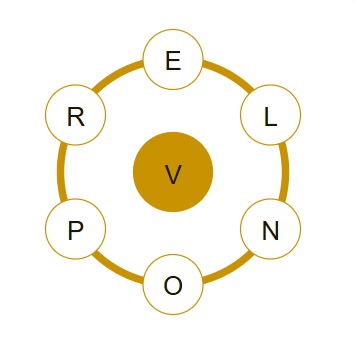
If you’ve been staring at that honeycomb of letters wondering whether you’re missing an obvious word, you’re not alone. Thousands of players search for spelling bee ans every single morning, hoping to close the gap between “Good” and “Genius” before their coffee gets cold.
The puzzle looks simple at first glance, seven letters, one center letter, find as many words as you can, but it has a way of humbling even people who read for a living. This piece walks through how the puzzle works today, what the pangram actually means, how scoring adds up, and where you can check your work when you’re truly stuck, without turning the whole experience into a spoiler-fest before you’re ready.
What Today’s Puzzle Actually Looks Like
Every day at 3 AM Eastern, the board resets. A fresh set of seven letters appears, one sits in the center, and the goal is to build as many valid words as possible using those letters, always including the center one. It sounds almost too simple to be addictive, and yet here we are.
Word length matters, but so does the rarity of the letters you’re working with. Some days the letters practically hand you easy four-letter words. Other days you’ll sit there for ten minutes convinced there’s nothing left, only to realize you forgot a plural-adjacent word that doesn’t actually count (more on that later). The official New York Times Spelling Bee page is where the puzzle lives, though you’ll need a Games subscription to play there directly.
Finding the Pangram Without Ruining the Fun
Every Spelling Bee intro eventually turns to the same question: where’s the pangram? A pangram is a word that uses every one of the seven letters in the grid at least once. It doesn’t have to use them in order, and letters can repeat, but all seven need to show up somewhere in the word. Finding it early tends to make the rest of the grid click into place, almost like it unlocks a mental map of what’s possible.
Some days the puzzle hides two pangrams, which honestly feels like a small gift. Three-pangram days exist too, but they’re rare enough that when they happen, the Spelling Bee community tends to mention it. There’s also the “perfect pangram,” a word that uses each of the seven letters exactly once, no repeats at all. Those are rarer still, and when one shows up, it’s usually the word people brag about finding first.
If you’d rather not see the full answer key yet, sites built specifically around this puzzle, like the pangram page on todayspellingbeeanswers.com, often separate the pangram reveal from the full word list, so you can get just enough of a nudge without spoiling everything else.
How the Scoring Actually Adds Up
Scoring feels arbitrary until you see the logic behind it, and then it makes perfect sense. Four-letter words are worth one point each, flat rate, no bonus for being clever. Once a word hits five letters or more, it earns points equal to its length. So a six-letter word is worth six points, a nine-letter word is worth nine, and so on. The math rewards length, which is exactly why the pangram carries extra weight.
Speaking of which, finding the pangram doesn’t just score points for the word itself, it tacks on a seven-point bonus on top of whatever the word was already worth. That bonus is usually the fastest single jump you’ll get toward the next rank, which is part of why so many players hunt for it before anything else.
Total possible score varies daily depending on how many valid words the puzzle contains, but you’ll often see the maximum sitting somewhere in the 150-point range on an average day. Rankings climb in stages, starting around “Beginner” and moving up through “Good,” “Solid,” “Nice,” “Great,” “Amazing,” until you eventually reach “Genius” and, if you’re relentless, “Queen Bee.”
Ranks: From Beginner to Queen Bee
Reaching Genius feels like the finish line for most players, and honestly, it kind of is. Genius usually requires somewhere around 70% of the total possible points, though the exact threshold shifts slightly depending on the day’s word list. It’s the rank most casual players aim for, and hitting it feels genuinely satisfying.
Queen Bee, on the other hand, is a different beast entirely. It means you found every single valid word in that day’s puzzle, no exceptions. There’s no visible progress bar nudging you toward it, no partial credit, just complete or incomplete. Most people who reach Queen Bee status describe it less as a goal and more as an obsession that snuck up on them somewhere around word twenty.
Why You’ll Never See the Letter “S”
Here’s a detail that trips up new players constantly: the letter S never appears in a Spelling Bee grid. It’s not an oversight. According to the puzzle’s longtime editor, Sam Ezersky, leaving S out is intentional, because it would make plural forms trivially easy to add, which flattens the challenge considerably. Without S, you actually have to think about word variety instead of just tacking an extra letter onto something you already found.
This also explains why certain plurals, proper nouns, and abbreviations get excluded from the accepted word list even when they seem completely valid. The puzzle has a curated dictionary behind it, and not every combination that looks like a real word makes the cut. It’s frustrating in the moment, sure, but it’s also part of what keeps the puzzle from becoming a word-association free-for-all.
Tips for Climbing to Genius Faster
Most people plateau at the same stage: they’ve found the obvious words, plural-adjacent instincts aren’t paying off, and the grid feels tapped out even though a dozen answers remain. A few habits tend to help here.
Start by cycling through common prefixes and suffixes systematically rather than randomly guessing. Words like “-ing,” “-ed,” or “-ly” endings often unlock several answers you’d otherwise miss. It also helps to say the letters out loud, since some words click faster when you hear them rather than stare at them. And don’t underestimate less common but everyday words, the puzzle leans toward practical vocabulary rather than obscure dictionary entries, so if a word feels “almost too simple,” it’s worth trying anyway.
If you genuinely hit a wall, checking a two-letter combination breakdown, which shows which letter pairs still have unused words, can narrow your search dramatically without spoiling the actual answers.
FAQs
How often does the puzzle reset?
The grid changes daily at 3:00 AM Eastern Time. Whatever letters you’re working with today will be replaced with a completely new set tomorrow.
Can letters repeat within a word?
Yes. You can reuse any of the seven letters as many times as needed within a single word, as long as the center letter appears at least once.
Is there always exactly one pangram?
Most days, yes, just one. But two-pangram days happen occasionally, and three-pangram days, while rare, do show up from time to time.
Do I need a subscription to play?
The official puzzle sits behind the New York Times Games subscription, though the daily letters, pangram, and full word list are widely available on fan-run answer sites for free.
What happens if I miss a day?
Nothing permanent. Most Spelling Bee answer archives, including yesterday’s puzzle pages, keep the previous day’s word list and pangram available so you can go back and check what you missed.
Conclusion
The NYT Spelling Bee rewards patience more than raw vocabulary size. Once you understand how the scoring works, why the pangram matters so much, and why certain “obvious” words never make the list, the whole puzzle starts to feel less like guesswork and more like a pattern you’re slowly learning to read.
Whether you’re chasing Genius for the first time or grinding toward Queen Bee out of pure stubbornness, the daily reset means there’s always another shot waiting tomorrow morning. Keep at it, and the letters will start making a lot more sense than they did on day one.