
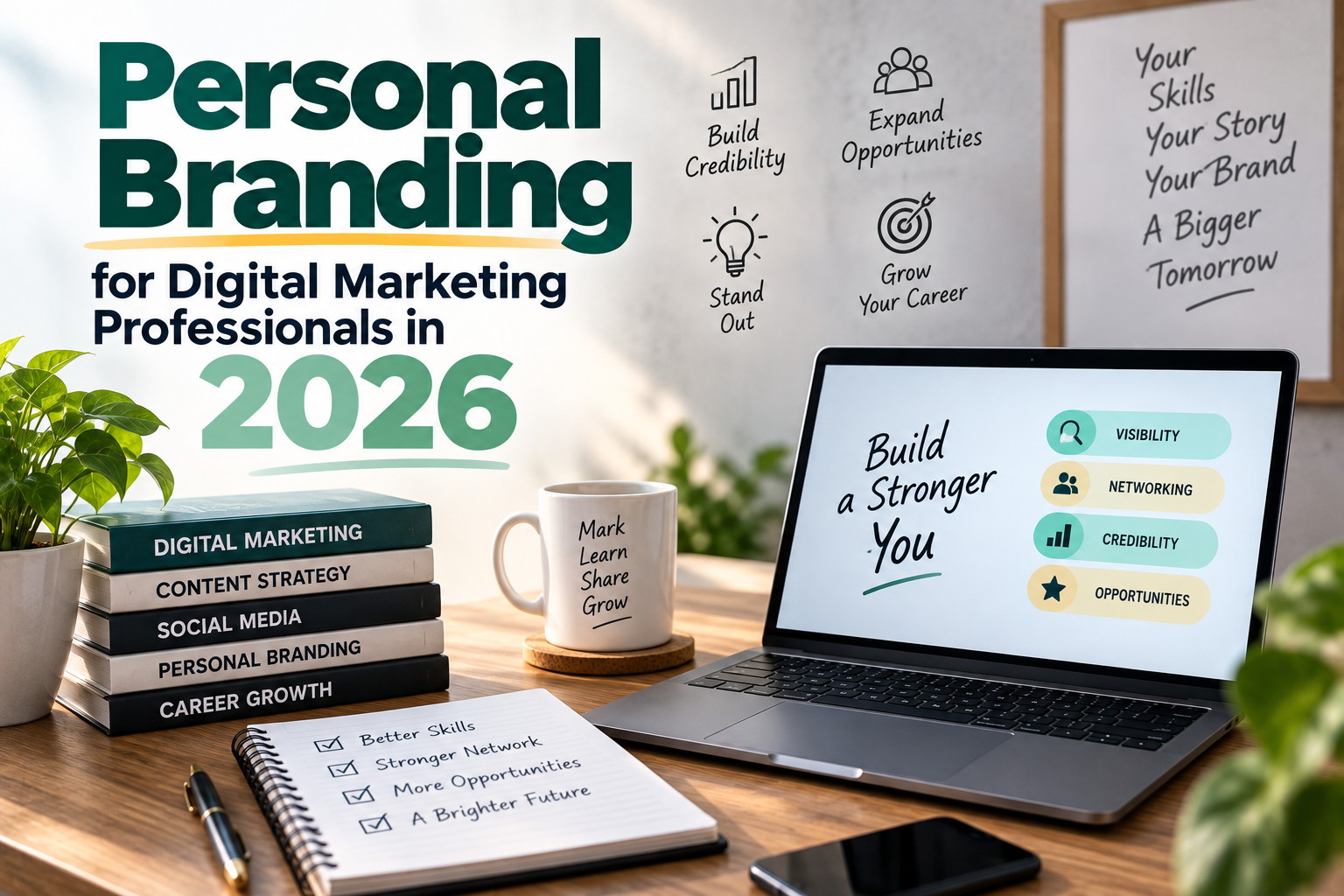
In 2026, knowing digital marketing is only part of the job. You also need to show people what you know.
That is where personal branding comes in.
For a digital marketing professional, personal branding means building a clear online identity around your skills, experience, ideas and work. It can help recruiters understand what you are good at, help clients feel more confident about working with you and help other professionals remember you.
You do not need thousands of followers.
You need a clear profile, useful content and proof that you understand your work.
Quick Answer
Personal branding matters for digital marketing professionals because people often check your online presence before deciding whether to hire, collaborate with or learn from you.
A strong personal brand can show your expertise through practical work, case studies, opinions, projects and useful content. In 2026, platforms such as LinkedIn, Instagram and personal websites can all become part of your professional identity.
What Is Personal Branding in Digital Marketing?
Personal branding is the way you present your professional identity online and offline.
Think about two digital marketers applying for the same job.
The first person has a resume listing:
- SEO
- Social media
- Google Ads
- Content marketing
- Analytics
The second person has the same skills but also has:
- A well-written LinkedIn profile
- SEO projects
- Website audits
- Helpful LinkedIn posts
- Case studies
- A portfolio
- Opinions about digital marketing trends
Who is easier to remember?
Usually, the second person.
Personal branding gives your skills a visible context.
Why Is Personal Branding More Important in 2026?
Digital marketing has become a crowded field.
There are freelancers, agency professionals, consultants, creators and fresh graduates offering similar services.
A certificate alone may not tell someone how you actually work.
Your online presence can give them more information.
For example, if you regularly share simple explanations about SEO audits, Google Search Console or content strategy, people can start associating your name with those areas.
That association takes time.
You don’t need to become an influencer. You need to become recognisable for something useful.
How Does Personal Branding Help Digital Marketers Get Jobs?
Recruiters often look beyond a resume.
A quick search of your name can show:
- LinkedIn profile
- Portfolio website
- Published articles
- Professional social media accounts
- Projects
- Certifications
- Public discussions and contributions
This allows you to show your skills before the interview.
Suppose you are a fresher applying for an SEO Executive position.
You may not have five years of experience.
But you can show:
- A sample website audit
- Keyword research examples
- A content brief
- Technical SEO observations
- A sample internal linking plan
- A Google Search Console analysis
Now the recruiter has something concrete to evaluate.
That’s much stronger than simply saying, “I know SEO.”
What Should a Digital Marketer Share Online?
Don’t post just because you feel you need to post.
Share things that demonstrate how you think.
SEO Content Ideas
You could write about:
- Common SEO mistakes
- Keyword research lessons
- Google Search Console observations
- Technical SEO basics
- Internal linking
- Local SEO
- Content updates
- Search intent
Social Media Marketing Ideas
You could share:
- Campaign observations
- Content planning tips
- Ad creative lessons
- Social media mistakes
- Engagement experiments
Digital Marketing Career Content
If you are starting your career, your learning journey itself can become content.
For example:
“I analysed a local business website today and found three simple on-page SEO issues.”
Then explain what you found.
This is more useful than posting:
“SEO is important for every business.”
The second statement is obvious.
The first shows practical thinking.
Should Freshers Build a Personal Brand?
Yes.
In fact, starting early can make things easier later.
A fresher may think:
“I don’t have enough experience to post anything.”
But you can share what you are learning.
Just be honest about your level.
Instead of presenting yourself as an SEO expert, say:
“I’m learning technical SEO and recently worked through my first website audit.”
Then explain what you learned.
That feels more genuine.
Over time, your posts can become a record of your professional growth.
Which Platforms Should Digital Marketers Use?
You don’t need to be active everywhere.
Choose platforms based on your career goals.
| Platform | Useful For |
| Jobs, networking and professional content | |
| Personal website | Portfolio and long-term visibility |
| Visual content and personal communication | |
| YouTube | Detailed tutorials and educational content |
| X | Industry discussions and short opinions |
For most digital marketing professionals, LinkedIn and a personal portfolio are a practical starting point.
Your goal is not to maintain five platforms badly.
It is better to manage two properly.
What Should Your LinkedIn Profile Include?
Your LinkedIn profile should answer three questions quickly:
Who are you?
What do you do?
What are you interested in?
Your profile can include:
A Clear Headline
Instead of simply writing:
Digital Marketer
Try something more specific:
SEO Executive | Keyword Research | On-Page SEO | Content Strategy
A Useful About Section
Explain:
- Your current role
- Your main skills
- Your areas of interest
- Tools you use
- Types of projects you work on
- What you want to learn next
Keep it natural.
You don’t need a paragraph full of marketing words.
Your Work
Add relevant projects, internships and practical work.
Even small projects can show how you approach problems.
How Can a Portfolio Strengthen Your Personal Brand?
Your portfolio gives people proof.
For a digital marketer, it can include:
- SEO audits
- Keyword research samples
- Content strategies
- Competitor analysis
- Local SEO work
- Website improvement suggestions
- Analytics reports
- Social media campaigns
If client data is confidential, remove private information.
You can also create sample projects using fictional businesses.
For example, choose a local restaurant in Nagpur and prepare a sample local SEO audit.
Explain:
- Current online presence
- Possible keywords
- Google Business Profile improvements
- Content ideas
- Review strategy
- Local citation opportunities
This demonstrates your thinking without revealing confidential client information.
Does Personal Branding Help Freelancers and Consultants?
It can be especially useful for them.
A potential client may want to know:
“Does this person understand my problem?”
Your content can answer that before you even speak to them.
For example, a marketer working with small businesses could regularly discuss:
- Local SEO
- Google Business Profile
- Website content
- Lead generation
- Search visibility
- Conversion problems
Over time, business owners who face these problems may start recognising that person’s name.
That can create useful professional connections.
How Can Students Build a Personal Brand While Learning Digital Marketing?
Start small.
If you are studying at a Best Digital Marketing Course in Nagpur, don’t wait until your course ends to build your online profile.
Document your learning.
For example:
Week 1: Learned keyword research
Week 2: Practised competitor analysis
Week 3: Created a sample content brief
Week 4: Studied Google Search Console
Week 5: Completed a basic SEO audit
You can turn each experience into a short post.
This also helps you remember what you learn.
Teaching something in simple language is often a good test of whether you actually understand it.
Common Personal Branding Mistakes
Trying to Look Like an Expert Too Early
You don’t need to pretend you know everything.
Be honest about your experience.
Posting Generic Quotes
Posts like “Never give up” rarely show your digital marketing skills.
Share practical observations instead.
Copying Other Creators
Take inspiration from professionals, but develop your own way of explaining things.
Talking Only About Yourself
Personal branding isn’t just about saying how good you are.
Teach something.
Share a useful observation.
Discuss a mistake.
Explain a process.
Chasing Followers
A smaller audience that actually cares about your work can be more useful than thousands of unrelated followers.
Changing Your Niche Every Week
If one week you post about SEO, the next about graphic design, and the next about cryptocurrency, people may not know what to associate with your profile.
You can explore different interests, but keep your main professional direction clear.
How Can You Build a Personal Brand in 30 Days?
You don’t need a complicated strategy.
Week 1: Clean Your Profiles
Update:
- Profile photo
- Headline
- About section
- Skills
- Experience
- Portfolio link
Week 2: Share What You Know
Publish two or three useful posts.
Keep them simple.
Explain one concept at a time.
Week 3: Show Your Work
Share a project, audit, analysis or learning experience.
Explain what you did and what you learned.
Week 4: Start Conversations
Comment thoughtfully on posts from SEO professionals, marketers and companies.
Don’t write comments like:
“Great post.”
Add something useful.
For example, share an observation or ask a relevant question.
How Can You Measure Personal Branding Progress?
Don’t focus only on follower count.
Track things such as:
- Profile views
- Relevant connection requests
- Recruiter messages
- Portfolio visits
- Content engagement
- Interview opportunities
- Client enquiries
- Professional conversations
A post with 300 views that brings one useful professional connection can be more valuable than a post with 10,000 random views.
Frequently Asked Questions
What is personal branding for digital marketers?
Personal branding for digital marketers is the process of building a recognisable professional identity around your skills, experience, knowledge and work. It includes your LinkedIn profile, portfolio, content, projects and professional interactions. The goal is to make it easier for recruiters, clients and other professionals to understand what you do and what you can contribute.
Is personal branding important for freshers in digital marketing?
Yes. Freshers may not have years of professional experience, but they can show what they are learning through projects, practical exercises and useful content. Sharing honest learning experiences can help demonstrate curiosity and subject understanding. A strong portfolio can also give recruiters something concrete to evaluate during the hiring process.
Which platform is best for digital marketing personal branding?
LinkedIn is a useful starting point because it is focused on professional networking, recruitment and industry discussions. A personal website can support it by providing your portfolio and detailed projects. You don’t need to use every social platform. Choose one or two channels where you can consistently share useful work.
How often should a digital marketer post?
There is no magic posting frequency. Two useful posts a week can be enough if you are starting. Focus on sharing practical information rather than publishing every day just to stay active. A detailed observation from a real project can be more useful than several short generic posts.
Can personal branding help digital marketers find freelance clients?
It can help potential clients understand your skills before contacting you. Sharing practical content, project examples and solutions to common business problems can build familiarity. Your portfolio should support your content by showing actual work or clearly labelled sample projects. Avoid sharing confidential client information without permission.
What should I post if I am still learning digital marketing?
Share your learning process honestly. You can explain a concept you recently understood, discuss a practical exercise, show a sample SEO audit or share a mistake you made and what you learned from it. You don’t need to present yourself as an expert. Useful, honest and specific content can still demonstrate your skills.
Final Thoughts
Personal branding is not about becoming famous online.
It is about making your professional skills easier to see.
For digital marketers, this can be especially useful because your own online presence can become a practical example of your work.
Start with LinkedIn. Build a simple portfolio. Share what you are learning. Show your projects. Talk about real problems instead of repeating generic marketing advice.
If you are learning through a Best Digital Marketing Course in Nagpur, start building your professional identity while you learn, not months after completing the course.
You don’t need to become an influencer.
You just need to give people a reason to remember what you do.