
bulkhead builders
A waterfront home’s property lines are impacted by more than its breathtaking vistas; waves, tides, erosion, drainage, and weather all combine to gradually shift both the shoreline and the land. A well-designed retaining structure designed by bulkhead builders can prevent erosion and smooth out the contours of the waterfront landscape. These experts can provide solutions for constructing a shoreline structure according to the needs of the home and the site conditions by taking advantage of their knowledge and the materials at hand.
The Importance of Bulkheads for Landscaping
Water is drawn to the soil of the shore, and wave action, boats, and shifting tides have a lasting effect on the terrain. Unchecked, the undermining of the shore and soil erosion affect the landscape and structures that were built on top of the ground.
A bulkhead retains the area between the water and land and prevents unwanted intrusion of either on the other. The function of this particular structure is not solely aesthetic but calls for close attention to detail during the design and material selection processes.
Bulkhead builders choose the most appropriate strategy based on a number of different variables, including the location, soil conditions, water characteristics, and desired outcomes.
The Process for Bulkhead Builders
Prior to the construction of the bulkhead proper, an experienced contractor reviews the fundamentals of the shoreline and assesses the overall situation. This requires a detailed analysis of the state of the soil, the depth of the water, the presence of erosion, and other factors that affect the stability and integrity of the bank.
Determining the Characteristics of the Shoreline
The current conditions of the shore provide the most crucial insights into potential solutions. The contractor examines the characteristics of the bank and decides which materials to employ in bulkhead construction. Erosion, leaning slopes, exposed soil, and insufficient drainage all factor into the decision-making process. Additionally, the contractor considers the flow patterns specific to the body of water in question. Runoff and water build-up behind the structure also impact the design and material selection for a bulkhead.
Selecting the Bulkhead’s Attributes
While constructing shoreline structures, contractors choose from a variety of materials and approaches. These include timber, steel, vinyl, and a combination of materials in composite bulkheads. Each of these materials has unique properties that determine the selection process: tensile strength, installation specifics, maintenance, and other variables. Bulkhead builders possess the expertise and knowledge of the necessary details for each material and approach. By consulting with professionals, homeowners receive the guidance and information required to understand the characteristics of their options.
The Interconnection Between Waterfront Structures
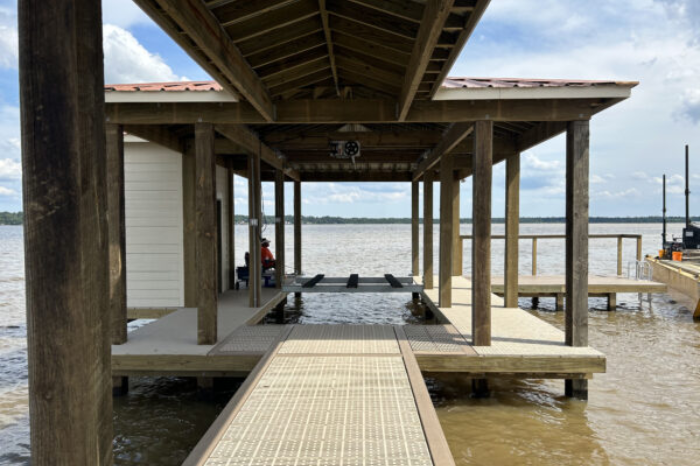
The construction of a bulkhead is only one of several possibilities available for waterfront modifications and improvements. Most landowners who pursue one also consider additional structures such as a dock, pier, or boat lift, as well as related improvements: a boat dock, walkway, or even lawn and garden enhancements. Bulkhead and dock builders collaborate to plan and produce a construction campaign that also takes into consideration these improvements.
Bulkhead and dock installation proceed simultaneously in many instances. One example concerns the construction of a dock that calls for particular location and layout specifications. Another example is a boat lift that must be supported by an additional structure.
Indicators of Improper Bulkheads
For any waterfront home, a properly-functioning and well-maintained bulkhead is the foundation of all other improvements. A homeowner must be familiar with indicators that call for professional intervention. Several such scenarios exist, such as dislodged or displaced soil near the waterline, exposure of tree roots, structural shifts or settling, and accumulations of water behind a bulkhead.
Even when the overall integrity has not been compromised, some forms of settling and misalignment require professional inspection and possible maintenance or restoration. The contractor handles the entire process and identifies the underlying cause: settling of the bank, the movement of the bank’s edge, improper drainage, or another contributing factor. A timely and well-planned response resolves the difficulty with minimal expense and inconvenience.
bulkhead builders
Collaborating with Delmont International
A competent and qualified contractor plays a vital role in the creation of a bulkhead. Delmont International provides an opportunity to plan and execute the proposed project within the framework of the site’s unique location and characteristics. Experienced bulkhead builders collaborate with landowners to establish a shared vision for the project’s future.
This cooperation is especially important if the construction site also features a dock, pier, or boat lift which must continue to see usage even after the completion of bulkhead improvements. In addition, contractors pay attention to landscaping and the overall future use of the improved waterfront.
Post-Installation Care and Considerations
Regardless of the type of bulkhead, completed installations require further upkeep and attention. Regular and methodical inspection allows the landowner to review the progress and state of the structure. These considerations include analyzing the performance of the drainage system, the condition of the structure, and the effects of water and weather on the shoreline, bulkheads, and other structures.
Experience informs the choice of materials, construction techniques, and subsequent care and maintenance. In addition, any modifications to the bank are documented in detail for future reference and evaluation. As a part of this process, homeowners can also plan and implement additional improvements that fall under the jurisdiction of bulkhead builders.
Final Remarks
An adequately constructed bulkhead provides homeowners with the ability to modify their waterfront landscape to their liking. Constructing this vital component of a waterfront structure calls for close examination of all pertinent factors related to site conditions, location, and materials.
For homeowners who are considering the option of installing a bulkhead or have concerns about an existing structure, Delmont International is an eminently capable partner in designing the framework of a new construction project.
Frequently Asked Questions
What purpose does a bulkhead serve?
A bulkhead is a retaining structure that safeguards a shore against erosion and retains the water against the land.
What materials are available for the construction of a bulkhead?
Depending on the needs and desires of the landowner, bulkhead builders employ a variety of materials. Among these are wood treated against rot and marine borers, steel, vinyl, and a combination of materials in composite bulkheads. The choice of material depends on a variety of different criteria. These include the characteristics of the local environment, as well as water movement patterns, structural specifics, and desired results.
Is it possible to construct a bulkhead alongside a dock or boat lift?
Bulkheads are often constructed in tandem with other improvements such as a boat dock or pier, or a boat lift. The two structures complement each other and the layout and construction of a bulkhead can affect the process of constructing a dock.
When should a previously installed bulkhead be inspected?
Bulkheads require inspection when signs of bank erosion appear, structural shifts occur, components sustain damage, or problems with drainage appear. For each particular structure, regular visual surveillance aids in the early discovery of problems. Experienced contractors can also identify difficulties and recommend a course of action.