

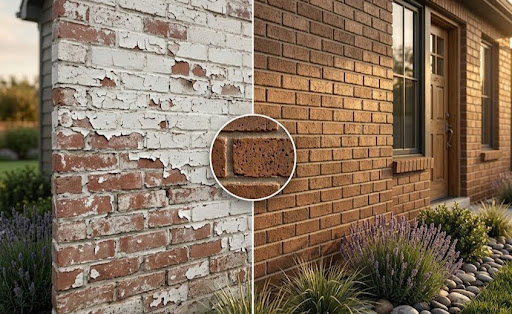
If you’ve been staring at your brick wall wondering why it looks tired, faded, or just plain wrong for your house, you’ve probably run into the term silicate stain somewhere along the way. Maybe a contractor mentioned it. Maybe you googled “how to change brick color without painting” and it popped up. Either way, it’s worth understanding before you spend money on it, because not every brick stain does the same job, and silicate stain is a different animal from the stuff you’d buy at a big box store.
So, What Exactly Is Silicate Stain?
Silicate stain is a mineral-based coating that actually bonds with brick and masonry on a chemical level instead of just sitting on top like paint does. Potassium silicate is the main player here, it reacts with the silica already present in brick, mortar, and stone, and it forms something closer to a permanent part of the surface rather than a layer you applied. That’s the whole selling point, honestly. Paint peels. Regular coatings crack and flake after a few winters. Silicate stain, when it’s done right, becomes part of the wall. It’s not glued on, it’s fused in. That distinction matters more than most people realize when they’re comparing products.
Why Brick Stain Even Matters In The First Place
People often ask why they’d bother staining brick at all instead of just painting it, or leaving it alone. Fair question. Brick is porous. It breathes, moisture moves through it, and that’s actually a good thing for the building’s health over time. Paint, being a film-forming product, blocks that movement. Trap moisture behind paint on old brick and you’re looking at spalling, cracking, and eventually crumbling masonry, sometimes within a decade. Brick stain, especially the silicate kind, is designed to let the wall keep doing what brick does naturally while still giving you the color change you’re after. It’s less about covering up the brick and more about working with it.

How Silicate Stain Is Different From Regular Masonry Paint
This is where a lot of homeowners get confused, and honestly some contractors don’t explain it well either. Regular masonry paint, even the “breathable” kind, still forms a surface film. It sits there. Silicate stain penetrates and chemically bonds, so there’s no film to peel, blister, or trap water vapor underneath it. The color also behaves differently. Paint gives you an opaque, flat finish. Silicate stain tends to look more natural, almost like the brick was always that color, because the pigment gets absorbed into the surface rather than layered over it. If you’ve ever seen old European buildings with color that’s held up for a hundred years without peeling, there’s a decent chance silicate coatings were involved.
The Application Process Isn’t As Simple As Rolling Paint
Here’s the part nobody likes hearing. Silicate stain isn’t a weekend DIY project in most cases, not if you want it done right. The brick surface has to be clean, really clean, no efflorescence, no old paint, no sealers sitting on top blocking the chemical bond. Any residue and the silicate reaction just won’t happen properly, and you’ll end up with patchy, inconsistent color that looks worse than doing nothing. Application usually happens in multiple thin coats rather than one heavy one, and timing matters too, you don’t want to apply it in direct sun or when temperatures are swinging wildly. This is one of those jobs where hiring someone who’s done it before saves you from a redo six months later.
Durability Is Where Silicate Stain Really Earns Its Keep
If you’re the type who wants to know the “why bother” answer in dollars and years, this is it. Because silicate stain becomes chemically part of the brick, it doesn’t degrade the way surface coatings do. UV exposure, freeze-thaw cycles, rain, all the stuff that eats paint alive over five to ten years, has a much smaller effect on a mineral bond. Manufacturers commonly talk about lifespans in the 15-25 year range for quality silicate systems on properly prepped brick, sometimes longer. That’s not a guarantee, weather and prep quality still play a role, but it’s a meaningfully longer runway than standard exterior masonry paint, which usually needs attention again within 7 to 10 years.
Color Options And What To Expect Visually
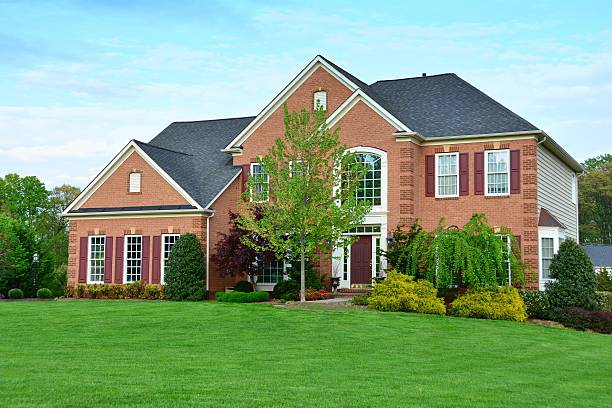
One thing people underestimate is how brick stain color shows up compared to what they picture in their head. Silicate stain color goes on somewhat translucent at first and develops as it cures and reacts with the substrate, so the final shade can look a little different than the wet sample suggested. It’s not like picking a paint chip where what you see is exactly what you get on day one. Most reputable suppliers will let you test on a small hidden section of the wall first, and honestly, you should insist on that step even if it feels like an extra hassle. Brick that’s older or has a lot of mineral variation will also take stain slightly unevenly, which some people love because it looks organic, and others hate because they wanted uniform color.
Cost Considerations Homeowners Should Actually Plan For
Silicate stain runs higher upfront than a basic paint job, there’s no getting around that. You’re paying for the material itself, which is pricier per gallon, plus the extra labor for proper surface prep and multiple coats. Depending on your region and the contractor, brick stain projects can run anywhere from moderately more expensive to nearly double what a standard paint job would cost for the same square footage. But when you factor in that you’re not repainting again in seven years, the math tends to even out or even favor the stain over a 15-20 year window. It’s a bit like buying a good pair of boots instead of the cheap ones, you pay more once and skip the annual replacement.
When Silicate Stain Isn’t The Right Call
Not every brick situation calls for it, and it’s worth being honest about that instead of pretending it’s a miracle fix for everything. If your brick already has a sealer or paint on it that can’t be fully stripped, silicate stain won’t bond properly and you’re better off with a compatible masonry paint instead. Severely damaged or crumbling brick needs repair before any stain goes near it, staining over structural problems just hides them temporarily. And if you’re on a tight budget with no plans to stay in the home long term, the premium cost of silicate stain might not make sense compared to a cheaper, shorter-term paint solution. Knowing when not to use it is honestly just as important as knowing when to.

Finding Someone Qualified To Do The Work
Because the process is unforgiving of shortcuts, the contractor you choose matters a lot here. Ask specifically about silicate stain experience, not just general masonry or painting work, since the prep and application steps are different enough that general experience doesn’t always transfer. A good contractor will want to test the product on your actual brick before committing to the whole project, and they should be upfront about how your specific brick’s age, porosity, and prior coatings might affect the outcome. If someone’s pushing you straight into a full application without any test patch or prep discussion, that’s a red flag worth paying attention to.
Conclusion
Silicate stain isn’t flashy or trendy, it’s just a genuinely solid way to change or restore brick color without fighting against how brick naturally behaves. It costs more upfront, it takes more prep, and it’s not a fix for every situation, but for brick that’s structurally sound and properly prepped, it delivers a kind of longevity that paint just can’t match. If you’re weighing brick stain options for your home or a project, it’s worth at least getting a quote and a test patch before deciding, because the difference between a mediocre paint job and a proper silicate application really does show up years down the road, not on day one.
Frequently Asked Questions
Is silicate stain the same as brick paint?
No. Brick paint sits on the surface as a film, while silicate stain chemically bonds into the brick itself, which is why it holds up longer and doesn’t peel the same way.
How long does silicate stain last on brick?
Most quality silicate stain systems last somewhere between 15 and 25 years on properly prepped brick, though prep quality and local weather conditions can shift that range.
Can you apply silicate stain over old paint?
Generally no, old paint or sealers block the chemical bond silicate stain needs, so those coatings need to be fully removed first for the stain to work correctly.
Is silicate stain more expensive than regular brick stain or paint?
Yes, it typically costs more upfront due to material price and labor-intensive prep, but its longer lifespan often makes it more cost-effective over time.
Does silicate stain change the texture of brick?
Not really. It penetrates and bonds rather than building up a layer, so the natural texture of the brick usually stays visible after application.
















Leave a Reply