

A lot of damage people blame on age or weather is actually just the result of years spent washing a car with the wrong stuff, and this is something most car detailing services will point out immediately during a consultation if you ask why the paint looks worn down. Dish soap, household cleaners, whatever’s sitting under the kitchen sink, none of it was designed for automotive paint, and using it repeatedly strips away protective layers faster than most people realize. It’s such a common mistake precisely because it seems harmless, soap is soap, right. Except it’s really not, and the difference between proper automotive cleaning products and generic household stuff shows up clearly once you know what to actually look for on your car’s finish.
Why Dish Soap Is Genuinely Bad For Your Car
Dish soap’s entire job is stripping grease and oil, that’s literally what it’s engineered to do in a kitchen setting. Problem is, your car’s paint has a wax or sealant layer sitting on top of it for protection, and dish soap strips that away right along with the dirt every single time you wash with it. Do this repeatedly over months or years and you’re left with paint that’s more vulnerable to UV damage, oxidation, and general wear, since that protective barrier keeps getting stripped before it has a chance to build back up properly. This is exactly why cars washed regularly with dish soap often look duller and more weathered than similarly aged vehicles washed with actual automotive products, even if both cars spent roughly the same amount of time outside in the elements.
What Makes Automotive Products Actually Different
Real car wash shampoo is formulated specifically to clean without stripping wax or sealant, which sounds like a small distinction until you understand what’s actually happening at a chemical level. These products use a different pH balance and surfactant blend designed to lift dirt and grime while leaving protective coatings intact underneath. Some formulas even add a bit of lubricity to the wash process itself, reducing friction between the wash mitt and paint surface, which matters more than people expect since friction during washing is actually one of the leading causes of those fine swirl marks that show up under direct sunlight. It’s not just marketing fluff either, there’s real chemistry behind why these products perform differently than something meant for scrubbing grease off dinner plates.
The Wash Process Itself Matters Just As Much
Even with the right soap, technique still plays a huge role in whether a wash actually protects the paint or slowly damages it over time. Using a single wash mitt for the entire car without rinsing it out regularly means you’re just dragging accumulated grit across the paint surface repeatedly, creating tiny scratches with every pass even if you can’t see it happening in real time. The two-bucket method, one bucket for soapy water, one for rinsing the mitt before going back into the soap, helps prevent this by keeping contaminants out of your wash solution. Starting from the top of the vehicle and working down also matters, since the lower panels typically collect more road grime and you don’t want to spread that grit up toward cleaner areas of the paint as you work through the wash.
Why Professional Detailers Take This So Seriously
Anyone running a legitimate detailing business understands that proper wash technique and products aren’t optional extras, they’re foundational to everything else they do. You can’t properly protect or correct paint that’s constantly getting micro-damaged through improper washing between visits, it’s basically working against yourself if the wash process itself is causing new imperfections. This is part of why a lot of detailers actually educate their clients on proper home washing techniques and product recommendations, not just to upsell more products, but because a well-maintained car between professional visits actually holds results longer and needs less intensive work each time it comes in. A detailer who genuinely cares about long-term results wants their client washing correctly at home too, since it directly affects how much correction work is needed down the road.
pH Balance Actually Makes A Real Difference
This gets a little technical, but it’s worth understanding since it explains a lot about why product choice matters this much. Automotive paint and clear coat have a specific chemical composition, and products formulated with a neutral or slightly acidic pH tend to clean effectively without being aggressive enough to strip protective coatings prematurely. Household cleaners and dish soap often run more alkaline, which is great for cutting through kitchen grease but genuinely harsh on the wax or ceramic protection sitting on your car’s paint. Over time, repeated exposure to overly alkaline products can also affect rubber trim and plastic components on the vehicle, causing fading or a chalky appearance that’s honestly pretty common on cars that have been washed with the wrong stuff for years without anyone realizing why.
Foam Cannons And Snow Foam Aren’t Just For Show
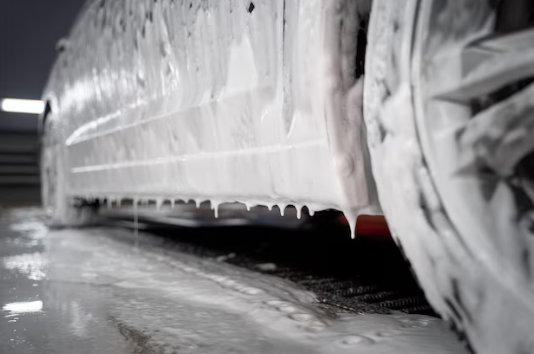
A lot of people see detailers using foam cannons and assume it’s mostly for the visual effect, cars covered in thick white foam does look pretty satisfying honestly. But there’s real function behind it too, a proper pre-wash foam helps lift dirt and grime off the surface before any physical contact happens, meaning less grit gets dragged across the paint during the actual contact wash phase that follows. This reduces the risk of introducing new scratches significantly, since you’re removing a good chunk of loose contaminants before a mitt or sponge ever touches the surface. Combining this step with quality automotive shampoo creates a genuinely gentler overall wash process, which matters a lot for anyone trying to maintain paint that’s already been properly corrected and protected through prior detailing work.
What To Actually Look For In A Good Product
Not all automotive shampoos are created equal either, and it’s worth understanding what separates a genuinely good product from something cheaply made just to capture sales at a low price point. Look for something specifically labeled pH balanced or pH neutral, since that indicates it’s formulated with paint protection in mind rather than just raw cleaning power. Products that mention being safe for waxed or ceramic coated surfaces are generally a good sign too, since that language usually means the formula was actually tested with paint protection systems in mind rather than developed purely as a general degreaser. Reviews from people who’ve used a product long term, rather than just a single wash, tend to be more useful since some products look fine initially but show their true effect on paint clarity and gloss only after repeated use over weeks or months.
Conclusion
Something as simple as what soap you’re using to wash your car actually has a real, measurable impact on how that paint holds up over years of regular use and exposure to the elements. Dish soap and household cleaners might seem like a harmless shortcut, but the cumulative damage adds up in ways that eventually require more intensive correction work down the road to fix. Whether you’re maintaining a car that’s already been professionally detailed or just trying to take better care of your daily driver going forward, switching to proper automotive products and technique makes a genuine difference that shows up clearly over time. Take the time to invest in the right products and learn proper washing technique, because protecting paint between professional visits is honestly just as important as whatever correction and protection work gets done during the actual detail itself.
















Leave a Reply