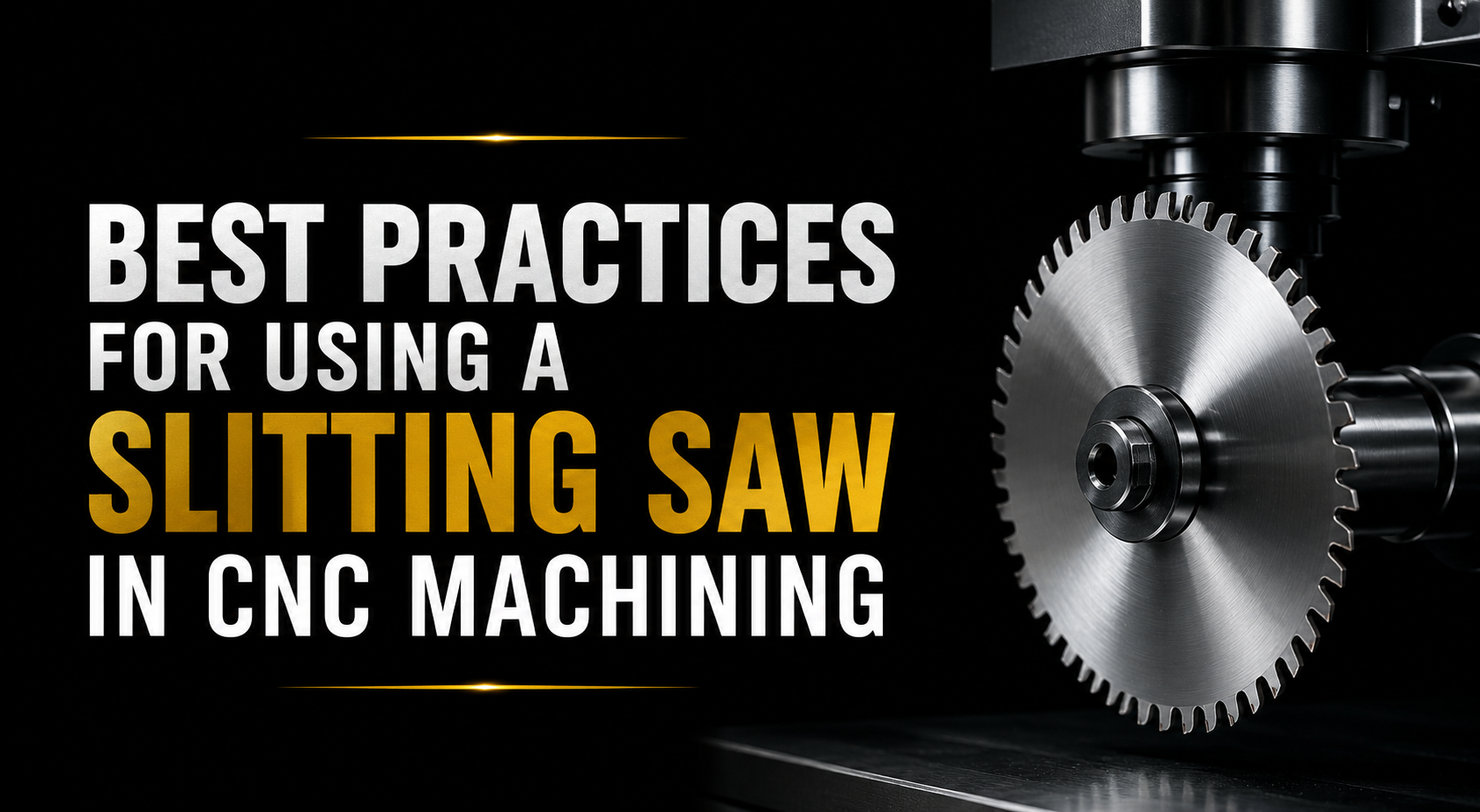
Precision is one of the most important factors in CNC machining, and the cutting tool plays a major role in achieving it. A Slitting Saw is widely used for producing narrow slots, grooves, and accurate cuts in various metals. When selected and used correctly, it delivers excellent surface finishes, consistent dimensions, and improved production efficiency.
However, even a high-quality slitting saw cannot perform at its best without the right machining practices. Factors such as blade selection, cutting parameters, machine setup, and routine maintenance all influence the final cutting quality. Following proven practices not only improves productivity but also extends tool life and reduces operating costs.
This guide explains the best practices for using a slitting saw in CNC machining to help you achieve reliable and consistent results.
1. Choose the Right Slitting Saw for the Job
Every machining application is different, so selecting the correct slitting saw is the first step toward achieving high-quality cuts. The blade should match the material being machined, the required slot width, and the cutting depth. Using the wrong blade can lead to poor surface finish, excessive vibration, and faster tool wear.
Blade diameter, thickness, tooth pitch, and material should all be considered before starting a machining operation. Choosing the right tool improves cutting efficiency while reducing unnecessary stress on both the machine and the blade.
2. Use the Correct Cutting Speed and Feed Rate
Cutting speed and feed rate have a significant impact on the performance of a Slitting Saw. Running the blade too fast creates excess heat, while feeding too aggressively can overload the teeth and reduce accuracy. On the other hand, very slow feed rates may cause rubbing instead of cutting, which also shortens tool life.
Begin with the recommended machining parameters for your blade and material. Fine-tuning the speed and feed based on actual cutting conditions will help produce cleaner cuts and improve overall productivity.
3. Ensure Proper Machine and Tool Alignment
Accurate alignment is essential for precision machining. If the slitting saw is not mounted correctly or the spindle has excessive runout, the blade may vibrate during cutting. This vibration can affect dimensional accuracy, create rough edges, and increase wear on the cutting teeth.
Before machining begins, check that the blade is securely mounted and properly aligned. A stable setup helps maintain consistent cutting performance throughout the operation.
4. Clamp the Workpiece Securely
A stable workpiece is just as important as a sharp cutting tool. Even slight movement during machining can reduce accuracy and damage the blade. Proper clamping minimizes vibration and allows the Slitting Saw to cut smoothly through the material.
For larger or longer components, use additional support where necessary. A rigid setup improves surface finish and reduces the chances of tool failure.
5. Select the Right Blade Material
Different workpiece materials require different blade materials. High-Speed Steel (HSS) blades are commonly used for general machining, while carbide slitting saws provide excellent performance for harder materials and high-speed production.
Selecting the appropriate blade material helps achieve better cutting quality, longer tool life, and more consistent machining results.
6. Use Coolant Effectively
Heat is one of the biggest causes of premature blade wear. During machining, friction between the blade and the workpiece generates heat that can affect both cutting performance and tool life.
Applying the correct coolant helps control temperature, improve chip removal, and produce smoother cuts. A steady coolant supply also reduces the risk of overheating and extends the life of the slitting saw.
7. Inspect the Blade Regularly
Routine inspection helps identify wear before it becomes a major problem. Over time, cutting edges naturally lose their sharpness, which can result in rough cuts, burr formation, and increased cutting force.
Inspect your Slitting Saw regularly for worn or chipped teeth, cracks, or signs of excessive heat. Replacing or reconditioning the blade at the right time helps maintain production quality and prevents unexpected downtime.
8. Keep the Slitting Saw Clean
Metal chips, dirt, and coolant residue can accumulate on the blade after repeated use. If left uncleaned, these deposits may reduce cutting efficiency and affect future machining operations.
After each job, clean the blade carefully and store it in a dry, protected location. Proper storage helps preserve the cutting edges and prevents corrosion or accidental damage.
9. Avoid Excessive Cutting Loads
Trying to remove too much material in a single pass places unnecessary stress on both the machine and the blade. Heavy cutting loads increase vibration, generate more heat, and accelerate wear.
Whenever possible, use cutting parameters that allow the Slitting Saw to operate smoothly. Multiple controlled passes often produce better accuracy and longer tool life than one aggressive cut.
10. Prioritize Safety During Machining
Safe machining practices protect both the operator and the equipment. Before starting any operation, inspect the blade, verify that all guards are in place, and ensure the workpiece is securely clamped.
Operators should also wear appropriate personal protective equipment and follow the machine manufacturer’s operating guidelines. Safe working practices reduce the risk of accidents while improving machining consistency.
Common Mistakes to Avoid
- Raising feed instead of speed when a cut feels slow — this adds force rather than reducing heat, and force is what breaks thin blades.
- Ignoring runout before a production run, which quietly widens slot tolerances.
- Using the wrong tooth form for slot depth, causing rubbing or excessive load.
- Running dry on tougher materials, which shortens tool life quickly.
Want to see the full range of tooth forms, grades, and sizes available? Check out Maxwell Slitting Saws brochure
Conclusion
A slitting saw is a precise tool, and precise tools reward attention to detail. Choosing the right tooth form, dialing in speed before feed, keeping the setup rigid, and cooling the cut properly will get you clean, accurate slots on almost any material. When you need saws ground exactly to your slot width, bore, and material - rather than a generic off-the-shelf blade – Maxwell Slitters manufactures HSS, cobalt (M35), powder-metal, and carbide slitting saws in-house, custom ground to your drawing, and shipped worldwide.
If your current slitting saw setup isn’t giving you the finish or tolerance you need, it may be worth having the blade itself reviewed against the job -sometimes a small change in tooth form or grade solves what looks like a machining problem.
Get a Saw Built for Your Cut
Not sure which grade or tooth form fits your job? Share a few basics — the material you’re cutting, the slot width and depth you need, and the quantity - or simply send over a drawing or an old worn-out saw as reference. Maxwell’s team will get back to you within a working day with the recommended grade, tooth count, pricing, and delivery timeline.
📧 sales@maxwellslitters.com | 📞 +91 82646 21011
Frequently Asked Questions
1. What is the difference between a slitting saw and a regular circular saw blade?
A slitting saw is thinner, ground to tighter tolerances, and designed for precision slotting or parting on a mill or CNC machine, not for general-purpose cutting.
2. How do I choose the right slitting saw thickness?
Slitting saw thickness should match your required slot width exactly, since the blade cuts a slot roughly as wide as itself. Custom-ground saws let you match odd or precise slot widths that off-the-shelf options may not cover.
3. Why does my slitting saw keep chattering during the cut?
Chatter is usually caused by insufficient rigidity, excessive runout, or a tooth form that’s too fine for the depth of cut. Checking the arbor fit and runout is the first place to look.
4. Can a worn slitting saw be sharpened again, or does it need replacing?
Most HSS, cobalt, and powder-metal slitting saws can be reground to their original geometry, which extends tool life and lowers the overall cost per cut.
5. What material grade should I use for stainless steel slotting?
HSS-Cobalt (M35) is generally recommended for stainless and alloy steels, since it holds up better under the higher heat these materials generate compared to standard HSS.