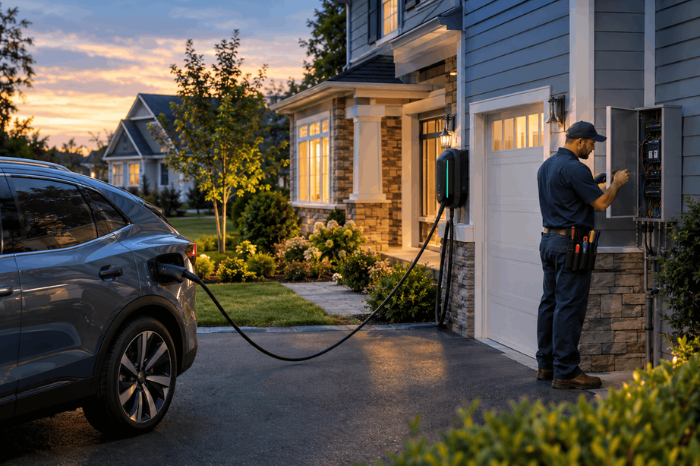
Electric vehicles have quietly become a normal sight in driveways across the Hudson Valley. As more drivers make the switch, questions about home charging follow close behind. For many, the search for reliable EV Charger Installation Services in Middletown, NY starts the moment they realize a standard wall outlet just won’t cut it for daily driving.
The idea seems simple enough. Plug the car in overnight, wake up to a full battery. In practice, though, the details matter more than most people expect.
Why Home Charging Isn’t as Simple as Plugging In
A typical household outlet delivers what’s known as Level 1 charging. It works, but slowly. Adding a full range overnight often isn’t possible with this setup, especially for larger battery packs.
That’s where Level 2 charging comes in. It runs on a 240-volt circuit, similar to what an electric dryer or oven uses. The catch is that not every home is wired to handle the extra load without adjustments.
Older houses in particular may need a panel upgrade or new dedicated circuit. An electrician usually checks the existing panel, measures available capacity, and confirms whether the wiring can support the added demand safely.
The Local Factor in Middletown
Every region has its quirks when it comes to residential electrical work. Homes around Middletown, NY range from newer builds with modern panels to older properties that were never designed for high-draw appliances.
This mix means there’s no one-size-fits-all answer. A quick assessment of the property tends to reveal what’s realistic and what needs attention first. Permits and local code compliance also play a role, and skipping those steps can cause headaches down the line.
Because charging equipment ties directly into a home’s electrical backbone, the condition of that system matters. Frayed connections or outdated panels don’t just affect a charger. They can affect the whole house.
Why the Wiring Underneath Matters
Charger performance depends heavily on the health of a home’s wiring. A brand-new charging unit won’t perform well if it’s connected to a strained or aging circuit.
This is why some homeowners pair charger installation with broader electrical checkups. In nearby communities, demand for Wiring Repair Services in New Paltz, NY often overlaps with EV projects, since both point back to the same core need: safe, capable electrical systems.
Faults in older wiring can go unnoticed for years until a high-draw device exposes them. Charging a vehicle every night is exactly the kind of consistent load that can bring hidden problems to the surface.
The Real Payoff of Charging at Home
The convenience is the obvious win. No detours to public stations, no waiting in line, no fumbling with apps or payment terminals. The car charges while its owner sleeps.
Cost tends to favor home charging too. Overnight electricity rates are often lower, and drivers avoid the premium pricing that public fast chargers sometimes carry.
There’s a quieter benefit as well. A properly installed Level 2 setup adds a layer of resale appeal. Buyers increasingly look for EV-ready homes, and a clean, code-compliant installation signals that the property has been well maintained.
How This Plays Out in Everyday Life
Picture a commuter who drives forty miles round trip each day. With Level 1 charging, keeping up becomes a daily source of low-grade stress. Switch to a Level 2 unit, and the same routine becomes effortless.
Or consider a family with two electric vehicles. Managing both on a single outdated panel simply isn’t practical. A capacity review, and sometimes an upgrade, turns a frustrating bottleneck into a smooth daily rhythm.
Local electrical contractors, including firms like Lightsmith Electric, often note that the most successful installations start with an honest look at the home’s existing system rather than the charger itself.
Where Wiring Repair Fits Into the Picture
Not every home is ready for a new high-draw appliance. Frayed connections, outdated breakers, or overloaded panels can turn a simple upgrade into a hazard.
This is why wiring repair services in New Paltz, NY, and surrounding areas frequently come up during EV conversations. Fixing the foundation first ensures the new charger runs the way it should.
For homeowners in Middletown, NY, the takeaway is straightforward: a charger is only as reliable as the wiring behind it.
Frequently Asked Questions
How long does a home EV charger installation usually take?
Most Level 2 installations wrap up within a few hours once the panel and wiring are confirmed ready. Projects that require panel upgrades or new circuits can stretch across a day.
Do I need a permit to install an EV charger at home?
In most areas, yes. Local codes typically require a permit and inspection for a 240-volt circuit, which helps ensure the work meets safety standards.
Can my current electrical panel handle a Level 2 charger?
It depends on the panel’s age and available capacity. An electrician can measure the existing load and confirm whether an upgrade is needed before installation.
Why is my EV charging slower than expected?
Slow charging often points to a Level 1 setup or an underpowered circuit. Wiring issues or an overloaded panel can also limit how much power reaches the vehicle.
Is home charging cheaper than using public stations?
Generally, yes. Charging overnight at home usually costs less per kilowatt-hour than public fast chargers, especially where off-peak electricity rates apply.
Can any electrician install a Level 2 charger?
A licensed electrician familiar with EV equipment is the safest choice. Level 2 units need a dedicated 240-volt circuit and correct load calculations to work properly.
Why does old wiring matter for EV charging?
Chargers draw heavy power for long periods. Worn or undersized wiring can overheat, so repairs are sometimes needed before an install can proceed safely.
Is home charging cheaper than public stations?
Generally, yes. Charging at home during off-peak hours often costs less than public fast chargers, and it removes the need to wait for an open port.
What’s the difference between Level 1 and Level 2 charging?
Level 1 uses a standard outlet and charges slowly. Level 2 runs on a 240-volt circuit and charges several times faster, making it the common choice for home use.