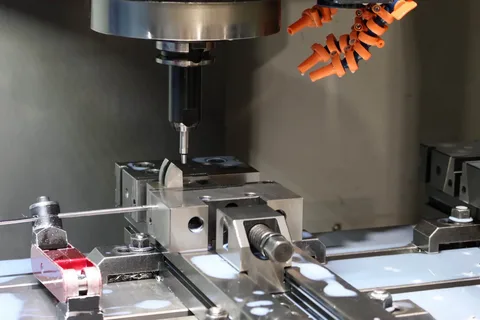
In modern product development, speed, accuracy, and flexibility are critical factors that determine success. Engineers across industries rely heavily on prototype CNC machining services to transform digital designs into functional, real-world parts. This manufacturing approach has become a preferred solution because it bridges the gap between concept and production with unmatched precision.
From aerospace to automotive and medical device engineering, prototyping plays a crucial role in testing ideas before full-scale manufacturing. CNC machining offers engineers the ability to validate designs quickly, reduce risks, and improve product performance before mass production begins.
High Precision and Tight Tolerances in Prototyping
One of the main reasons engineers prefer prototype CNC machining services is the exceptional precision they offer. CNC machines operate using computer-controlled instructions, ensuring every cut and dimension matches the design specifications exactly. This level of accuracy is essential when testing prototypes that must function like final production parts.
Unlike manual machining, CNC technology eliminates human error and ensures repeatability across multiple iterations. Engineers can trust that each prototype reflects the exact geometry required for testing and validation.
Key advantages of precision CNC prototyping:
- Achieves extremely tight tolerances for complex parts
- Ensures consistent quality across multiple prototypes
- Reduces design errors during testing phases
- Supports intricate geometries and fine details
- Improves reliability in functional testing
Beyond accuracy, precision also allows engineers to identify design flaws early. This helps prevent costly mistakes in later production stages and improves overall product quality.
Fast Turnaround Time for Product Development
Speed is another major factor that makes prototype CNC machining services highly valuable. In competitive industries, getting a product to market quickly can determine success or failure. CNC machining significantly reduces the time required to produce prototypes compared to traditional manufacturing methods.
Because CNC machines are automated, they can run continuously with minimal downtime. Once a CAD file is ready, production can begin almost immediately, allowing engineers to test and iterate designs rapidly.
Benefits of fast prototyping cycles:
- Rapid production of functional prototypes
- Quick design iteration and improvements
- Reduced time-to-market for new products
- Efficient testing of multiple design versions
- Faster validation of engineering concepts
This speed enables engineers to follow an agile development process. Instead of waiting weeks for prototypes, they can refine and optimize designs in days, improving innovation and productivity.
Wide Material Selection for Real-World Testing
Another reason engineers rely on prototype CNC machining services is the wide range of materials available. CNC machining supports metals, plastics, and composites, allowing engineers to choose materials that closely match final production requirements.
This flexibility is essential for testing how a part performs under real-world conditions. Engineers can evaluate strength, durability, heat resistance, and weight using actual production-grade materials.
Common material advantages in CNC prototyping:
- Aluminum for lightweight and durable prototypes
- Stainless steel for strength and corrosion resistance
- Engineering plastics for cost-effective testing
- Titanium for high-performance applications
- Composite materials for specialized performance needs
By testing with real materials, engineers can make more informed decisions about final production designs. This reduces risks and ensures that the product will perform as expected in its intended environment.
Cost-Effective Solution for Iterative Design
Cost efficiency is a critical factor in engineering development, and prototype CNC machining services provide a practical solution. While CNC machining may seem expensive at first glance, it becomes highly cost-effective when considering reduced errors and faster development cycles.
Engineers often go through multiple iterations before finalizing a design. CNC machining allows these iterations without the need for expensive tooling or molds, which are typically required in mass production methods.
Cost-saving benefits of CNC prototyping:
- No need for expensive mold creation
- Reduced material waste through precision machining
- Lower risk of production errors
- Efficient small-batch production capability
- Affordable design modifications and updates
This cost-effectiveness makes CNC machining ideal for startups and large companies alike. It allows engineers to experiment freely without worrying about excessive production costs.
Flexibility and Design Freedom for Engineers
Flexibility is another major advantage of prototype CNC machining services. Engineers can create highly complex and customized designs without being limited by traditional manufacturing constraints. CNC machines can produce intricate shapes that would be difficult or impossible using manual methods.
This flexibility supports innovation, allowing engineers to push design boundaries and explore new concepts. Whether it’s a complex mechanical component or a detailed enclosure, CNC machining can handle it with ease.
Key flexibility benefits include:
- Ability to produce complex geometries
- Easy design modifications through CAD updates
- Suitable for both simple and highly detailed parts
- Supports low-volume and one-off prototypes
- Compatible with advanced engineering designs
With this level of freedom, engineers can focus on improving functionality and performance instead of worrying about manufacturing limitations. This leads to better product outcomes and more innovative solutions.
Conclusion
Engineers prefer prototype CNC machining services because they offer a powerful combination of precision, speed, material flexibility, cost efficiency, and design freedom. These advantages make CNC machining an essential tool in modern product development and prototyping.
By enabling fast iterations and accurate real-world testing, CNC prototyping helps engineers reduce risks, improve designs, and bring high-quality products to market faster. As industries continue to evolve, the demand for reliable and efficient prototyping methods like CNC machining will only continue to grow.