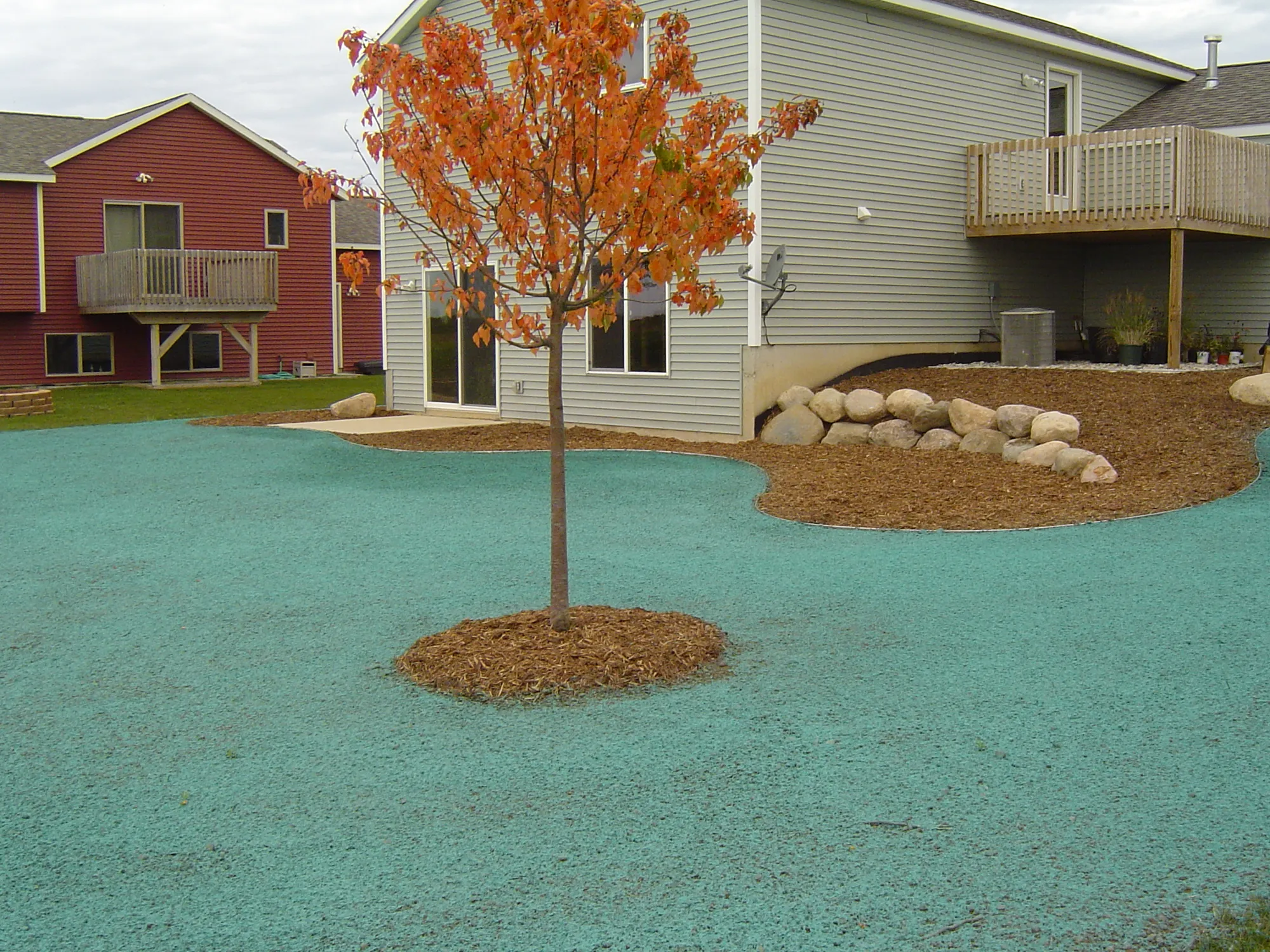
Choosing the right grass is one of the most important decisions when establishing a new lawn, stabilizing a slope, or improving a pasture in North Texas. The region’s hot summers, variable rainfall, periods of drought, and different soil conditions can make grass selection more complicated than simply choosing the fastest-growing seed. Hydroseeding North Texas properties can be highly effective when the seed mixture matches the site’s purpose and environmental conditions. Bermudagrass, zoysiagrass, turf-type tall fescue, buffalograss, and selected forage grasses each have different strengths, making professional evaluation valuable before installation.
Why Grass Selection Matters in North Texas
North Texas presents a demanding growing environment for newly established turf. Summer temperatures can place substantial stress on young seedlings, while soil type, sunlight, drainage, and irrigation availability can vary considerably from one property to another. A grass that performs well in a sunny residential lawn may not be the best option for a shaded area, erosion-prone slope, or grazing pasture. Texas A&M guidance emphasizes that turfgrass selection should consider factors such as climate, soil, traffic, shade, and management requirements.
Hydroseeding adds another consideration because not every desirable turfgrass establishes equally well from seed. Some varieties are more commonly installed using sod, sprigs, or plugs, while others are available as seed and can be practical candidates for hydroseeding. Bermudagrass is particularly important because seeded varieties are available and the grass is well adapted to Texas conditions. Zoysiagrass has seeded options as well, although seeded zoysia generally establishes more slowly than seeded bermudagrass.
The property’s purpose should always guide the final selection. A homeowner may prioritize appearance, drought tolerance, and mowing requirements, while a developer may need rapid ground coverage and erosion management. A ranch owner may instead prioritize forage production, grazing tolerance, persistence, and seasonal productivity. Working with a qualified contractor or turf professional allows these objectives to be considered together instead of selecting a grass based solely on its name or advertised characteristics.
Bermudagrass: A Strong Choice for Sunny Areas
Bermudagrass is one of the most versatile options for North Texas because it performs well in warm conditions and is available in both seeded and vegetatively established forms. It spreads through stolons and rhizomes, allowing it to develop a dense turf when properly established and maintained. Texas A&M identifies bermudagrass as a major turf and forage grass in Texas, with strong adaptation across many areas of the state. These characteristics make it a leading consideration for sunny lawns, commercial properties, sports areas, and suitable pasture applications.
For hydroseeding projects, common or improved seeded bermudagrass can be especially useful when a property owner wants relatively efficient establishment across a broad area. The grass prefers good drainage and performs best with adequate sunlight. Its spreading growth habit can help fill open spaces as the lawn develops, although establishment still depends on proper soil preparation, irrigation, seed quality, and timing. A professional assessment is important when determining which bermudagrass cultivar or blend fits the intended application.
Bermudagrass can also be appropriate for certain North Texas slopes because its spreading growth habit can eventually create substantial ground coverage. However, a slope should never be treated as though grass alone will solve every erosion problem. Steep slopes, concentrated runoff, and unstable soils may require additional erosion-control measures. Hydroseeding can be incorporated into a broader stabilization strategy after grading, drainage, and soil conditions have been properly addressed.
Zoysiagrass for Attractive, Dense Turf
Zoysiagrass is another warm-season option worth considering for selected North Texas lawns. It is known for producing dense turf and can offer good performance when properly matched to the site. Texas A&M notes that zoysia includes different types, with Zoysia japonica generally having a medium texture and Zoysia matrella types producing finer, denser turf. These differences can affect appearance, mowing requirements, shade tolerance, and maintenance expectations.
One limitation is establishment speed. Only certain zoysiagrass varieties are available as seed, and Texas A&M notes that seeded varieties can be considerably slower to establish than seeded bermudagrass. This means zoysia may not always be the first choice when rapid coverage is the primary objective. However, where appearance, density, and long-term turf characteristics are more important than quick establishment, a suitable seeded zoysia can still be considered for the right residential or landscape application.
Zoysia also requires thoughtful site selection. Different varieties vary in texture and shade tolerance, so property owners should avoid assuming that every zoysia cultivar performs identically. A hydroseeding professional can evaluate sunlight patterns, soil conditions, irrigation capacity, and maintenance expectations before making a recommendation. This approach helps ensure that the selected grass supports the property’s long-term landscaping goals.
Turf-Type Tall Fescue for Selected North Texas Lawns
Turf-type tall fescue deserves consideration in North Texas, particularly where shade and cool-season performance are important. Texas A&M describes tall fescue as a cool-season turf adapted primarily to North Texas and notes that it can tolerate drought and shade moderately well. However, it generally requires more summer irrigation than warm-season grasses and is not ideal for heavily trafficked areas.
For this reason, tall fescue may be more appropriate for selected residential landscapes than broad, high-traffic commercial areas exposed to extreme summer conditions. Its advantages can become more relevant when a property has partial shade where warm-season grasses may struggle. However, irrigation requirements need to be considered carefully before choosing it. A homeowner should understand that a grass capable of performing in North Texas does not necessarily have the same summer water requirements as a warm-season alternative.
Tall fescue also illustrates why there is no single “best” grass for every North Texas property. A lawn’s sunlight exposure, soil characteristics, desired appearance, and available maintenance resources all influence the decision. A reputable hydroseeding company can compare these factors and explain the trade-offs between different seed choices rather than recommending the same grass for every project.
Buffalograss for Lower-Water Landscapes
Buffalograss can be an interesting option for certain low-maintenance North Texas landscapes, particularly where reduced water requirements are important. Texas A&M’s water-management guidance identifies buffalograss as requiring less water than several common turfgrass choices. This characteristic can make it attractive for properties where conserving irrigation resources is a priority.
However, buffalograss should be selected according to realistic expectations. It may not provide the same appearance, density, or traffic performance as every improved turfgrass variety. Site conditions and management practices remain important, particularly during establishment. Homeowners considering buffalograss should discuss its appearance, growth habit, irrigation needs, and maintenance requirements with a professional before choosing it for a hydroseeding project.
For suitable open areas, the grass can provide a practical alternative where water conservation is an important objective. It may also fit certain larger properties where a highly manicured appearance is not required. The key is matching the grass to the property’s purpose rather than expecting every turf variety to provide identical performance.
Best Grass Options for North Texas Pastures
Pasture establishment requires a different selection process from residential lawn installation. The primary objective may be forage production, grazing tolerance, persistence, soil adaptation, and seasonal productivity rather than fine texture or uniform ornamental appearance. Bermudagrass is widely used in Texas forage systems, and Texas A&M identifies it as a major warm-season perennial forage with strong grazing and hay applications.
Bahiagrass can also be used for pasture, particularly where its characteristics fit the soil and fertility conditions. Texas A&M notes that bahiagrass can persist under relatively low fertility conditions, although it generally produces less forage than hybrid bermudagrass under comparable fertility. It also establishes more slowly, so expectations should be adjusted accordingly.
Other forage grasses, including selected native and introduced species, may have applications depending on the property and management objectives. Texas A&M’s forage resources distinguish between warm-season and cool-season forage systems and emphasize considerations such as soil testing and forage variety selection. Pasture owners should therefore avoid choosing seed based solely on availability. Grazing goals, soil type, rainfall, fertility, livestock needs, and long-term management should all be considered before installation.
Choosing Grass for North Texas Slopes
Slopes require special attention because rainfall and gravity can move soil before newly planted grass has time to develop roots. For these locations, the best grass is one that can establish reliably under the site’s conditions and contribute to long-term vegetative coverage. Bermudagrass can be a strong candidate for sunny areas because of its spreading growth habit, while other grasses may be more appropriate depending on shade, soil, and moisture. The final selection should be part of a broader erosion-management plan.
Hydroseeding can help distribute seed and mulch across irregular terrain, but application technique matters. Contractors need to consider slope steepness, soil preparation, drainage patterns, rainfall exposure, and potential runoff. In particularly vulnerable areas, erosion blankets, drainage improvements, check structures, or other measures may be necessary. Professional site evaluation is therefore essential when hydroseeding is being used for slope stabilization.
The objective should be to establish vegetation without creating unrealistic expectations about what grass can accomplish on its own. A healthy root system can contribute to soil stability as the turf matures, but it takes time to develop. Protecting the area from unnecessary disturbance and maintaining appropriate moisture during establishment can significantly improve the chances of successful coverage.
How to Choose a Hydroseeding Company
When searching for a hydroseeding company near me, property owners should evaluate experience as carefully as price. Ask whether the company has completed projects similar to yours, including residential lawns, slopes, commercial properties, or pastures. A contractor experienced with different applications can better understand why a grass selected for a lawn may not be appropriate for a grazing field. Ask about seed sourcing, soil preparation, application equipment, irrigation recommendations, and post-installation care.
A professional contractor should inspect the property before making a final recommendation. Factors such as sunlight, soil texture, compaction, drainage, slope, expected traffic, and available irrigation can substantially change which grass is appropriate. Texas A&M also maintains resources covering turfgrass selection, pasture management, and forage testing, reinforcing the importance of matching grass selection to site and management conditions.
Ultimately, the best grass for Hydroseeding North Texas is not necessarily the fastest-growing or most popular variety. Bermudagrass is a strong all-purpose candidate for many sunny applications, while zoysiagrass, turf-type tall fescue, buffalograss, and selected forage grasses each have specific situations where they may be advantageous. By evaluating the property’s purpose, soil, sunlight, water availability, maintenance expectations, and seasonal conditions before installation, property owners can choose a grass with a much better chance of long-term success.