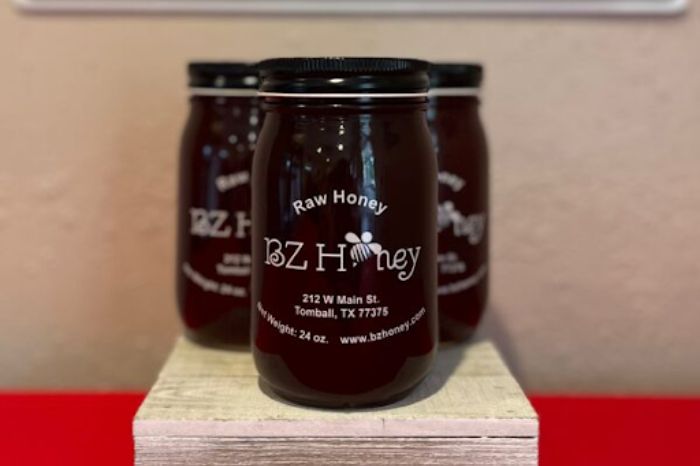
A street stall that has glass jars that reflect sunlight have an entirely different quiet appealing. It’s not glossy like the bottles you buy at the supermarket It’s more hefty, like it’s unfiltered. It’s a simple place where the curiosity typically begins, especially when you search for something similar to local honey near Texas looking for an authentic experience instead of mass-produced sweeteners.
However, locating fresh honey isn’t so easy as making a search in Google’s search engine. There’s a tiny ecosystem to the honey industry: beekeepers operating in pockets scattered throughout the year and seasonal harvest cycles and informal distribution via farms or markets. The way this system functions alters the way honey is procured and evaluated.
Why Fresh Honey Still Matters More Than It Seems
Freshly picked honey has subtle distinctions that extend beyond the taste. Its texture changes depending on flowers, humidity and the date of extraction. Certain types of flowers crystallize more quickly while others remain liquid for months, and none can be random.
The main difference lies in the enzymatic activities. Raw honey, that is not filtered thoroughly, will retain the natural substances that are usually diminished when heated commercially. This is why beekeepers with small batches are often the subject of attention. the process can be slower more sloppy, less standardized as well as more perceptive to the environment. True, yet strange -imperfections are a one of the benefits.
Understanding Where Beekeepers Actually Operate
Beekeeping does not occur in prominent areas. The colonies are usually located near areas of agriculture, such as orchards as well as semi-wild patches, which are less exposed to pesticides. They aren’t always obvious when driving on main roads.
Local producers typically operate within micro-networks. The beekeeper could sell his products at market days, word-of mouth listings or even small co-ops as opposed to formal retail chains. That’s why observation is important more than the advertising. Handwritten labels on Jar often demonstrates greater authenticity than any glossy brand would ever.
A seasonal pattern is also in play. The availability of honey is highest during blooming seasons and is not available all year round. If you miss this cycle, you could end up getting mixed or stored inventory instead of truly freshly harvested harvests.
How to Track Down Authentic Sources
Digital maps are helpful, but they don’t always tell the whole of the story. Looking through directories of agriculture and regional associations for beekeepers and bulletin boards for community groups often provides more reliable information.
Farmers’ markets are one of the longest-running accessibility points. There are a lot of vendors who rotate their stalls weekly as well as honey stalls are known to offer distinct kinds of honey based upon the local vegetation -such as mustard blossom pockets, eucalyptus or blends of wild forests.
There are also roadside vendors that are frequently overlooked. The setups typically appear in peak harvest times and then disappear the same time. They are not particularly well-organized, however quite reliable in many instances since the scale of these setups is very limited.
Social media sites that are focused on the regional aspects of food production are also playing a part. The listings aren’t always perfect but they do tend to be a reflection of the current availability instead of the curated inventory.
What Truly Fresh Honey Looks and Feels Like
It’s easy to misinterpret appearance alone Certain patterns can be misleading, however they repeat regularly enough for you to be able to spot. Fresh honey is likely to exhibit an uneven viscosity. It may flow slow or display a slight cloudiness based the pollen content.
The formation of crystals isn’t a problem. Actually, the early appearance of crystals could indicate a lack of processing. A belief that smooth is pure is among the most pervasive misconceptions.
The taste is where the differences are evident. Small-batch honey is often distinguished by an earthy or floral undertones that diminish in commercial processing. Honey doesn’t always have the same taste “clean” in a uniform manner — which is precisely what the purpose is.
Packaging can also be a source of information. Glass jars made of glass, with no labels, and notes for batches typically indicate direct source. The packaging that is over-branded often implies the blending of multiple regions this can weaken the local sourcing.
Seasonal Timing and Subtle Market Patterns
Honey availability fluctuates over time that are directly linked to flowering times. The spring and early summer months typically provide the largest variety as late autumn honey the honey is generally heavier and more concentrated.
Also, there is a slowdown in the winter seasons. This isn’t because the production ceases completely and extraction, but rather because it becomes more frequently. If you’re expecting a consistent supply all year round, you may be dissatisfied.
But timing isn’t all related to availability. It also affects the intensity of flavor. Late-season harvests often taste more molassesy, like a molasses-like taste. Harvests that are early in the season tend to be less aromatic and lighter in flavor.
Where Local Discovery Often Begins
In time when the user’s search becomes more focused, it changes from browsing online towards physical exploration. tiny grocery stores, roadside stand-ups and seasonal pop-ups are more important over algorithms.
The same is true for places that are labeled Farm stores near me in Texas frequently have unexpected items and not just because they are heavily advertised, but simply because they are able to quietly source with beekeepers in the area who do not grow beyond what is available in the region. They are often used as a bridge between production from rural areas and the urban market, but without any noise between.
Final Thoughts
The search for fresh honey isn’t so much concerned with convenience, and more so about patterns. When seasonal flows as well as local network networks and cues for packaging become well-known and the hunt becomes easy. There’s a pattern to it that is slow and unpredictably, but it’s constant enough when you get used to it.
FAQs
- What is the best way to ensure that honey from a local source be distinguished from honey grown in the local area?
Check for labeling on small batches with uneven texture and sources that are tied to adjacent areas instead of general brand names. - Is crystallized honey spoiled?
No. It is often a sign of low processing, and a the natural sugar composition. - How often is honey that’s fresh accessible?
Fresh harvests typically appear following significant flowering periods, which is usually the spring and summer months. - Why local honey is more popular than commercial honey?
It is often a source of organic enzymes and is a reflection of the local flower diversity, resulting in the drink a distinct flavor.