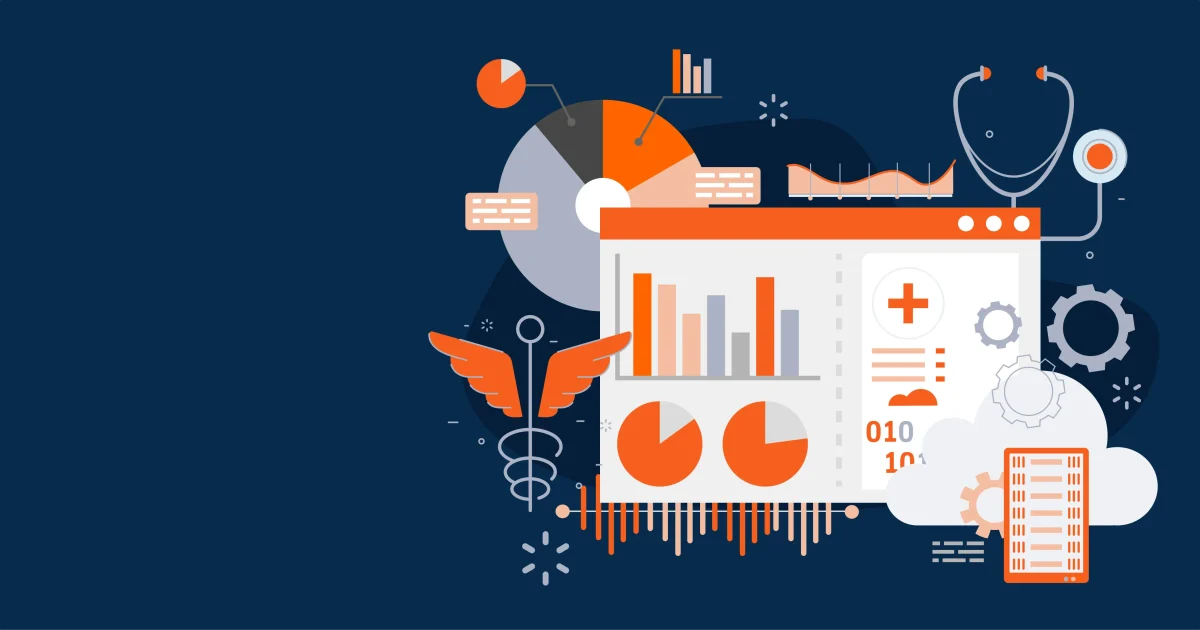
Data-driven solutions are being used more and more by the healthcare sector to improve patient care, boost operational effectiveness, and facilitate more precise clinical decision-making. Every day, healthcare organizations collect vast amounts of information from electronic health records, diagnostic systems, wearable devices, medical imaging, and research activities. Converting this data into actionable insights has become essential for identifying health trends, improving treatment outcomes, and streamlining healthcare services. Advanced analytics, combined with artificial intelligence and machine learning, enables medical professionals to forecast disease risks, optimize resource utilization, and deliver more personalized care. Precision medicine, which combines a person’s genetic traits, lifestyle choices, and medical history to create individualized treatment regimens rather than depending on standardized methods, is a significant development in this profession. As data continues to reshape modern healthcare, professionals with strong analytical skills are in high demand. Many aspiring analysts build practical expertise through a Data Analytics Course in Chennai, where hands-on training covers healthcare analytics, predictive modeling, and business intelligence techniques.
Understanding Advanced Analytics
The application of statistical tools, machine learning, predictive models, and data visualization approaches to derive significant insights from intricate datasets is known as advanced analytics.
Unlike traditional reporting, advanced analytics helps organizations predict future outcomes and support informed decision-making.
Why Analytics Matters in Healthcare
Healthcare organizations manage vast amounts of medical information.
Advanced analytics helps improve:
- Patient outcomes
- Clinical decision-making
- Operational efficiency
- Cost management
- Disease prevention
Data-driven insights enhance healthcare quality.
Understanding Precision Medicine
Precision medicine focuses on providing personalized healthcare based on individual patient characteristics.
Instead of applying identical treatments to every patient, physicians consider genetic information, lifestyle factors, environmental influences, and medical history when developing treatment plans.
Healthcare Data Sources
Modern healthcare systems generate information from multiple sources.
These include:
- Electronic health records
- Medical imaging
- Laboratory reports
- Wearable devices
- Genomic databases
Combining multiple datasets improves analytical accuracy.
Predictive Analytics
Predictive analytics estimates future health outcomes using historical patient information.
Before symptoms worsen, medical professionals identify individuals who are more susceptible to chronic illnesses, readmissions to hospitals, or other health issues.
Disease Risk Prediction
Machine learning models analyze patient histories to identify potential disease risks.
Early prediction supports preventive care while reducing emergency treatments and long-term healthcare expenses.
Medical Image Analysis
Advanced analytics assists healthcare professionals in interpreting medical images.
Artificial intelligence improves the detection of abnormalities in X-rays, CT scans, MRI scans, and ultrasound images, supporting faster and more accurate diagnoses.
Genomic Data Analysis
Precision medicine relies heavily on genomic information.
Advanced analytics evaluates genetic variations that influence disease susceptibility, treatment effectiveness, and individual medication responses.
Personalized Treatment Planning
Every patient responds differently to medical treatments.
Analytics helps physicians recommend therapies based on clinical evidence, genetic profiles, treatment history, and predicted outcomes.
Drug Discovery
Pharmaceutical companies increasingly rely on advanced analytics throughout drug development.
Analytical models accelerate research by identifying promising compounds, evaluating clinical trial data, and predicting treatment effectiveness.
Hospital Resource Optimization
Healthcare facilities manage staff, equipment, and patient care simultaneously.
Analytics improves:
- Bed allocation
- Staff scheduling
- Equipment utilization
- Patient flow
- Resource planning
Operational improvements increase healthcare efficiency.
Population Health Management
Healthcare organizations analyze large patient populations to identify disease trends and public health challenges.
Population-level insights support preventive healthcare programs and targeted intervention strategies.
Remote Patient Monitoring
Wearable medical devices continuously collect patient health information.
Advanced analytics processes real-time physiological data, enabling healthcare providers to detect abnormalities early and intervene before conditions worsen.
Clinical Decision Support
Decision-support systems combine patient information with medical knowledge.
Healthcare professionals receive evidence-based recommendations that improve diagnosis, treatment selection, and overall clinical decision-making.
Data Security and Privacy
Healthcare information requires strong protection.
Organizations implement:
- Data encryption
- Secure authentication
- Access controls
- Regulatory compliance
- Continuous monitoring
Protecting patient privacy remains a top priority.
Challenges of Healthcare Analytics
Although advanced analytics offers numerous benefits, healthcare organizations must overcome challenges involving data quality, interoperability, regulatory compliance, privacy protection, system integration, and ethical AI implementation before achieving maximum value.
Building Practical Healthcare Analytics Skills
Developing expertise in healthcare analytics requires practical knowledge of data visualization, predictive analytics, machine learning, statistical modeling, healthcare information systems, and business intelligence platforms. Many professionals strengthen these capabilities through project-based learning available at an Advanced Training Institute in Chennai, where real-world analytics projects provide valuable exposure to healthcare datasets and enterprise analytical solutions.
Future of Healthcare Analytics
Healthcare analytics continues evolving alongside artificial intelligence, deep learning, digital twins, wearable technologies, cloud computing, predictive healthcare platforms, and precision medicine innovations. Future analytical systems will provide earlier disease detection, highly personalized treatment recommendations, and more intelligent clinical decision support for healthcare professionals worldwide.
Advanced analytics has become a driving force behind modern healthcare and precision medicine by transforming large volumes of clinical data into meaningful insights that improve diagnosis, treatment planning, operational efficiency, and patient outcomes. Through predictive analytics, genomic analysis, personalized treatment strategies, hospital optimization, and intelligent decision support, healthcare organizations can deliver higher-quality medical services while improving overall efficiency. As digital healthcare continues advancing, professionals with expertise in healthcare analytics will remain highly sought after.