Understanding the car accident repair process is essential for any UK driver facing the stress of vehicle damage from the moment of impact to the final handover, knowing each stage helps you manage expectations and avoid costly surprises.
Most drivers choose insurance‑approved repairs to guarantee safety and compliance with manufacturer standards, but the path from initial damage assessment to paint refinishing can still feel overwhelming without a clear roadmap.
This guide breaks down the complex journey into simple, manageable steps, giving you the confidence to ask the right questions and make informed decisions.
And when you’re ready to move from planning to action, finding a reliable local workshop is just a click away. Simply locate accidental car repair near you and get your vehicle restored to perfect, road‑safe condition with minimum hassle.
1. Initial Assessment and Damage Documentation
The first stage of any professional repair involves a detailed accident damage assessment process. Technicians inspect your vehicle to identify both visible surface damage and hidden structural issues.
They create a comprehensive report that outlines necessary parts, labour hours, and estimated repair timelines. This initial report is vital for your insurance claim and ensures all damage is captured accurately. Having a clear plan from the start prevents unexpected costs or delays later on.
2. Insurance Approval and Authorisation
Before any physical work begins, your insurance provider must formally authorise the repair estimate. They verify the claim details and approve the use of professional collision repair services UK.
Once the green light is given, the garage schedules your vehicle for the workshop. This step often feels slow, but it is necessary to secure full financial coverage. Clear communication between the garage and your insurer ensures the work proceeds without any issues.
3. Disassembly and Detailed Inspection
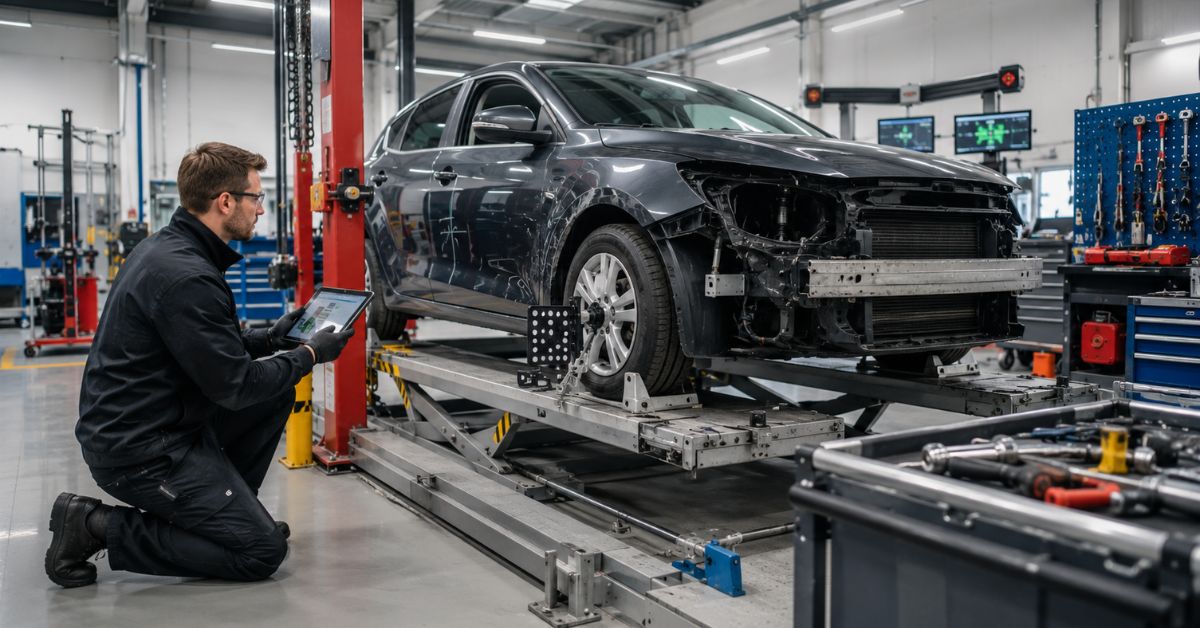
Once in the shop, technicians carefully disassemble damaged components to reveal hidden internal damage. Often, what looks like a minor bumper dent hides significant frame or sensor issues.
This stage of post-accident vehicle restoration allows the team to refine the repair plan. They document these new findings and update the repair estimate if necessary. Thorough disassembly is the only way to guarantee a safe and complete final repair.
4. Structural and Mechanical Repair
This is the core phase where your vehicle begins its journey back to factory standards. Expert technicians use advanced jigs to realign the chassis if the frame is bent.
Following the structural work, they replace or repair crucial mechanical parts like cooling systems or suspension. These critical vehicle body shop repair steps ensure your car handles correctly and remains safe at speed. Precision here is paramount to maintaining the original safety features built by the manufacturer.
5. Bodywork, Priming, and Expert Paint Matching
After structural integrity is restored, the focus shifts to aesthetic perfection and protective finishes. Body panels are carefully shaped, sanded, and smoothed before the application of high-quality primers.
Skilled painters then use advanced technology to match your vehicle’s exact paint colour code. This stage of the car accident repair process requires patience to ensure a flawless, seamless finish. A perfect paint job restores your car’s visual appeal and protects the underlying metal from rust.
Key Stages of Professional Vehicle Restoration
| Repair Stage | Purpose of This Step |
| Inspection | Completing the accident damage assessment process to find hidden issues. |
| Authorisation | Getting insurance approval and car repairs from your provider. |
| Structural Fix | Performing essential vehicle body shop repair steps to fix the frame. |
| Paint Finish | Applying colour-matched paint for professional post accident vehicle restoration. |
| Quality Audit | Ensuring all systems work perfectly before the final handover to you. |
6. Final Assembly and Quality Testing
The final stage involves putting all trim, sensors, and interior components back into place. Technicians then perform a rigorous quality audit to ensure everything functions exactly as intended.
This includes testing safety features like autonomous braking or parking sensors affected by the crash. The final stage of the car accident repair process ends with a thorough test drive. Your vehicle must meet all safety standards before it is signed off for return.
7. Handover and Vehicle Return
After passing all internal checks, the garage cleans your car inside and out. You will receive a full breakdown of the work performed during the car accident repair process.
Checking your car carefully during handover ensures you are satisfied with the completed cosmetic work. Drive away with confidence knowing your vehicle is restored to a high professional standard. Retain all repair documentation for your records, as it adds value if you sell later.
Conclusion
Navigating the road to recovery after a crash can be a smooth experience with the right team. Professional collision repair services UK provide the expertise needed to return your vehicle to its pre-accident condition.
By following each stage of the car accident repair process, you ensure your car remains safe and fully functional. Trusting qualified experts allows you to regain your mobility and peace of mind much faster. Keep this guide in mind to help you stay informed and prepared during your repair journey.
FAQ’s
1. How long does a typical repair take?
The duration depends on the severity of the damage and parts availability in the UK. A small repair using insurance-approved car repairs might only take a few days to complete. Major structural work, however, can require several weeks to restore the vehicle to safety standards.
2. Can I choose my own repair garage?
Yes, you generally have the right to choose your preferred garage for your vehicle. However, it is often faster to use the insurer’s network of collision repair services than UK providers. Always check your policy terms to confirm if using a non-approved garage affects your claim.
3. What happens if hidden damage is discovered later?
If technicians find more damage during the accident damage assessment process, they will update the quote immediately. They must then seek further authorisation from your insurance provider to cover these additional necessary costs. This ensures your vehicle is repaired fully and safely without any dangerous shortcuts.
4. Are genuine parts always used in the repair?
Many insurers prefer to use high-quality, approved aftermarket parts that meet strict safety regulations. If you specifically require genuine manufacturer parts, you should discuss this during your post accident vehicle restoration. Be aware that this might impact your final excess or the time needed for repairs.
5. Will my car be the same as before the crash?
Yes, modern techniques ensure your car is returned to its original factory safety specifications. Completing all vehicle body shop repair steps correctly preserves the structural integrity and handling of your car. Your vehicle should perform and look exactly as it did before the incident.
6. What is a quality audit in the workshop?
A quality audit is a final safety check performed by technicians before returning the car. They test all electronics and mechanical systems that were part of the car accident repair process. This vital step ensures your vehicle is safe to drive away from the garage.
7. Does the garage clean the car?
Most reputable workshops provide a thorough interior and exterior clean as a final courtesy. This professional touch is the final stage of post accident vehicle restoration before the handover. Driving away in a clean, repaired car helps you feel much better after a stressful accident.
8. What documentation should I keep?
You should keep a full copy of the repair invoice and the technician’s report. This documentation provides proof of the accident damage assessment process and confirms what repairs were performed. Having these records is helpful for future maintenance or when you decide to sell the vehicle.
9. Can I track the progress of my repair?
Many modern garages offer digital updates via email or an online portal for your convenience. Staying informed during the vehicle body shop repair steps gives you peace of mind throughout the wait. Do not hesitate to call the service advisor if you have specific questions about the timeline.
10. What if I am not happy with the repair?
If you notice issues during handover, you should point them out to the manager immediately. Using insurance-approved car repairs usually comes with a workmanship guarantee to protect you from future problems. Most garages will gladly correct any minor issues to ensure your complete satisfaction with the result.