Modern commerce is no longer confined to a single channel. Customers interact with brands across websites, mobile apps, email, social media, marketplaces, and physical stores throughout their buying journey. They expect these interactions to feel connected, consistent, and personalized regardless of where engagement happens.
However, delivering seamless experiences across channels is one of the biggest challenges businesses face today. Many organizations still operate with disconnected systems, fragmented customer data, and siloed content strategies that create inconsistent experiences.
This is why the Content Personalization Engine has become increasingly important in omnichannel commerce. By combining customer data, behavioral insights, and real-time decision-making, these engines help businesses deliver unified and personalized experiences across every touchpoint.
As customer expectations continue rising, content personalization is evolving from a marketing enhancement into a core component of modern commerce infrastructure.
What is a Content Personalization Engine?
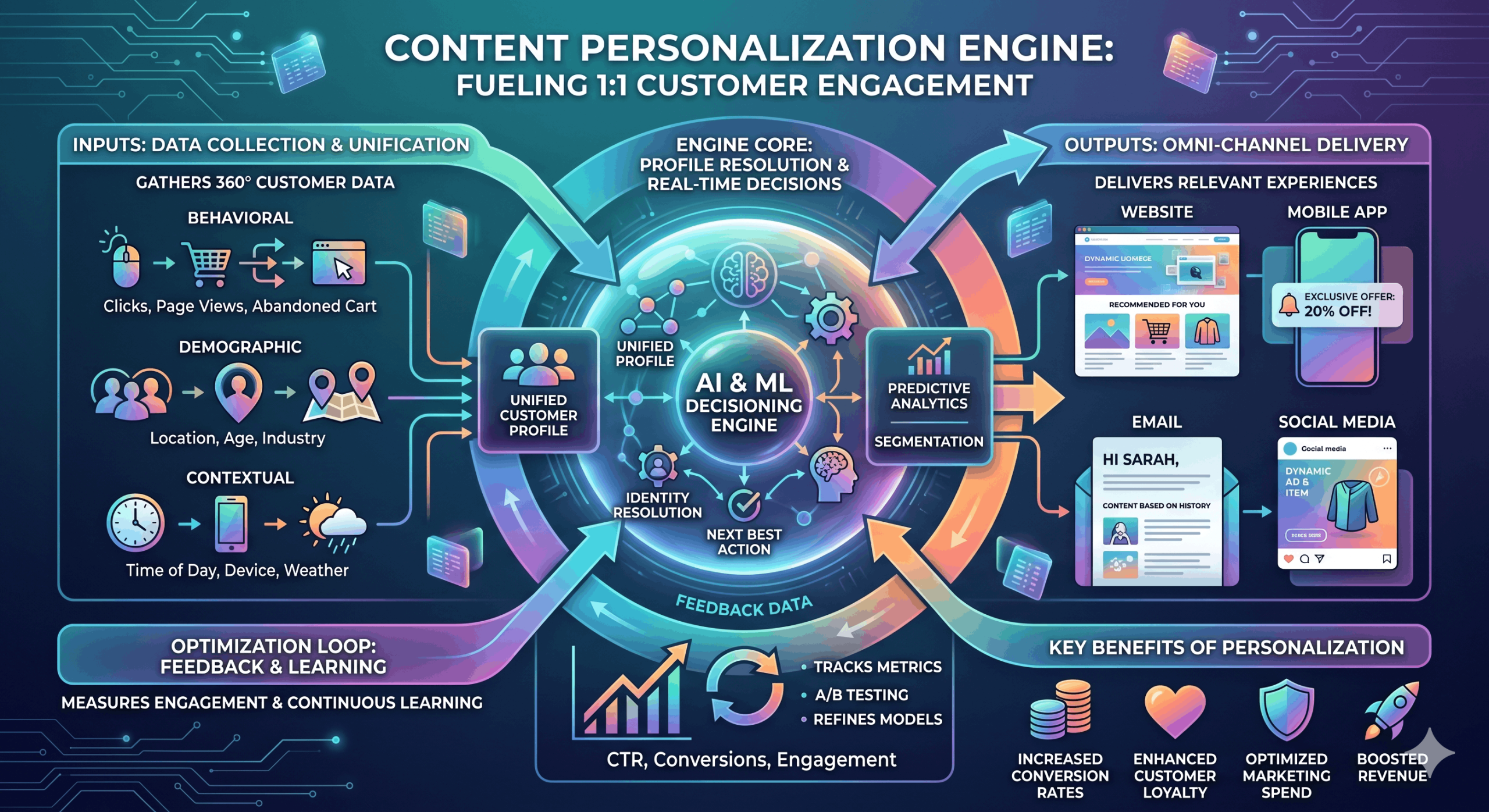
A Content Personalization Engine is a technology system that dynamically delivers personalized content based on customer behavior, preferences, context, and real-time interactions.
Instead of showing the same content to every user, the engine determines:
- What content should be displayed
- Which products should be promoted
- What messaging is most relevant
- Which channels should deliver the experience
This personalization can occur across multiple customer touchpoints simultaneously.
Understanding Omnichannel Commerce
Omnichannel commerce refers to creating a connected customer experience across all channels and touchpoints.
Customers may:
- Discover products on social media
- Browse on mobile devices
- Receive personalized emails
- Visit physical stores
- Complete purchases on desktop websites
Modern consumers expect continuity throughout this journey.
For example:
- Products viewed on mobile should influence website recommendations
- In-store purchases should affect future email personalization
- Search behavior should shape app experiences
Omnichannel commerce focuses on making these interactions seamless.
Why Traditional Personalization Approaches Fall Short
Many businesses still rely on disconnected personalization strategies.
Examples include:
- Separate personalization systems for email and websites
- Static audience segmentation
- Channel-specific customer data silos
This creates several problems:
- Inconsistent messaging
- Repetitive recommendations
- Fragmented customer journeys
- Delayed personalization
Traditional systems struggle to adapt to the complexity of modern customer behavior.
The Growing Importance of Unified Customer Experiences
Customer expectations have changed significantly in recent years.
Modern shoppers expect:
- Real-time personalization
- Seamless cross-device experiences
- Consistent messaging
- Faster product discovery
- Relevant recommendations across channels
Businesses that fail to meet these expectations risk losing engagement and loyalty.
This is where a Content Personalization Engine becomes essential.
How Content Personalization Engines Support Omnichannel Commerce
Unified Customer Profiles
Content personalization engines integrate customer data from multiple sources to create centralized customer profiles.
This includes:
- Browsing behavior
- Purchase history
- Search activity
- Email engagement
- Mobile app interactions
- In-store purchases
Unified profiles allow businesses to personalize experiences consistently across channels.
Real-Time Personalization
Modern personalization engines process customer interactions in real time.
For example:
- A customer viewing products on mobile instantly receives related recommendations on desktop
- Search behavior influences homepage content dynamically
- Cart activity triggers personalized email messaging
Real-time responsiveness improves relevance and engagement.
Cross-Channel Content Orchestration
Content personalization engines coordinate messaging across channels such as:
- Websites
- Mobile apps
- Email campaigns
- Paid advertising
- Customer support interfaces
This ensures continuity throughout the customer journey.
AI-Driven Decision-Making
Artificial intelligence helps determine:
- Which products to recommend
- Which content to prioritize
- When to engage customers
- Which channels are most effective
Machine learning models continuously optimize personalization strategies.
Key Use Cases in Omnichannel Commerce
Personalized Product Recommendations
Recommendations adapt based on customer behavior across channels.
For example:
- Website browsing influences app recommendations
- Purchase history shapes email suggestions
Dynamic Website Experiences
Homepage layouts, banners, and promotions change according to customer preferences and behavior.
Personalized Search Experiences
Search results adapt based on:
- Past behavior
- Product affinity
- Real-time interactions
This improves product discovery.
Contextual Email Personalization
Email content reflects customer activity across websites, apps, and stores.
Loyalty and Retention Campaigns
Personalized loyalty experiences strengthen long-term customer relationships.
Benefits of Content Personalization Engines in Omnichannel Commerce
Improved Customer Experience
Unified personalization creates smoother and more intuitive interactions.
Higher Engagement
Relevant content increases customer interaction across channels.
Better Conversion Rates
Personalized experiences improve purchase likelihood.
Increased Customer Retention
Consistent personalization strengthens loyalty.
More Efficient Marketing
Centralized personalization reduces duplication and improves campaign effectiveness.
The Role of Real-Time Data
Real-time customer behavior is critical for omnichannel personalization.
Content personalization engines analyze signals such as:
- Live browsing activity
- Search queries
- Product interactions
- Cart behavior
This allows businesses to respond instantly to customer intent.
Without real-time responsiveness, personalization quickly becomes outdated.
AI and Machine Learning in Content Personalization
Artificial intelligence has become central to modern personalization engines.
AI helps businesses:
- Predict customer intent
- Automate personalization decisions
- Optimize content dynamically
- Improve recommendation accuracy
Machine learning models continuously improve as more customer interactions occur.
This enables scalable personalization across large customer bases.
Challenges Businesses Face
Data Fragmentation
Disconnected systems reduce personalization accuracy.
Integration Complexity
Connecting multiple platforms and channels can be technically challenging.
Content Scalability
Omnichannel personalization requires flexible and adaptable content structures.
Privacy and Compliance
Businesses must use customer data responsibly and transparently.
Addressing these challenges is essential for long-term success.
Best Practices for Omnichannel Personalization
Build a Unified Data Infrastructure
Connected customer data improves personalization consistency.
Prioritize Real-Time Capabilities
Timely engagement is critical for modern customer experiences.
Align Teams Across Channels
Marketing, ecommerce, and customer experience teams should collaborate closely.
Use AI Strategically
AI should support meaningful customer experiences, not excessive automation.
Continuously Optimize Journeys
Customer behavior evolves constantly, requiring ongoing experimentation and refinement.
The Future of Content Personalization in Commerce
Content personalization engines will continue evolving alongside advancements in AI and customer experience technologies.
Future trends include:
- Predictive omnichannel personalization
- AI-generated dynamic content
- Voice and visual personalization experiences
- Hyper-personalized customer journeys
- Real-time commerce orchestration
These innovations will make omnichannel experiences even more seamless and intelligent.
Conclusion
Content personalization engines are becoming essential for businesses operating in an omnichannel commerce environment. By unifying customer data, enabling real-time personalization, and coordinating experiences across channels, these systems help brands deliver more connected and relevant customer journeys.
As customer expectations continue to rise, businesses that invest in intelligent and scalable personalization strategies will be better positioned to improve engagement, increase conversions, strengthen loyalty, and drive long-term growth in the future of digital commerce.