

Key Takeaways
- A selectable LED flood light can help one fixture serve many outdoor needs.
- Wattage, color temperature, beam aim, and mounting style should be planned before installation.
- Good flood lighting supports safety, visibility, comfort, and cleaner building design.
- LED outdoor lighting can reduce waste when it is matched to the right space and control plan.
- Buyers should compare brightness, weather rating, voltage, warranty, and long-term care before choosing a fixture.
Introduction
Outdoor spaces need light that does more than turn darkness into brightness.
A driveway needs safe movement. A sign needs clear focus. A building face needs clean style. A parking area needs wide coverage. A backyard needs comfort without harsh glare.
That is why smart flood light planning matters.
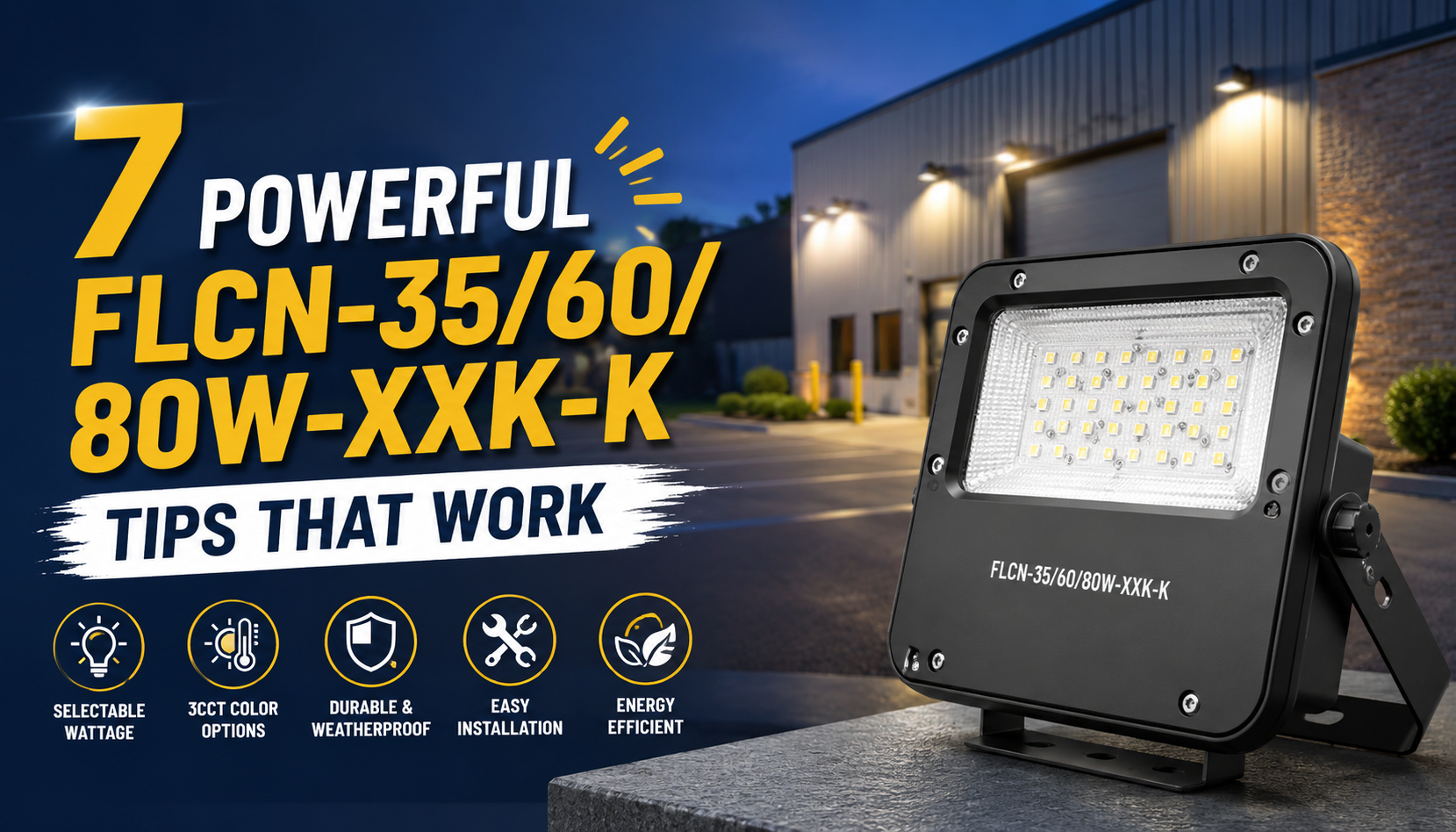
The FLCN-35/60/80W-XXK-K is a selectable LED flood light made for people who need flexible outdoor lighting. It can support different brightness levels, different color needs, and different mounting plans in one simple fixture.
This guide explains how this type of premier led lighting fits into real outdoor projects. It covers wattage, color temperature, mounting, controls, safety, energy use, and buying choices.
It also explains how property owners, contractors, facility teams, and homeowners can compare LED flood lights with older regular lighting. The goal is simple. The reader should understand what matters before buying, installing, or upgrading an outdoor flood light.
Why FLCN-35/60/80W-XXK-K Matters Outdoors
Outdoor lighting has one main job. It helps people see clearly and move safely.
However, the best outdoor lighting does more than that. It also protects property, improves curb appeal, supports night work, and makes a space feel planned. A flood light can guide a driver into a parking lot, help a worker unload a truck, brighten a sign, or make a walkway feel safer after sunset.
The FLCN-35/60/80W-XXK-K matters because it is not locked into one power level. A fixed light may be too dim for one area and too bright for another. A selectable flood light gives the installer more room to match the fixture to the space.
This matters in both small and large projects. A house may need lower brightness near a garden. A small warehouse may need stronger light near a loading door. A shop may need clear light near the front sign. A facility manager may want one product type that can serve several areas.
That kind of flexibility can reduce guesswork. It can also help a buyer avoid buying too many different models for one job. When one fixture can cover several brightness needs, planning becomes simpler.
Outdoor flood lights are often used in places such as:
- Driveways and side yards
- Storefronts and signs
- Parking lots and garages
- Walkways and gates
- Building walls and facades
- Storage yards and service areas
- Courts, yards, and recreation spaces
Each space needs a slightly different lighting result. A sign needs focus. A parking area needs spread. A pathway needs enough light for safe steps. A building face may need softer light that looks clean, not harsh.
This is where good design makes a big difference. A bright light placed in the wrong way can create glare. It can shine into windows, bother neighbors, or make shadows deeper. A weaker light placed well may work better than a stronger light placed badly.
Good outdoor lighting is not only about watts. It is about useful light.
A useful light reaches the right area, supports the task, and avoids waste. That is why beam aim, mounting height, color temperature, and control choice all matter.
Many buyers search for premier led lights because they want quality and dependability. However, quality is not only about a brand name. It is also about choosing the right fixture type for the job. A good flood light should match the purpose of the space, the size of the area, the mounting point, and the amount of nightly use.
For architecture, lighting can shape how a building feels at night. A reader studying best lighting tips for architecture to enhance your space design can see how light supports shape, depth, and mood. A flood light may highlight stone, brick, signs, trees, or entry points when used carefully.
However, outdoor lighting should never be treated as decoration only. It also affects safety. Dark corners can make people feel unsure. Overly bright areas can cause eye strain. Uneven light can create confusing shadows. The right balance helps the space look better and work better.
How selectable wattage and color help
Selectable wattage means the fixture can be set to different power levels. In this case, the light can work at 35W, 60W, or 80W. That gives the installer options.
A lower setting may fit a smaller yard, a walkway, or a sign that does not need heavy brightness. A middle setting may work for a wider wall, a shop front, or a medium service area. A higher setting may fit larger open spaces, brighter security needs, or places where stronger visibility is needed.
This does not mean the highest setting is always best.
Too much light can waste energy and make a space less comfortable. It can also create glare, which makes it harder for the eyes to adjust. A thoughtful installer starts with the real task and then picks the setting that supports that task.
Color temperature is another key choice. Color temperature is measured in Kelvin. Lower numbers look warmer and more yellow. Higher numbers look cooler and more white or blue.
A 3000K setting can feel warm and calm. It may work well near homes, patios, building accents, and outdoor areas where comfort matters. A 4000K setting often feels balanced and neutral. It may fit general paths, entrances, and mixed-use spaces. A 5000K setting can feel crisp and bright. It may support security, task areas, parking zones, and work locations.
This makes a 3CCT selectable fixture useful. It lets the installer choose the color tone during setup. If the project changes, the fixture may still stay useful.
For example, a business may first use a light to highlight a sign. Later, the same area may need brighter, cooler security lighting. A selectable fixture gives more room to adjust without replacing the whole unit.
This idea also supports premier lighting and controls. A lighting plan should include both the fixture and the way it is used. Timers, photocells, motion sensors, and clear switching plans can help reduce waste. They can also make sure the light works when people need it most.
A flood light that runs all night at full power may not always be the best choice. In some places, a lower setting with a sensor may work better. In other places, steady dusk-to-dawn lighting may be needed. The best answer depends on the site.
This is why lighting should be planned as a system. The fixture, mounting point, control method, and area layout should work together.
Smart Outdoor Planning for Safety and Comfort
Outdoor lighting should make a space easier to use. It should not create new problems.
A strong flood light can help people find doors, walk safely, park clearly, and see signs. However, poor planning can lead to glare, wasted energy, uneven brightness, or light spilling into places where it does not belong.
The first step is to define the main purpose.
Some spaces need safety lighting. These include doors, stairs, loading areas, gates, ramps, and paths. Other spaces need security lighting. These may include building corners, fenced yards, parking areas, and storage spaces. Some places need accent lighting. These may include facades, trees, signs, and landscape features.
A single property may need all three.
For example, a small store may need a light near the customer entrance, another light for a sign, and another light for the rear service door. Each light may need a different wattage, color tone, and aim. If all lights are set the same way, the result may look uneven or harsh.
Comfort also matters. People often think outdoor lighting should be very bright. However, the eyes do not only need brightness. They need balance.
A very bright spot next to a dark area can make the dark area feel even darker. A soft, even spread can feel safer and more natural. This is especially important near homes, hotels, restaurants, small offices, and public walkways.
Light direction is also important. A knuckle mount can help aim the fixture more carefully. The installer can angle the light toward the needed area instead of letting it spill everywhere. This can improve visibility and reduce glare.
In a real project, a contractor may stand in the space at night and look from different angles. The view from the walkway may be different from the view from the road. The view from a window may be different from the view near a gate. This kind of check helps catch problems before the job is finished.
Weather resistance is another major part of outdoor lighting. A flood light must face rain, dust, wind, heat, and cold. An outdoor-rated fixture with a strong housing helps support longer service in hard conditions. Aluminum housing, sealed construction, and a wet-location rating can all matter in daily use.
Still, even a strong fixture needs good installation. Wiring should be safe. Mounting should be firm. The light should not sit where water collects. The installer should follow local rules, product instructions, and proper electrical practices. A qualified professional is often the safer choice for hardwired outdoor fixtures.
Good planning also includes maintenance access. A light mounted too high or behind a difficult barrier may be hard to check later. A fixture that can be reached safely is easier to inspect, clean, and adjust.
Many buyers also compare outdoor LED lighting with older lighting. The article led vs regular is a useful internal topic because buyers often ask about power use, lifespan, heat, and replacement needs. LED lighting is often chosen because it can provide strong light with better energy use than many older options.
However, LED success depends on correct use. A poor LED layout can still waste light. A smart layout can improve comfort and lower operating waste.
Matching light to real places
A good lighting plan begins with the place itself.
A driveway does not need the same layout as a parking lot. A tiny home does not need the same light level as a warehouse. A restaurant patio does not need the same color tone as a storage yard.
For a home driveway, the goal may be simple. People need to walk from the car to the door without tripping. A lower or middle wattage setting may work well, especially when the light is aimed toward the drive and away from windows.
For a building facade, the goal may be style. The light may need to wash across brick, stone, or siding. A warmer 3000K look can feel more welcoming. A careful angle can show texture without creating harsh shadows.
For a parking lot edge, the goal may be safety and clear sight. A stronger setting may be needed, depending on the size of the area. However, the light should still be aimed well so it does not bother drivers or nearby homes.
For signage, the goal is readable attention. The sign should stand out, but it should not look washed out. The color temperature should also match the brand feel. A warm light may suit a cozy shop. A neutral or cool light may suit a service business, warehouse, or modern building.
For tiny homes and compact outdoor spaces, less can often be more. The article types of permanent outdoor lighting for tiny homes can support readers who need lighting that works in small places without feeling too strong. In small spaces, glare shows up quickly, so careful aiming matters.
For commercial spaces, the needs can be more complex. A facility may need lights for workers, visitors, vehicles, signs, loading zones, and security cameras. A buyer researching commercial led lights your complete efficiency guide may want to compare efficiency, maintenance, brightness, and control choices before making a larger purchase.
This is where premier lighting & hardware becomes important. Hardware is not a side detail. Brackets, mounts, junction boxes, poles, and wiring paths all affect the final result. A strong fixture with weak mounting can fail the project. A good mount with poor aiming can still waste light.
The best outdoor projects also consider future changes. A business may expand parking. A home may add a gate. A sign may move. A storage area may become a work area. Selectable lighting gives the owner more freedom when the space changes.
This is one reason many installers like flexible products. They can solve more field problems with one fixture type. When the final light level is not clear until installation, selectable wattage and color can help.
Buying and Installing LED Flood Lights with Confidence
A good buying decision starts with clear questions.
The buyer should ask where the light will go, what it must light, how bright the area should be, and how often the fixture will run. These questions sound simple, but they prevent many common mistakes.
A buyer should also look at the main product details. For a selectable LED flood light, the important details include wattage options, lumen output, color temperature choices, voltage range, mounting style, weather rating, housing material, life rating, and warranty.
Brightness should be judged by lumens, not only watts. Watts show energy use. Lumens show light output. A modern LED can produce more useful light per watt than many older regular lights. This is why a lower-watt LED may replace a higher-watt older fixture in some projects.
Color rendering also matters. CRI, or color rendering index, explains how naturally colors appear under the light. Outdoor security spaces may not need museum-level color quality. However, signs, entrances, patios, and architectural features can look better when color is clear enough.
Voltage is another buying detail. Many commercial and residential projects use different electrical systems. A wide voltage range can make a fixture more flexible for different sites. However, electrical matching should always be confirmed by a trained installer.
Mounting style should match the surface. A knuckle mount can work for adjustable aiming on poles, walls, ground mounts, or boxes, depending on the project. The goal is to hold the light securely and point it accurately.
Weather rating should also match the setting. Outdoor fixtures need protection against dust and water. An IP65 style rating means the fixture is made for outdoor conditions, but it should still be installed correctly. Water should not sit inside connection points. The fixture should be sealed and mounted according to instructions.
The buyer should also consider whether the light is dimmable. If dimming is required, the fixture must support it. If a fixture is not dimmable, the lighting plan should use wattage selection, control timing, or fixture placement instead.
This is an important point. Not every LED fixture does every job. A premier light works best when its real features match the real need.
Another key buying factor is total cost. The cheapest fixture is not always the least expensive over time. A weak product may need more service, more replacement, or more adjustment. A better fixture may cost more at first but save time and effort later.
For businesses, fewer replacements can matter a lot. A light over a loading area may require a lift to service. A parking lot light may affect safety. A sign light may affect customer attention. In these cases, long service life can have real value.
For homes, value may come from comfort, safety, and lower upkeep. A light that works each night without constant bulb changes can make daily life easier.
Buyers should also think about the look of the fixture. Outdoor lighting is visible during the day. A bronze finish or clean housing can blend better with many buildings. A fixture should not only work well at night. It should also look acceptable when the sun is up.
Maintenance controls and long term value
LED flood lights need less routine care than many older lighting types, but they are not care-free.
Dust, dirt, leaves, insects, and weather can affect how a fixture looks and performs. A simple visual check can help spot loose mounting, blocked lenses, water issues, or changed aim. Cleaning should follow product guidance and safe electrical practice.
Controls can also add value. A timer can turn lights on and off at planned times. A photocell can react to daylight. A motion sensor can bring light when movement is present. A switch can give manual control.
The right control depends on the space.
A sign light may need steady hours. A driveway light may work well with motion. A parking area may need dusk-to-dawn lighting. A loading area may need control tied to work shifts.
Premier lighting and controls are strongest when they match daily habits. A control that is too complex may be ignored. A simple control that fits the routine can save energy and improve safety.
Maintenance also includes checking light aim. Outdoor spaces change over time. Trees grow. Signs move. New fences appear. A parked vehicle may block part of the beam. A light that worked last year may need a small adjustment this year.
In addition, owners should avoid mixing too many color temperatures in one view. A building with warm, neutral, and cool lights all shining together can look messy. A planned mix may work, but an accidental mix often feels uneven.
For premier lighting & production, visual consistency can be especially important. Events, outdoor displays, business fronts, and staged spaces may need lighting that looks clean on camera and in person. A selectable fixture can help crews tune the color to better match the setting.
Long-term value also comes from buying for the right use case. A flood light meant for one wall should not be expected to light a huge lot by itself. Several lower-aimed fixtures may work better than one very bright fixture. The goal is even, useful coverage.
Buyers should also keep documents, model numbers, and settings recorded. If a property uses several fixtures, a simple note can help later. The note may list each fixture location, wattage setting, color setting, install date, and control method. This makes future service faster.
A clear record is useful for homes, businesses, contractors, and facility teams. It also helps avoid confusion when one light needs replacement or adjustment.
Common mistakes buyers should avoid
A common mistake is choosing a flood light only by wattage. Wattage tells how much power the fixture uses, but it does not tell the whole lighting story. The buyer should also look at lumens, aim, color temperature, mounting height, and the size of the area.
Another mistake is placing the light too low or too close to the target. This can create a bright hot spot and leave the rest of the area dark. Better placement can spread the light more evenly and make the space easier to see.
Some buyers also ignore neighbors and nearby windows. Outdoor light should help the property without becoming a problem for others. Careful aiming, the right wattage setting, and a shielded location can reduce spill light.
A final mistake is forgetting about controls. A good fixture left on at the wrong time can waste power. A simple timer, photocell, or motion plan can make the system easier to manage.
FAQs
What is FLCN-35/60/80W-XXK-K used for
FLCN-35/60/80W-XXK-K is used for outdoor flood lighting. It can support places that need strong, directed light, such as driveways, building walls, signs, parking areas, walkways, service yards, and security zones.
Its selectable wattage makes it helpful when the exact brightness need may change by location. Its color choices can also help match the space. Warmer light may fit architecture and homes. Cooler light may fit task and security areas.
Why does selectable wattage matter in an LED flood light
Selectable wattage matters because not every space needs the same brightness.
A small path may not need full power. A larger open area may need more light. A fixture with 35W, 60W, and 80W settings gives the installer room to choose a better match.
This can reduce waste and improve comfort. It can also help contractors carry fewer fixture types for different jobs.
What color temperature is best for outdoor lighting
The best color temperature depends on the job.
Warm 3000K light can feel softer and more welcoming. Neutral 4000K light can work well for general outdoor use. Cool 5000K light can feel crisp and clear for security, parking, and work areas.
A 3CCT selectable fixture gives more choice. That helps the owner match the light to the building, purpose, and surrounding area.
How does LED compare with regular outdoor lighting
LED lighting often uses energy more efficiently than many older regular lighting types. It can also last longer and need fewer replacements when chosen and installed correctly.
However, the result still depends on good planning. A high-quality LED fixture should be aimed well, mounted securely, matched to the right control, and used at the right brightness level.
This is why the question of led vs regular should include energy, comfort, maintenance, heat, cost, and the real lighting goal.
Conclusion
Outdoor lighting works best when it is planned with care.
The right flood light can make a dark space safer, cleaner, and easier to use. It can help people find doors, read signs, park vehicles, walk paths, and enjoy outdoor areas after sunset. It can also improve how a building looks at night.
FLCN-35/60/80W-XXK-K gives buyers a flexible option because it supports selectable wattage and selectable color temperature. This means one fixture can serve different outdoor needs when it is installed with the right plan.
However, the fixture is only one part of the result. The final lighting quality also depends on mounting height, beam aim, control choice, weather protection, wiring safety, and the real purpose of the space.
A homeowner may need comfort and safety near a driveway. A shop may need sign visibility. A warehouse may need clear light near a service door. A property manager may need dependable light for parking and perimeter areas. Each case needs a slightly different choice.
This is why good lighting planning should begin with questions, not guesses.
What area needs light? How much brightness is useful? Should the tone feel warm, neutral, or crisp? Will the light run all night or only when motion is present? Is the mounting point strong and safe? Can the fixture be reached for future care?
When these questions are answered, outdoor lighting becomes easier to choose.
Premier led lights, premier led lighting, premier lighting & hardware, and premier lighting and controls all point toward the same idea. Better lighting comes from matching the right product with the right plan.
The best outdoor flood light is not always the strongest one. It is the one that makes the space safer, clearer, and more useful without wasting light.
For that reason, buyers should think beyond price and brightness alone. They should compare life rating, weather rating, color options, mounting style, controls, and long-term value.
A well-chosen LED flood light can serve a home, business, or outdoor project for many years. With careful planning, it can support safety, design, and daily use at the same time.























Leave a Reply