

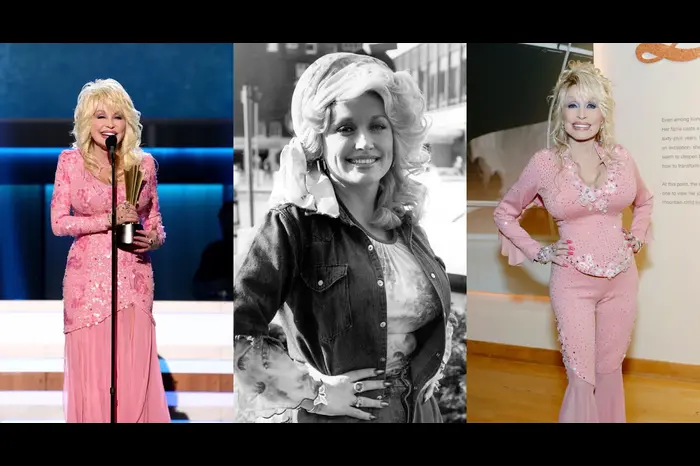
Few figures in cutting-edge culture have coordinated to touch as distinctive hearts, cross as diverse boundaries, and drive forward an inheritance as Dolly Parton. Her story is one woven from threads of hardship and acknowledgment, sewn together with songs that have resounded over decades. It is a story not about music, but about quality, generosity, character, and the calm control of remaining true to oneself click here.
Roots in the Smoky Mountains
Dolly Rebecca Parton was born on January 19, 1946, in a one-room cabin in Sevier County, settled in the foothills of the Great Smoky Mountains. She was the fourth of twelve children in a family that struggled financially but was well off in spirit, especially in art and music.
Her father, Robert Lee Parton, worked as an agriculturalist and laborer, even though her mother, Avie Lee, had a very strong passion and stories. It was from her mother that Dolly got both her melodic ear and her storytelling. Tunes were not in a common-sense imperative in the Parton household—they were memory, history, and energized expression.
Growing up in a crippling environment left a lasting impression on Dolly. She has, as regularly as possible, spoken candidly about the challenges of her childhood, not with sharpness but with appreciation for the lessons it taught her. These early experiences, a brief time later, moved a few of her most solid tunes, including Coat of Diverse Colors, a personal reflection on revere, regard, and resilience.
A Voice That Couldn’t Be Silenced
From an early age, Dolly’s capacity was unmistakable. By the time she was ten, she was performing on neighborhood radio and TV programs in Knoxville. Her voice carried an unmistakable clarity and excited significance that set her apart as a child without question.
After graduating from high school, Dolly made a striking choice that would characterize her life: she moved to Nashville, the heart of country music. It was a bounce of certainty, one that never-ending longing specialists have taken, but few with such affirmation and vision.
In Nashville, Dolly began with triumph as a lyricist. Her compositions were recorded by skilled masters, including Charles Phillips, whose recording of “Put It Off Until Tomorrow” brought Dolly’s composing abilities into the spotlight.
Yet Dolly was not content to remain behind the scenes. She required her voice—her story—to be tuned in directly.
Rising to Stardom
Dolly’s colossal break came when she joined Guardian Wagoner on his TV show, “The Concierge Wagoner Show”. Their association was introduced at a national gathering, allowing her to showcase her vocal and songwriting abilities.
Though their collaboration was valuable, it was not without weight. Dolly, in the long run, made the troublesome choice to pursue a solo career, a move that required both coarseness and conviction. She broadly expressed her appreciation and farewell to Wagoner through the tune I Will Ceaselessly Cherish You, a composition that would, a short time later, become one of the most recognizable songs in music history.
As a solo gifted pro, Dolly’s career took off. She blended standard country roots with a broader, more open sound that appealed to a wide range of spectators. Tunes like Jolene and 9 to 5 showcased her versatility, not as a master, but as a storyteller who can capture longing, quality, humor, and social commentary.
Crossing Boundaries
What set Dolly apart from her accessories was her ability to rise above social boundaries. By showing disdain for the reality firmly established in country music, she has incorporated elements of pop, bluegrass, and gospel—her approach to looking beyond the genre expanded her reach, removing her from traditional country audiences.
The tune “9 to 5,” composed for the film of the same title, became abecame a song of commitment for working women, reflecting broader societal shifts and Dolly’s sharp awareness of everyday struggles. Her music consistently carried subtle messages about independence, communication, and self-worth, conveyed in a way that felt personal rather than political.
Her cross-breed triumph brought her worldwide recognition, turning her into not just a country star but an around-the-world icon.
Beyond Music: Film and Exchange Ventures
Dolly’s capacities intensified, removed from past music. She presented herself as an able performer, a gifted specialist, with roles in development pictures such as 9 to 5 and Steel Magnolias. Her shows were marked by warmth, humor, and authenticity, charming crowds who might not have been familiar with her music.
At the same time, Dolly outlined a soil-shattering commerce understanding. One of her most cherished dreams was the creation of Dollywood theme park, found near her hometown. More than a sensible imperative, Dollywood serves as a tribute to Appalachian culture and provides livelihoods and economic benefits.
This increment reflected Dolly’s deep connection to her roots and her commitment to giving back to the community that molded her.
For more information check now.
Philanthropy and Compassion
If Dolly Parton’s melodic achievements are basic, her charitable work is moreover unprecedented. She has consistently used her triumph to raise others, often in quiet, simple ways.
One of her most striking works is the Inventive Capacity Library, a program that provides free books to children from birth through the start of school. Founded in 1995, it has scattered millions of books worldwide, making it a cherished destination for eager learners. Her commitment to instruction stems from her experience. Dolly’s father, who was unable to scrutinize or sort in, taught her to regard capability and ensure that others would have opportunities he did not.
In development and instruction endeavors, Dolly has contributed to improving healthcare and community development. Her blessings have routinely been given without appearing to be up, reflecting a sense of goodness that seeks help rather than self-sufficiency.
Reinvention and Longevity
One of the most striking aspects of Dolly Parton’s career is its longevity. In an industry known for its brief plans, she has remained basic for more than five decades. This persistent offer is not accidental—it is the result of careful consideration combined with striking authenticity.
Dolly has gotten a handle on unused stages and large crowds, collaborating with pros over time and classes. At the same time, she has remained true to goodness to her unmistakable style, both musically and personally.
Her image—characterized by colossal hair, shining clothing, and an eager sense of glamour—has gained prominence. In any case, she has consistently been clear about its built nature, frequently commenting that it takes effort to see “this cheap.” This self-awareness has charmed her fans, allowing her to balance her larger-than-life persona with down-to-earth relatability.
Cultural Impact
Dolly Parton’s impact extends beyond imperativeness. She has wrapped up a picture of mindfulness, quality, and authenticity in a world as routinely as conceivable stamped by division and pretense. Her capacity to interface with people from separate establishments is perhaps her most unmistakable quality. Whether through her music, interviews, or charitable work, she communicates a sense of empathy and understanding that resonates deeply.
Songs like “Jolene” see at defenselessness and shortcoming, while “Coat of Diverse Colors” celebrates cherish and respectability in the face of hardship. These subjects are broad, spanning social and generational boundaries.
Moreover, Dolly’s openness about her life—her fights, her choices, her values—has made a sense of recognition with her community. She is not sensibly recognized; she is believed.
Personal Life and Values
Despite her notoriety, Dolly has kept up an acceptably private personal life. She hitched Carl Dignitary in 1966, and their relationship has remained, to a great degree, out of the public eye. This alternation between a public career and a private life reflects her grounded approach to fame.
Dolly has routinely talked about her certainty, her work ethic, and her conviction in treating others with respect. These values have guided her choices, both professionally and otherwise. She has also investigated complex issues of significance, choosing to center on common humanity rather than vision. In interviews, she ceaselessly emphasizes recognition, understanding, and the centrality of tuning in to others.
Challenges and Criticism
Like any public figure, Dolly Parton has faced criticism and challenges throughout her career. Early on, a few faultfinders rejected her as not commercial or put down her songwriting, focusing on her appearance or, possibly, her talent.
However, Dolly responded not with confrontation, but with assertion. She continued to do crucial work, allowing her achievements to speak for themselves. Over time, in reality, her faultfinders came to recognize the significance of her commitments. These days, she is broadly regarded as one of the most satisfied and respected talented laborers in music history.
Legacy and Influence
Dolly Parton’s inheritance is multifaceted. She is a melodic pioneer, a compelling commerce visionary, a given support, and a social figure. Her impact is evident in the countless experts whose work she has inspired.
More significantly, her estate is characterized by the lives she has touched—through her tunes, her stories, and her charity. The driving ubiquity of “I Will Ceaselessly Revere You,” a song recorded a short time later by Whitney Houston, exposed Dolly’s songwriting to a wider audience and underscored the undying quality of her work. In the meantime, programs like the Inventive Capacity Library continue to make a lasting impact, ensuring that its impact will be felt for years to come.
The Heart Behind the Music
At its center, Dolly Parton’s story is, by and large, organized. Her music speaks to wide emotions—love, event, acknowledgment, and perseverance—while her life epitomizes the control of vulnerability and authenticity.
She has never disregarded where she came from, nor has she allowed triumph to remove her from others. In addition, she has used her organization platform to build bridges, unite communities, and celebrate the wealth of human experience. In a world that habitually values picture over substance, Dolly stands as an exemplary model that reasonable goodness lies in dependability, magnanimity, and the quality to remain oneself.
Conclusion
“Heartstrings and Harmonies” is more than an untainted depiction of Dolly Parton’s career—it is a reflection of the center of who she is. Her travel from a small cabin in the Smoky Mountains to distant coming to notoriety is a testament to capacity, confirmation, and a determined soul. Through her music, she has given voice to boundless presumptions. Through her works, she has laid out the basic effects of generosity and empathy. And through her persistent closeness, she has shown that realness is not a hindrance but a strength.
Dolly Parton’s story is not just unforgettable—it is advancing. With each tune, each increment, and each act of generosity, she continues to shape a bequest that rises over time. In conclusion, what makes Dolly truly extraordinary is not what she has accomplished, but how she has accomplished it: with heart, with understanding, and with a deep and abiding reverence for the world around her.


















Leave a Reply