Someone’s driving down the same road they take every day. They’re listening to the radio, thinking about work or what’s for dinner, and barely paying attention to what’s around them. Your automotive signage is right there, with plenty of vehicles they’d probably be interested in. But if your sign doesn’t catch their attention when they look over, they keep driving.
That’s the reality for dealerships today. You can have great inventory and a sales team that knows what it’s doing, but that doesn’t help much if people don’t notice your dealership in the first place. With so many dealerships competing for attention, it’s easy to get overlooked.
Most dealership owners spend money on digital ads, social media, and website updates, and those things matter. But the sign outside the dealership often gets forgotten. You see it every day, so eventually you stop noticing it. Your customers don’t have that same familiarity.
That’s where automotive signage can make a real difference. It’s not just there to put your dealership’s name on the building. Done right, it can help people notice you, know where you are, and remember you later. Let’s look at why it matters and what you can do with it.
Why Automotive Signage Matters More Than You’d Think
Here’s something a lot of dealership owners miss: your signage is doing sales work before your sales team ever says a word. It’s the first impression, the silent pitch, the thing that either pulls a car off the road and onto your lot or lets it drive right past.
You already know foot traffic drives sales. More people walking around your inventory means more conversations, more test drives, and more deals closed. But how do you get that traffic in the first place? A dealership that’s easy to spot, easy to read, and impossible to ignore has a real edge over the one hiding behind a faded old sign from a decade ago.
And it’s not just about being seen once. Good signage builds recognition over time. When someone sees your name and colors enough times, driving by starts to feel familiar. Familiarity builds trust, and trust is what gets someone to actually pull in instead of just noticing you exist.
Think about the last time you drove somewhere new and needed a specific service. Did you pick the business with the confusing, hard-to-read sign, or the one that looked established and easy to find? You already know the answer, because everyone does.
What Good Automotive Signage Actually Looks Like
Automotive signage isn’t just one big sign out front. It’s a whole system working together, and each piece has its own job to do.
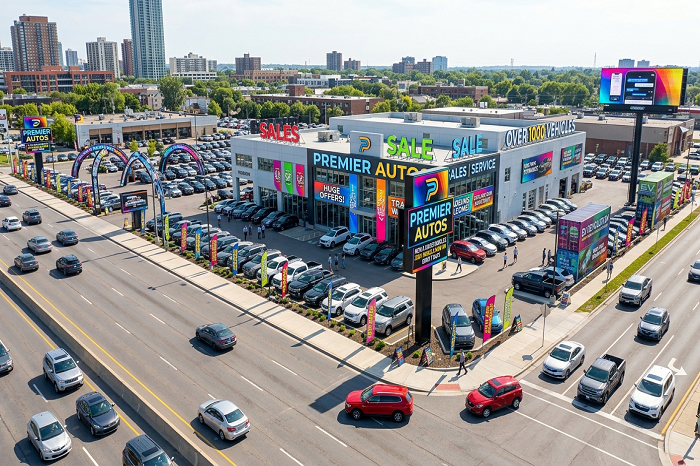
Your exterior building signage is your brand’s handshake. Illuminated channel letters, a clean logo, and consistent colors tell people who you are before they even read a word. This is what makes your dealership recognizable from a distance, day or night.
Your entrance and monument signs guide people once they’ve decided to check you out. A well-placed monument sign near the road with your name, hours, and maybe a current offer answers the questions people have before they even park the car.
Directional and lot signage keeps things moving once customers are already there. New arrivals, certified pre-owned, service entrance, financing office — clear signs mean fewer confused customers wandering around, and fewer staff members stuck giving directions instead of selling cars.
Digital displays and LED screens are where things get interesting for dealerships willing to invest a bit more. These can rotate through promotions, showcase featured vehicles, or highlight financing deals, and they update in minutes instead of taking days to reprint like a static banner would.
Practical Examples You Can Actually Use
Let’s make this less abstract. Here are a few real ways dealerships use signage to pull more attention their way:
- A roadside LED display cycling through current offers. Instead of one static message, you can rotate a lease special, a service discount, and a “new arrivals” callout throughout the day. People passing by at 8 a.m. and 5 p.m. see different messages, which means more reasons to stop.
- Bright, branded flags along the lot’s edge. They sound almost old-fashioned, but flags catch peripheral vision in a way plain signs don’t. Cars and vibrant colors moving in the wind practically scream “dealership” from blocks away.
- In-showroom digital screens showing service wait times or loyalty perks. This one isn’t about pulling people in from the street, it’s about keeping the customers you already have engaged and coming back. Someone waiting for an oil change who sees a screen showing “your car will be ready in 20 minutes” feels a lot better than someone left guessing.
Each of these does something a little different, but together, they build a dealership that feels active, current, and worth stopping for.
Getting the Basics Right
You don’t need every type of signage on day one. But a few things matter no matter your budget.
- Keep your messaging simple enough to read in under three seconds
- Stick to consistent colors and fonts across every sign you use
- Make sure your signage is visible and legible at night, not just during the day
- Update your promotional messages regularly so returning customers see something new
A sign that’s technically there but hasn’t been cleaned, updated, or lit properly in years does more harm than good. It tells people you’re not really paying attention, and that’s not the impression you want before someone’s even walked through your door.
It doesn’t have to be complicated or expensive to fix, either. Sometimes it’s as simple as swapping a burnt-out bulb, wiping down a faded panel, or finally taking down last year’s promo banner. Small fixes like these add up, and customers notice more than you’d expect.
Bringing It All Together
At the end of the day, automotive signage is one of the simplest, most cost-effective ways to get more eyes on your dealership without spending a fortune on ongoing ads. It works around the clock, doesn’t call in sick, and keeps doing its job long after your last salesperson has gone home for the night.
So take a walk outside your own dealership and look at it the way a stranger would. Would your signage stop you, or would you just keep driving?