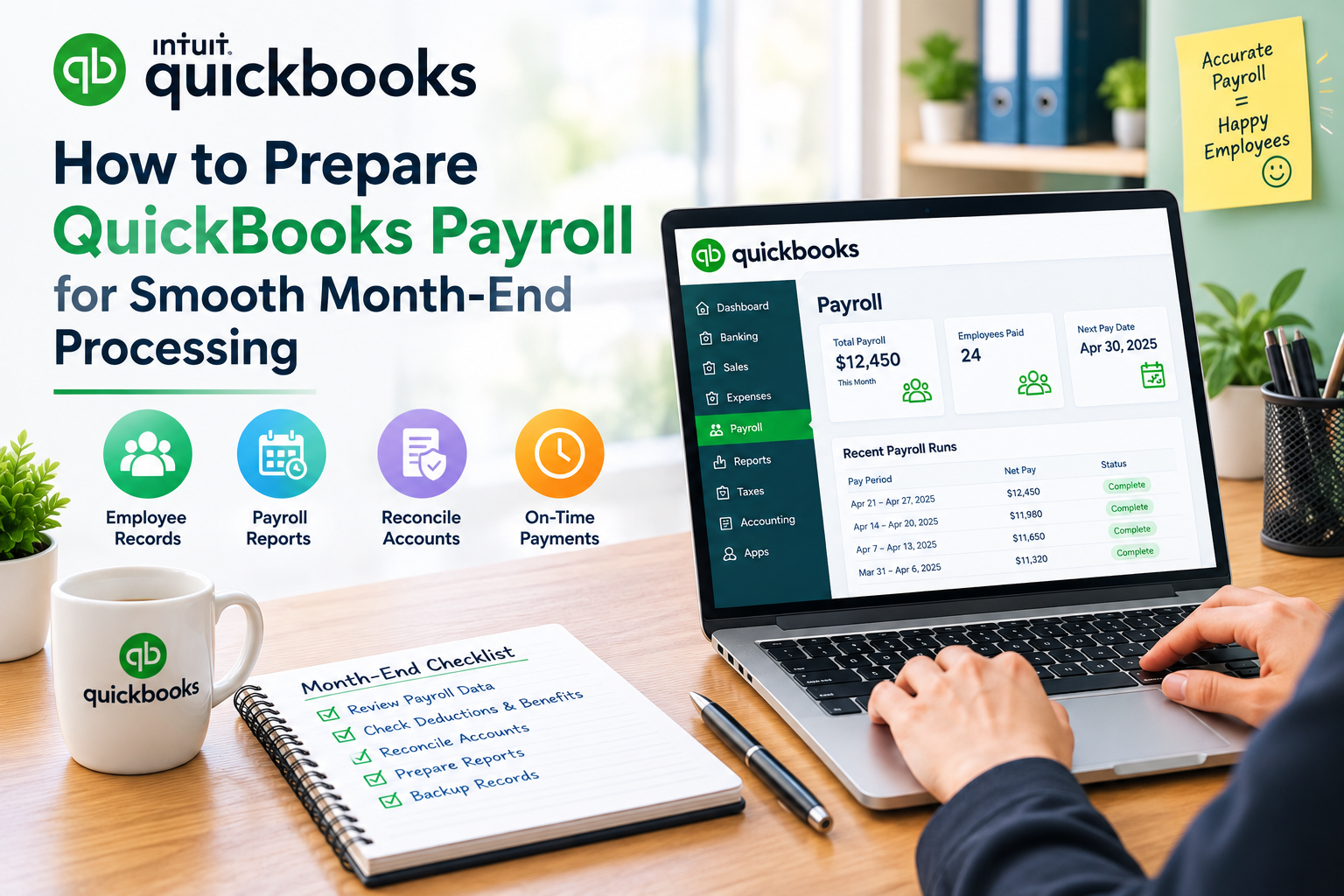
Month-end processing is an important part of maintaining accurate business records. For companies that use QuickBooks Payroll, the end of each month provides an opportunity to review employee payments, payroll expenses, deductions, liabilities, and related accounting information. However, if payroll records are incomplete or poorly organized, month-end closing can become time-consuming and difficult.
A structured payroll preparation process can make month-end activities more predictable. By reviewing employee information, checking payroll transactions, reconciling accounts, organizing documentation, and addressing problems before the month closes, businesses can reduce errors and avoid unnecessary administrative work.
QuickBooks can support many payroll and accounting activities, but businesses still need consistent procedures to ensure that information is accurate. The following strategies can help businesses prepare QuickBooks Payroll for smoother month-end processing.
1. Establish a Month-End Payroll Checklist
A month-end payroll checklist provides a clear sequence of tasks that should be completed before the accounting period is closed. Without a checklist, administrators may overlook small but important details.
A basic checklist can include:
- Reviewing employee information
- Confirming completed payroll runs
- Checking employee payments
- Reviewing deductions
- Verifying payroll liabilities
- Reviewing payroll reports
- Reconciling payroll accounts
- Saving supporting documents
- Investigating unusual transactions
- Backing up important records
The checklist should be updated as the business’s payroll requirements change.
2. Review Employee Information Before Month-End
Employee information should be accurate before month-end reports are finalized. Changes during the month can include new hires, terminations, salary adjustments, benefit changes, or changes in working arrangements.
Review employee records for:
- Pay rates
- Employment status
- Benefits
- Deductions
- Tax-related information
- Work locations
- Payroll classifications
- Direct deposit information
Reviewing these details regularly helps prevent outdated information from affecting payroll records.
3. Confirm All Payroll Runs Are Complete
Before beginning month-end reconciliation, confirm that every scheduled payroll for the month has been processed correctly.
Check whether:
- All regular payroll runs were completed
- Special payroll runs were recorded
- Bonuses or additional payments were included
- Employee payments were properly recorded
- Any payroll corrections were completed
If a payroll run is missing or incomplete, month-end financial reports may not accurately represent the company’s payroll expenses.
4. Check Payroll Subscription and Service Status
Payroll service interruptions can create problems when businesses are trying to complete month-end activities. A subscription or service issue discovered at the end of the month can delay payroll reviews and reporting.
Administrators should periodically check whether payroll services are active and functioning properly. When performing QuickBooks payroll subscription troubleshooting, businesses should review the payroll service status, account information, software configuration, and other relevant settings.
Addressing service-related problems early gives administrators more time to resolve them before month-end deadlines.
5. Review Payroll Expenses
Payroll expenses are an important part of a company’s financial records. At month-end, businesses should review payroll-related expenses and compare them with expectations or previous periods.
Look for unusual changes in:
- Employee wages
- Overtime
- Bonuses
- Employer contributions
- Benefits
- Payroll-related fees
A significant difference does not necessarily mean there is an error, but it should be investigated so that unexpected activity can be properly explained.
6. Reconcile Payroll Accounts
Reconciliation is one of the most important month-end payroll activities. It helps businesses compare payroll records with accounting information and identify discrepancies.
Administrators can review:
- Payroll bank transactions
- Employee payments
- Payroll liabilities
- Tax-related amounts
- Benefit deductions
- Employer contributions
If differences appear, investigate them before closing the month. Resolving discrepancies early prevents them from becoming more difficult to trace later.
7. Review Payroll Liabilities
Payroll liabilities should be reviewed carefully at month-end. These may include amounts associated with taxes, employee deductions, benefits, and other payroll obligations.
Administrators should verify that liability balances appear reasonable and that relevant payments have been properly recorded.
A liability review can help identify:
- Unusual balances
- Missing payments
- Duplicate entries
- Incorrect classifications
- Old outstanding amounts
Regular monitoring makes it easier to identify problems before they accumulate.
8. Compare Payroll With the Previous Month
Comparing current payroll results with the previous month can reveal unusual changes that may require additional review.
For example, administrators can compare:
- Total wages
- Number of employees
- Overtime
- Benefits
- Deductions
- Payroll taxes
- Payroll liabilities
If a major difference appears, determine whether it is related to normal business activity or an unexpected transaction.
Historical comparisons are especially useful for growing businesses because payroll expenses may change significantly as employee numbers increase.
9. Verify Employee Deductions
Employee deductions should be reviewed before month-end records are finalized. Incorrect deductions can affect both employee payments and payroll accounting records.
Review deductions related to:
- Benefits
- Retirement contributions
- Insurance
- Other authorized deductions
- Tax-related withholding
Administrators should confirm that deductions are being applied according to the company’s established payroll procedures.
10. Review Payroll Reports
Payroll reports provide a structured way to review monthly activity. Instead of manually checking individual transactions, administrators can use appropriate reports to understand the overall payroll picture.
Useful reports may provide information about:
- Employee wages
- Payroll expenses
- Payroll liabilities
- Taxes
- Deductions
- Paychecks
- Payroll summaries
Reviewing these reports at month-end can help identify missing information, unusual amounts, or transactions that require clarification.
11. Maintain Consistent Payroll Documentation
Payroll records should be supported by organized documentation. Important documents may include timesheets, payroll summaries, employee change records, benefit information, and other payroll-related materials.
A consistent folder structure can make month-end reviews easier. For example:
Payroll > 2026 > September > Month-End
Businesses can also use standardized file names so that documents are easier to locate later.
Good documentation reduces the amount of time spent searching for information during audits or financial reviews.
12. Record Payroll Adjustments Properly
Payroll adjustments may be required when businesses discover corrections, missed hours, incorrect deductions, or other discrepancies.
Every adjustment should be documented with relevant information such as:
- Date
- Reason for adjustment
- Amount
- Employee affected
- Approval information
- Supporting documentation
Avoid making unexplained changes to payroll records. Clear documentation helps maintain an understandable record of what changed and why.
13. Check for Duplicate Payroll Transactions
Duplicate transactions can distort payroll expenses and financial reports. Month-end processing is a good time to look for unusual or repeated entries.
Administrators should compare payroll records with bank transactions and payroll reports to identify potential duplicates.
If a duplicate is discovered, investigate it carefully before making corrections. Maintaining documentation for the correction can also make future reviews easier.
14. Use Practical Payroll Management Procedures
Month-end processing becomes easier when businesses follow consistent payroll procedures throughout the month. Waiting until the last day to organize payroll information can create unnecessary pressure.
Businesses can apply practical payroll management tips such as maintaining updated employee records, using payroll checklists, setting clear deadlines, reviewing payroll reports regularly, and documenting important payroll changes as they occur.
These practices reduce the amount of cleanup required at the end of the month and make payroll information easier to review.
15. Review Timesheets and Attendance Records
For businesses that pay employees based on hours worked, timesheet accuracy is particularly important. Missing or incorrect hours can affect wages, overtime, and payroll expenses.
Before month-end:
- Confirm timesheets are complete
- Check unusual hours
- Review overtime
- Verify approved time
- Investigate missing entries
A consistent approval process can help prevent inaccurate hours from entering payroll records.
16. Review Payroll Corrections From the Month
If payroll corrections were made during the month, they should be reviewed before month-end closing.
Administrators should verify that:
- The correction was properly recorded
- The affected employee information is accurate
- Related accounting entries are correct
- Supporting documentation is available
- The correction does not create another discrepancy
Reviewing corrections helps ensure that temporary payroll problems do not become permanent recordkeeping issues.
17. Secure Payroll Information
Payroll information contains confidential employee and financial details. Businesses should maintain appropriate controls over access to payroll records.
Access should be limited to employees who need payroll information for their responsibilities. Businesses should also review permissions periodically, especially when employees change roles.
Secure recordkeeping reduces the possibility of accidental changes and supports better control over payroll data.
18. Back Up Payroll and Accounting Data
Reliable backups should be part of the month-end process. Businesses should maintain backups according to their internal data-protection procedures.
A backup strategy can help protect against:
- Accidental deletion
- File damage
- Hardware problems
- Unexpected data loss
- Other operational disruptions
Businesses should also periodically verify that important backups can be accessed when needed.
19. Document Unusual Payroll Activity
Not every month will look exactly the same. A growing business may have new employees, bonuses, salary adjustments, overtime increases, or other unusual payroll activity.
When an unusual transaction appears, document the reason behind it. This can make future reviews much easier.
For example, if payroll expenses increased because of seasonal hiring or a one-time bonus, keeping supporting information can help explain the difference when financial records are reviewed later.
20. Complete a Final Month-End Review
Before closing the month, perform one final review of payroll information. This should be a high-level check to confirm that important tasks have been completed.
Review:
- Employee records
- Payroll runs
- Payroll expenses
- Liabilities
- Deductions
- Payroll reports
- Reconciliations
- Corrections
- Supporting documentation
- Backups
A final review provides an additional opportunity to catch missing information before month-end records are considered complete.
Conclusion
Preparing QuickBooks Payroll for smooth month-end processing requires consistent attention throughout the month. Businesses should avoid treating month-end as a single final task and instead build payroll reviews into their regular workflow.
Accurate employee records, completed payroll runs, organized documentation, reliable reconciliations, liability reviews, and regular report checks can significantly improve the month-end process. Businesses should also monitor payroll services, document corrections, review unusual transactions, and maintain appropriate backups.
A structured month-end payroll routine can reduce administrative pressure and make financial records easier to understand. As a business grows, regularly reviewing and improving payroll procedures can help create a more reliable system that supports accurate reporting and efficient financial management.