Every successful management system needs regular evaluation to remain effective. Organizations use audits to check whether their processes work as planned and meet required standards.
However, auditing is not just about reviewing documents or asking basic questions. A professional auditor must understand processes, collect reliable evidence, and make decisions based on facts.
An ISO Lead Auditor Course helps professionals develop these important skills. It provides a structured introduction to audit principles, techniques, and best practices. The training creates a strong foundation for individuals who want to perform effective audits across different management systems.
Whether the focus is quality, environmental management, occupational health and safety, or information security, the basic principles of auditing remain similar. This makes lead auditor training a valuable starting point for professionals from different backgrounds.
Understanding Auditing as a Professional Discipline
Many people assume auditing is similar to inspection or routine checking. However, auditing requires a much deeper approach.
An auditor does not simply look for mistakes. Instead, they evaluate whether processes are effective and whether organizations follow established requirements.
A professional auditor follows a structured method. They ask relevant questions, review evidence, observe activities, and compare actual practices with defined criteria.
This evidence-based approach helps auditors create fair and accurate conclusions. It also prevents personal opinions from influencing audit results.
An ISO Lead Auditor Course teaches professionals how to maintain objectivity and conduct audits with confidence.
Key Elements of an ISO Lead Auditor Course
A well-designed course covers both theoretical concepts and practical skills. Participants learn the complete audit process and understand how auditors contribute to organizational improvement.
Learning Audit Principles
The first stage of training focuses on fundamental auditing principles.
Participants learn concepts such as:
- Objectivity
- Independence
- Confidentiality
- Professional judgment
- Evidence-based evaluation
These principles guide auditors throughout every stage of an audit.
For example, an auditor must remain neutral even when they identify problems. Their responsibility is to report facts clearly and help organizations improve.
Understanding the Complete Audit Process
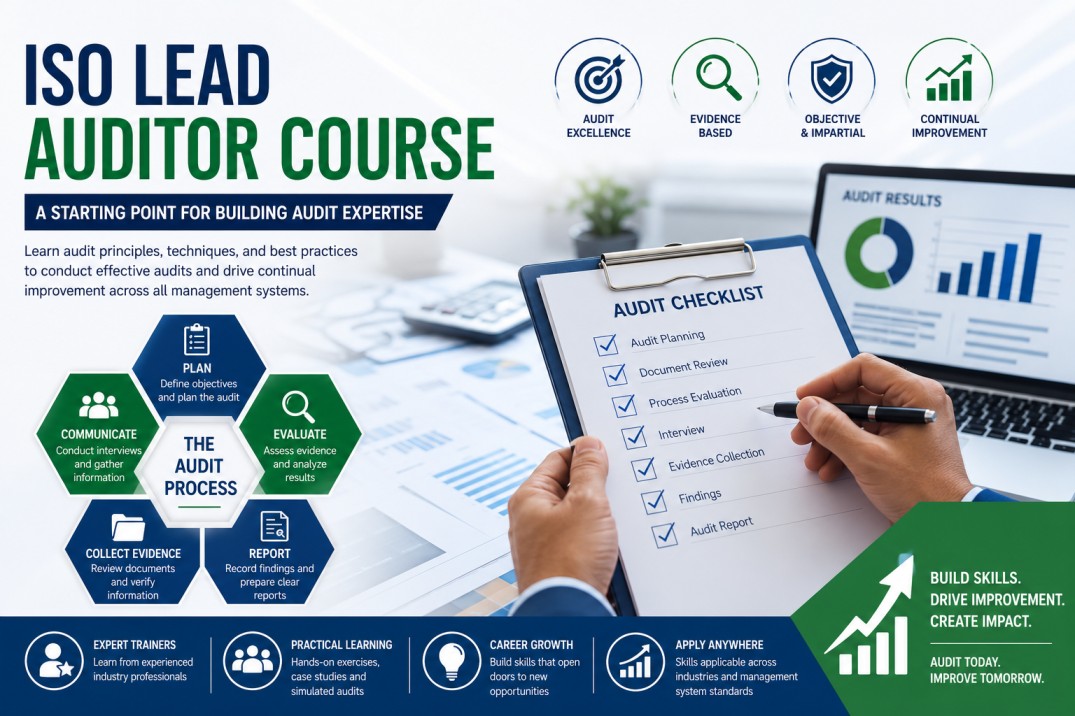
A lead auditor must understand how an audit moves from planning to completion.
During training, participants learn how to:
- Define audit objectives
- Prepare audit plans
- Identify audit criteria
- Conduct interviews
- Collect evidence
- Record findings
- Prepare audit reports
Understanding each step helps auditors manage audits more effectively and maintain consistency.
Practicing Through Real Audit Situations
Practical learning plays an important role in auditor development.
Many courses include case studies, group activities, and simulated audits. These exercises allow participants to experience common audit situations before working on real projects.
Through practice, learners improve their communication skills and become more confident in handling different audit challenges.
Why ISO Lead Auditor Training Creates a Strong Foundation
Developing Transferable Audit Skills
One of the biggest advantages of an ISO Lead Auditor Course is that the skills apply across different industries and standards.
Techniques such as evidence evaluation, interview methods, and report writing are useful in many professional environments.
A person trained in auditing can apply these skills while reviewing internal processes, evaluating suppliers, or supporting compliance activities.
Supporting Career Development
Organizations across industries need professionals who understand management systems and improvement methods.
Lead auditor training can support career growth by preparing individuals for roles such as:
- Internal auditor
- Compliance specialist
- Management system consultant
- Quality professional
- Process improvement specialist
The knowledge gained from this course can create opportunities in different sectors.
Common Questions about ISO Lead Auditor Courses
Does an ISO Lead Auditor Course Focus on One Standard?
Some courses use a specific management system standard as the main example. However, the auditing principles taught during the program usually apply to different standards.
The same audit approach can support evaluations related to quality, safety, environment, and information security systems.
Is the Course Suitable for Beginners?
Yes. Most ISO Lead Auditor Courses welcome professionals with different levels of experience.
The training usually begins with basic auditing concepts before moving into advanced techniques. This approach helps beginners understand the complete audit process step by step.
Professionals with existing experience can also use the course to improve their auditing methods and strengthen their knowledge.
How Audit Skills Apply Beyond Certification Audits
Audit skills are useful in many workplace situations. They are not limited to formal certification activities.
Professionals can apply audit techniques when they:
- Review supplier performance
- Investigate process problems
- Evaluate operational procedures
- Identify improvement opportunities
The ability to collect evidence and analyze information helps professionals make better decisions.
Audit thinking encourages people to look beyond assumptions and focus on actual performance.
Choosing the Right ISO Lead Auditor Course
Course quality can vary depending on the learning approach. A strong program should include practical activities along with theoretical lessons.
Professionals should look for courses that provide:
- Experienced trainers
- Practical audit exercises
- Realistic case studies
- Interactive discussions
- Feedback on performance
Courses that focus only on presentations may provide information but may not build strong practical confidence.
Hands-on activities help participants understand how auditing works in real situations.
Who Benefits From ISO Lead Auditor Training?
Many professionals choose this training to improve their auditing knowledge and career opportunities.
Common participants include:
- Quality managers
- Internal auditors
- Compliance officers
- Consultants
- Process owners
- Team leaders
- Management representatives
The course is also useful for professionals who want to understand how organizations improve their systems.
Even employees who do not conduct formal audits can benefit from learning audit principles. These skills help them evaluate processes and identify improvement areas in their daily work.
Important Skills Developed During Training
Creating Effective Audit Plans
Planning is one of the most important parts of auditing.
Participants learn how to define audit scope, identify objectives, and prepare a structured approach before starting an audit.
Good planning helps auditors stay focused and complete assessments efficiently.
Asking Effective Audit Questions
Communication is a major part of auditing.
Auditors must ask questions that help them understand how processes work in practice.
Training helps participants develop better interview techniques and learn how to gather useful information from different process owners.
Preparing Clear Audit Reports
Audit reports communicate important findings to organizations.
A good report should be clear, accurate, and based on evidence.
ISO Lead Auditor Courses teach participants how to document findings professionally and explain issues without unnecessary assumptions.
Preparing Before Starting the Course
Preparation can improve the learning experience. Professionals can review the basic structure of management system standards before attending training.
It is also helpful to think about workplace examples. Real situations make audit concepts easier to understand.
Active participation during training allows learners to gain more value from discussions and practical exercises.
Applying Knowledge after Completing the Course
Completing an ISO Lead Auditor Course is only the beginning of the learning journey.
Professionals need regular practice to strengthen their skills. Participating in internal audits, reviewing procedures, and supporting improvement projects can help maintain confidence.
Continuous learning also keeps auditors updated with changing business requirements and management system practices.
Over time, audit skills become a natural part of professional decision-making.
Building a Future With Audit Expertise
An ISO Lead Auditor Course provides more than technical knowledge. It develops a structured way of thinking about processes, evidence, and improvement.
The skills gained from this training support professionals throughout their careers. They help individuals conduct better audits, identify opportunities, and contribute to stronger management systems.
For anyone looking to build expertise in auditing, this course provides a practical foundation that can support long-term professional growth.