Introduction to Sudoku
Sudoku is one of the most popular logic puzzles in the world. Millions of people enjoy Sudoku every day because it combines entertainment, concentration, and problem-solving skills. Unlike many number-based games, Sudoku does not require advanced mathematics. Success depends on logical thinking, pattern recognition, and patience.
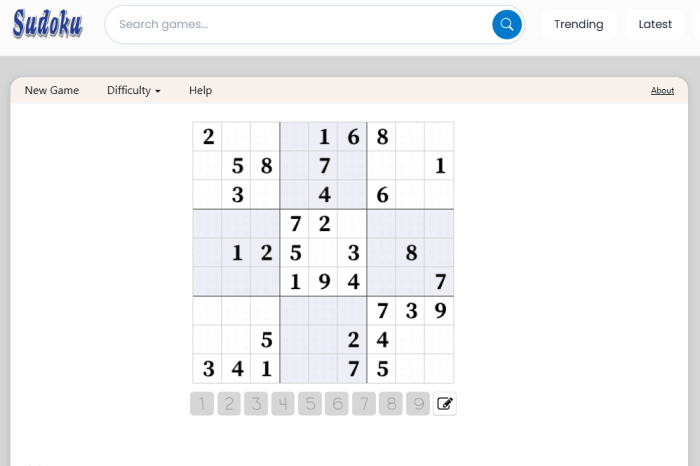
A standard Sudoku puzzle contains a 9×9 grid divided into nine smaller 3×3 boxes. The objective is simple: fill every empty cell with a number from 1 to 9. Each row, each column, and each 3×3 box must contain all numbers from 1 to 9 without repetition.
The simplicity of the rules makes Sudoku accessible for beginners, while the increasing difficulty levels provide a challenge for experienced players.
Why Sudoku Remains Popular Around the World
Sudoku continues to attract players of all ages because it offers a unique combination of relaxation and mental stimulation. Many people include Sudoku in daily routines as a way to exercise the brain and improve focus.
Benefits for Cognitive Development
Regular Sudoku practice can strengthen several mental skills. Players often improve memory, concentration, and logical reasoning through consistent puzzle solving. The process of analyzing possibilities and eliminating incorrect choices trains the mind to think systematically.
Sudoku also encourages patience. Difficult puzzles require careful observation and step-by-step decision-making rather than quick guesses.
Entertainment Without Complex Rules
Many puzzle games involve extensive instructions, special abilities, or changing mechanics. Sudoku stands out because the rules remain the same regardless of difficulty level. A beginner and an expert follow identical principles while solving puzzles.
This simplicity creates a low barrier to entry while maintaining long-term appeal.
Understanding the Structure of Sudoku
Before exploring advanced techniques, it is important to understand how a Sudoku grid functions.
Rows and Columns
Every row contains nine cells arranged horizontally. Every column contains nine cells arranged vertically. Each row and column must include the numbers 1 through 9 exactly once.
When a number already exists in a row or column, that number cannot appear again within the same area.
The Role of 3×3 Boxes
The grid is divided into nine smaller boxes. Each box contains nine cells and must also include every number from 1 to 9 exactly once.
Successful Sudoku solving involves examining rows, columns, and boxes simultaneously. A missing number in one area often becomes obvious when restrictions from the other areas are considered.
Essential Sudoku Techniques for Beginners
New players can solve many puzzles using a few basic methods. These strategies form the foundation of effective Sudoku solving.
Scanning for Missing Numbers
Scanning is one of the easiest techniques. Players examine rows, columns, and boxes to identify missing numbers.
For example, if a row already contains eight numbers, only one number remains possible for the empty cell. This straightforward observation often provides an excellent starting point.
Cross-Checking Possibilities
Cross-checking involves comparing information from rows and columns. If a specific number cannot appear in several positions due to existing restrictions, the correct location becomes easier to identify.
This method gradually reduces uncertainty and reveals hidden solutions.
Using Pencil Marks
Many experienced players use small candidate numbers inside empty cells. These notes represent possible values based on current information.
As more numbers are placed in the grid, impossible candidates can be removed. Eventually, some cells contain only one remaining option, leading directly to the next move.
Intermediate Strategies for Faster Progress
As puzzle difficulty increases, simple scanning may not be enough. Intermediate techniques help players handle more complex situations.
Naked Singles
A naked single occurs when an empty cell has only one valid candidate. Even if the answer is not immediately visible from scanning, candidate analysis reveals the correct number.
This technique appears frequently in medium-level Sudoku puzzles.
Hidden Singles
A hidden single exists when a number can only appear in one position within a row, column, or box. The cell may contain multiple candidates, but only one location satisfies all requirements for that specific number.
Recognizing hidden singles often unlocks large sections of the puzzle.
Candidate Elimination
Candidate elimination focuses on removing impossible values from cells. Every confirmed number creates new restrictions throughout the grid.
As candidates disappear, new opportunities emerge for solving additional cells. This chain reaction forms the core of logical Sudoku progression.
Advanced Sudoku Solving Methods
Experienced players frequently encounter puzzles that require more sophisticated analysis.
Naked Pairs and Triples
When two cells within the same row, column, or box contain the exact same pair of candidates, those numbers can be removed from all other cells in that area.
A similar principle applies to triples, where three cells share three candidate numbers.
These techniques reduce complexity and reveal hidden patterns.
Pointing Pairs
A pointing pair occurs when all possible locations for a number within a box align along the same row or column. This arrangement allows elimination of that number from other cells in the corresponding row or column outside the box.
The technique becomes particularly useful in difficult Sudoku puzzles.
Logical Deduction Over Guessing
Developing this mindset improves accuracy and enhances satisfaction when completing challenging puzzles.
Common Mistakes to Avoid
Many Sudoku errors result from rushing through the puzzle without careful verification.
Ignoring Existing Restrictions
Players sometimes focus on one area of the grid while overlooking information from surrounding rows or columns. This mistake can lead to incorrect placements and future conflicts.
Regularly checking all related areas helps prevent errors.
Excessive Guessing
Guessing may appear faster, but it often creates confusion later in the puzzle. Incorrect assumptions can spread throughout the grid and force players to restart.
Logical reasoning provides a more reliable path to success.
Forgetting Candidate Updates
When using pencil marks, candidates should be updated whenever new numbers are placed. Outdated notes can create unnecessary complexity and slow progress.
Maintaining accurate candidate lists improves efficiency.
Digital Sudoku and Modern Accessibility
Technology has expanded access to Sudoku through websites, mobile applications, and online puzzle communities.
Many digital platforms offer adjustable difficulty settings, hints, statistics, and daily challenges. These features help players track improvement and discover new solving techniques.
Online access also allows enthusiasts to enjoy Sudoku anywhere, whether during travel, work breaks, or leisure time at home.
Conclusion
Sudoku remains a timeless puzzle because it combines simple rules with deep logical challenges. Players can begin with basic scanning techniques and gradually develop advanced strategies such as hidden singles, naked pairs, and pointing pairs.
Regular practice strengthens concentration, critical thinking, and problem-solving skills while providing enjoyable entertainment. Whether solving a quick beginner puzzle or tackling an expert-level challenge, Sudoku offers a rewarding experience that continues to captivate puzzle enthusiasts around the world.