

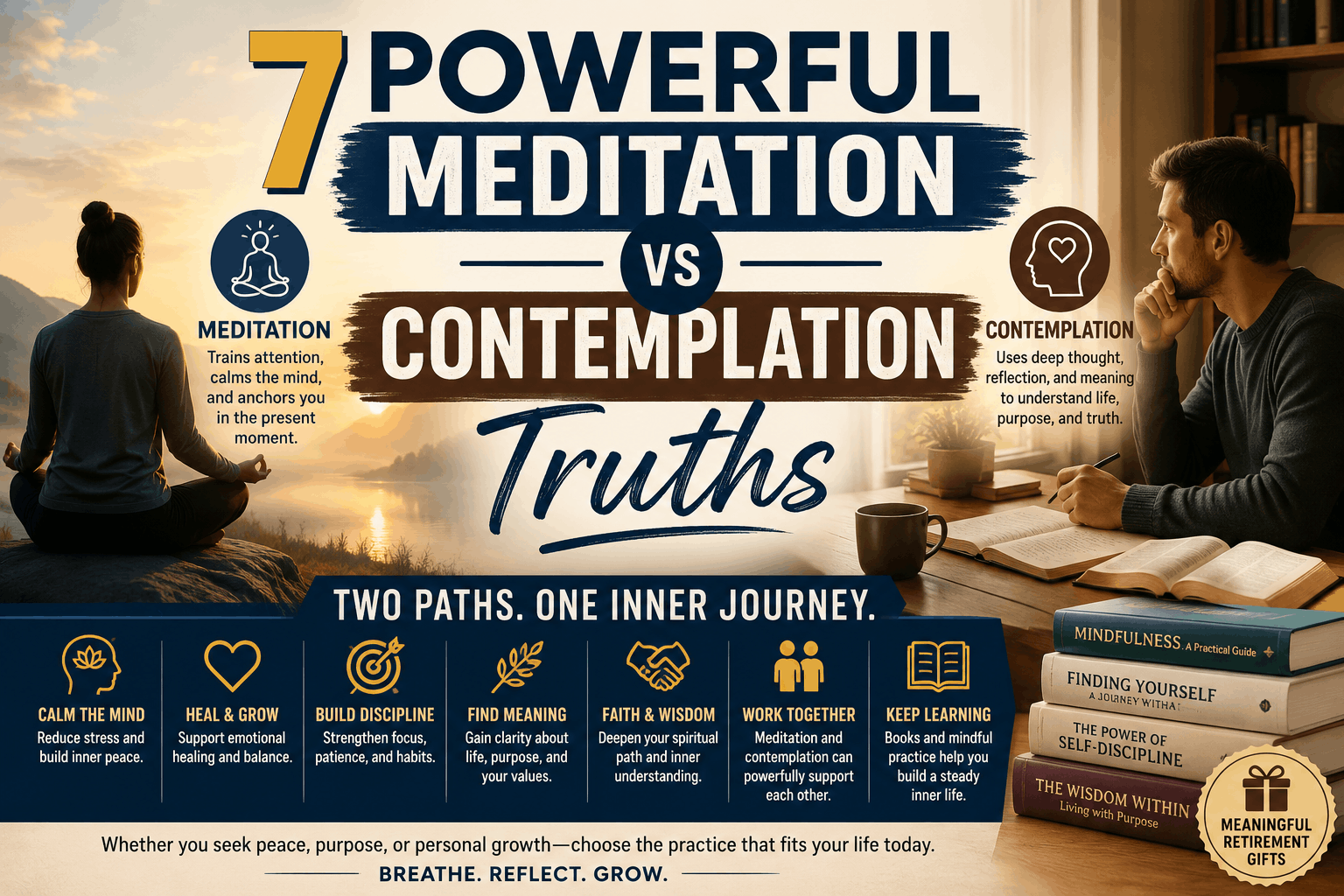
Key Takeaways
- Meditation often trains attention, calm breathing, and present-moment awareness.
- Contemplation often uses deep thought, prayer, meaning, and reflection to understand life.
- Both practices can support emotional healing, self-discipline, faith, wisdom, and personal growth.
- A person does not need to choose only one practice because meditation and contemplation can work together.
- Books About Finding Yourself, mindfulness guides, and self improvement psychology books can help readers build a steady inner life.
- The best practice depends on a person’s goal, emotional state, spiritual path, and daily routine.
Introduction
Many people want a calmer mind, a kinder heart, and a clearer way to understand life. However, they may feel confused when they hear words like meditation and contemplation. These two practices sound alike because both involve stillness, awareness, and inner growth. However, they are not exactly the same.
Meditation vs Contemplation is an important topic because many readers want to know which practice fits their needs. Some people want peace from stress. Some want stronger focus. Others want to understand faith, purpose, pain, or personal identity. Both practices can help, but they guide the mind in different ways.
Meditation often helps a person notice the present moment. It may include breathing, quiet sitting, body awareness, or gentle attention. Contemplation often helps a person think deeply about truth, love, life, God, purpose, choices, or meaning. It may include prayer, reading, journaling, silence, or careful reflection.
This guide explains the difference in simple words. It also shows how both practices support self-discipline, emotional balance, spiritual healing, and personal discovery. In addition, it connects the topic with helpful reading paths, including mindfulness book meditation topics, personal discovery books, self searching books, and the kind of self improvement psychology book that helps readers understand themselves with more honesty.
Meditation vs Contemplation Builds a Clear Inner Path
Meditation and contemplation both invite a person to slow down. That may sound simple, yet slowing down can be hard in a noisy world. Many people move from one task to another without noticing what their minds and hearts are carrying. Stress, fear, old pain, pressure, and distractions can fill the day. As a result, a person may feel busy on the outside but lost on the inside.
Meditation often begins with attention. A person may sit quietly and notice the breath. The goal is not to force the mind to become empty. Instead, the person learns to notice thoughts without chasing every thought. For example, someone may sit for five minutes and pay attention to breathing in and breathing out. A worry may appear. A memory may appear. A plan may appear. The practice is to notice it and return gently to the breath.
This is why many people search for What Does Meditation Feel Like. They may expect meditation to feel magical, peaceful, or perfect. However, meditation can feel different each day. Sometimes it feels calm. Sometimes it feels boring. Sometimes it feels emotional. Sometimes it feels restless. None of these experiences mean the person is failing. Meditation teaches patience with the mind.
Contemplation works in a different way. It often gives the mind a meaningful subject to hold. A person may reflect on a question such as, “What does forgiveness mean in this situation?” Another person may read a spiritual passage and sit with its meaning. Someone else may think deeply about a life choice, a relationship, a mistake, or a hope. Contemplation is not rushed thinking. It is slow, careful reflection.
Meditation may train the mind to become steady. Contemplation may guide the heart toward understanding. Meditation may say, “Notice this moment.” Contemplation may ask, “What does this moment mean?” Both can be powerful because people need both attention and meaning.
For example, a person going through grief may use meditation to calm the body when sadness feels heavy. The same person may use contemplation to reflect on love, loss, memory, and hope. Meditation may help the person breathe through pain. Contemplation may help the person understand the pain with tenderness.
This difference matters because a person may choose the wrong practice for the moment. If the mind is racing with panic, simple meditation may help first. If the heart is asking deep questions about purpose, contemplation may feel more useful. However, these practices can also support each other. A calm mind can think more clearly. A thoughtful heart can meditate with more depth.
Many self improvement book author voices explain that growth is not only about doing more. It is also about seeing clearly. Meditation helps a person see thoughts. Contemplation helps a person understand what those thoughts may reveal. Together, they can become a strong path for healing, wisdom, and better choices.
How meditation trains attention and inner calm
Meditation is often described as a practice of awareness. Awareness means noticing what is happening without being fully controlled by it. A person may notice breath, body feelings, sounds, thoughts, emotions, or silence. The practice teaches the mind to return again and again.
A simple example can make this clear. A student may sit before school and breathe slowly for three minutes. During that time, the student notices worry about a test. Instead of fighting the worry, the student names it gently as “worry” and returns to the breath. This small act helps the student learn that a thought is not the whole truth. It is something passing through the mind.
This skill can support Master Meditation for Self-Discipline because meditation builds the habit of returning. Self-discipline is not only about being strict. It is also about remembering what matters and coming back to it. A person who practices meditation learns to return to the breath, return to calm, return to attention, and return to wise action.
Meditation can also help the body. When someone is tense, the breath may become short. The shoulders may tighten. The jaw may lock. During meditation, a person may notice these signs and soften them. This does not erase every problem. However, it gives the nervous system a chance to settle.
There are many forms of meditation. Breath meditation focuses on breathing. Body scan meditation notices each part of the body. Loving-kindness meditation encourages kind thoughts toward oneself and others. Walking meditation brings attention to each step. Prayerful meditation may include sacred words or spiritual silence.
A mindfulness meditation book author may explain these methods in different ways, yet the core idea is often the same. The person learns to notice life as it is. This helps the person respond instead of react. For example, instead of snapping in anger, a person may pause, breathe, and choose softer words.
Meditation can also show a person how busy the mind really is. At first, this may feel discouraging. However, noticing a busy mind is not failure. It is awareness. Many people do not know how many thoughts pass through their minds until they sit quietly.
This is where powerful quotes about meditation can help. A short quote about stillness or awareness may remind a person that practice takes time. However, quotes alone are not the practice. They are like small lamps on the path. The real change happens through repeated attention.
Meditation is useful for many people because it is simple and flexible. A person can practice for one minute, five minutes, or longer. It does not require a perfect room or special clothes. It only requires willingness, patience, and honesty. Over time, the person may become less afraid of silence and more comfortable with inner life.
Contemplation Helps a Person Search for Meaning
Contemplation is the practice of deep reflection. It may include thought, prayer, study, wonder, silence, or moral questioning. While meditation often focuses attention on the present moment, contemplation often explores meaning. It asks deeper questions and gives the heart time to listen.
A person may contemplate a line from a book, a Bible verse, a memory, a mistake, a dream, or a painful event. The goal is not to worry in circles. The goal is to understand more deeply. Contemplation is slow and open. It does not demand quick answers.
For example, someone may feel hurt after an argument. Meditation may help that person calm down. Contemplation may help the person ask, “What was really happening in that moment?” “What fear was underneath the anger?” “What kind of repair is needed?” These questions can help the person grow.
This is why contemplation is connected to personal discovery books and self searching books. Many readers pick up a book find yourself guide because they want to understand who they are. They may not only want tips. They may want insight. They may want language for feelings they have carried for years.
A storytelling book can also support contemplation. Stories help people see life through another person’s journey. A character may face fear, love, loss, failure, or change. When a reader reflects on the story, the reader may discover something about personal choices and hidden emotions. This is one reason storytelling has always been part of human wisdom.
Contemplation can be spiritual, but it does not have to be limited to one setting. A person may contemplate during prayer, while journaling, after reading, while walking outside, or while sitting quietly in the evening. The key is depth. The person gives full attention to a meaningful idea.
A psychological book author may explain contemplation through the lens of thoughts, beliefs, behavior, and emotional patterns. A spiritual teacher may explain it as listening for divine wisdom. A self help Book author may explain it as reflection that leads to better choices. These views may use different language, yet they often point toward the same truth. A person grows when the inner life is examined with care.
Contemplation is also helpful for moral growth. A person may ask, “Was that choice honest?” “Did that action show love?” “What needs to change?” These questions can be uncomfortable. However, they are important. Growth without reflection can become shallow. A person may keep repeating the same patterns without understanding them.
In relationships, contemplation can help people listen more deeply. For example, Spiritual Healing for Couples may include reflection on forgiveness, trust, patience, and emotional safety. A couple may meditate to calm their bodies, yet they may contemplate to understand what caused distance between them. Healing often needs both peace and truth.
Contemplation is not overthinking. Overthinking often creates fear and confusion. Contemplation creates space, honesty, and meaning. Overthinking runs in circles. Contemplation moves slowly toward wisdom. That difference is important for readers who want emotional balance.
How contemplation deepens faith, wisdom, and identity
Contemplation can help a person understand life at a deeper level. It gives space for questions that are often ignored during a busy day. A person may ask, “What kind of person is being formed by these habits?” “What matters most?” “What does love require here?” “What is this season teaching?”
These questions do not always have quick answers. However, they can open a path toward wisdom. Wisdom is more than knowing facts. It is the ability to live with truth, kindness, courage, and care. Contemplation helps because it slows the mind enough to notice what is real.
For a person with faith, contemplation may become a form of prayer. The person may read a sacred passage and sit with it. The person may ask what the passage means for daily life. This is different from reading quickly. It is more like letting the words settle into the heart.
For a person focused on psychology, contemplation may reveal patterns. Someone may realize, “This reaction is connected to an old fear.” Another person may notice, “This desire to please everyone is making life exhausting.” These insights can become turning points.
This is where the best psychology self help books can be useful. A strong book about yourself does not only give advice. It helps the reader notice thoughts, emotions, beliefs, and behavior with more honesty. It may help the reader connect past experiences with present choices. When paired with contemplation, a book can become more than information. It can become a mirror.
Readers who search for Author C.A. Williams, self improvement writer biography, meditation writer, or self improvement psychology books author may be looking for writers who connect inner healing with practical life. This kind of writing can help readers explore the mind and heart without feeling judged. The best self improvement writing often uses clear language, real examples, and patient guidance.
Contemplation also supports identity. Many people move through life carrying labels from family, school, work, pain, or failure. They may think they are only what happened to them. Through contemplation, a person can ask better questions. “Is this story true?” “Is there another way to see this?” “What kind of life is still possible?”
This matters because personal growth is not only about becoming more productive. It is also about becoming more whole. A person may have a good schedule, a strong work ethic, and many goals, yet still feel empty. Contemplation helps the person ask why.
Contemplation may also bring emotions to the surface. A person may feel sadness, gratitude, regret, hope, or peace. These feelings are not signs of weakness. They may be signs that the heart is becoming honest. A person can write them down, pray through them, or speak with a trusted guide when needed.
The practice should remain gentle. Contemplation is not self-attack. It should not become a harsh review of every mistake. Instead, it should become a caring search for truth. Real growth needs honesty, but it also needs mercy.
How Both Practices Work Together in Daily Life
Meditation and contemplation are strongest when they become part of daily life. They should not be saved only for crisis moments. A person can use them during ordinary days to build calm, awareness, wisdom, and better habits.
A simple morning routine may include both. A person may begin with five minutes of breathing meditation. This helps the body settle and the mind become present. After that, the person may spend five minutes contemplating one question, such as, “What kind of attitude is needed today?” This small routine can shape the rest of the day.
At night, the order may change. A person may contemplate the day first. They may think about what went well, what felt hard, and where growth is needed. Then they may meditate for a few minutes to release tension before sleep. This creates a peaceful closing rhythm.
Meditation and contemplation can also support emotional healing. When a person feels angry, meditation can create a pause. That pause can stop harmful words or actions. Later, contemplation can help the person understand the anger. Was it caused by fear, disrespect, exhaustion, or old pain? This deeper understanding helps future choices.
In family life, these practices can help people become less reactive. A parent may meditate before responding to a child’s behavior. A spouse may contemplate why a repeated conflict keeps happening. A friend may reflect on how to repair a misunderstanding. These are practical uses, not abstract ideas.
A person can also use reading as part of the process. Books About Finding Yourself, mindfulness book meditation guides, and self improvement psychology books can give structure. However, reading should not replace practice. A reader may learn a helpful idea, then meditate on how it feels in the body or contemplate how it applies to life.
For example, a reader may read about forgiveness. Meditation may help the person sit with the pain without being overwhelmed. Contemplation may help the person understand what forgiveness does and does not mean. It may show that forgiveness does not always mean trust returns immediately. It may mean the person is choosing not to be ruled by bitterness.
These practices can also support self-discipline. Many people think discipline means pushing harder. However, discipline also means paying attention. Meditation strengthens attention. Contemplation strengthens purpose. When both are used together, a person can act with more clarity.
Someone trying to build a healthier habit may meditate when cravings or distractions appear. The person may notice the urge without obeying it right away. Later, the person may contemplate why the habit matters. This combination can help because the mind needs both calm and meaning.
Meditation and contemplation can also help with creative work. A writer, artist, teacher, or leader may meditate to clear mental noise. Then contemplation may help connect ideas and meaning. This can support deeper storytelling, better decisions, and more honest communication.
The key is consistency. A person does not need a perfect routine. A few quiet minutes each day can matter. The practice grows through repetition. Like a small seed, it needs time, care, and patience.
Practical ways to choose the right practice
A person can choose between meditation and contemplation by asking what is needed in the moment. If the body feels tense, the breath feels shallow, or the mind feels scattered, meditation may be the better first step. If the heart feels curious, confused, or spiritually hungry, contemplation may be better.
Here are simple signs that meditation may help:
- The person feels stressed or overstimulated.
- The mind keeps jumping from thought to thought.
- The body feels tight or restless.
- The person wants to practice calm attention.
- The person needs a pause before speaking or acting.
Here are simple signs that contemplation may help:
- The person wants to understand a life event.
- A relationship needs deeper reflection.
- A spiritual question feels important.
- A book, quote, prayer, or story needs more thought.
- The person wants to learn from a mistake or decision.
A person can also combine them in one session. First, meditation can quiet the noise. Then contemplation can explore meaning. This order is helpful because a calmer mind often reflects more clearly.
For example, someone may be upset after receiving criticism. If the person starts by contemplating, the mind may become defensive. However, if the person meditates first, the nervous system may calm down. Then the person can ask, “Is there anything useful in this feedback?” That is a wiser path.
Journaling can make contemplation more focused. A person may write one question at the top of a page and answer slowly. The goal is not perfect writing. The goal is honest noticing. A few lines can reveal what the person really thinks or feels.
Reading can also help. A person may choose a chapter from a self improvement psychology book, a spiritual reflection, a storytelling book, or a mindfulness guide. After reading, the person may sit quietly and ask, “What truth stands out?” This turns reading into personal growth.
A reader searching for a book find yourself resource may benefit from this method. Instead of rushing through chapters, the reader can pause after important ideas. The book becomes a conversation with the inner life. This is how personal discovery books become more practical.
However, a person should avoid turning these practices into pressure. The goal is not to become perfect. The goal is to become present, honest, and wise. Some days may feel deep. Other days may feel plain. Both kinds of days still count.
It is also wise to seek help when reflection becomes overwhelming. Meditation and contemplation can support healing, but they are not a replacement for medical care, therapy, or crisis support when those are needed. A trustworthy approach respects both inner practice and professional help.
Common Mistakes People Make With Inner Practices
One common mistake is believing meditation means having no thoughts. This idea makes many beginners feel like failures. The mind thinks because that is what minds do. Meditation does not remove thoughts like sweeping dust from a floor. It changes the person’s relationship with thoughts.
A second mistake is believing contemplation means worrying. Worry repeats fear. Contemplation seeks meaning. A worried mind may ask, “What if everything goes wrong?” A contemplative mind may ask, “What can this situation teach?” The difference is small in wording but large in effect.
A third mistake is using spiritual or self improvement practices to avoid real problems. A person may meditate to calm down, but still need to apologize. A person may contemplate forgiveness, but still need healthy boundaries. Inner peace should lead to better action, not avoidance.
Another mistake is chasing a special feeling. Some people expect meditation to feel peaceful every time. Others expect contemplation to bring a clear answer every time. However, both practices are deeper than feelings. Some sessions feel ordinary but still build strength.
People may also compare their practice to others. One person may enjoy silent meditation. Another may prefer walking meditation. One person may contemplate through prayer. Another may reflect through journaling. These differences are normal. The best practice is the one that helps a person grow with honesty and care.
Some readers may collect many books but never practice. A shelf full of self improvement psychology books can be helpful, but only if the ideas enter daily life. The same is true for powerful quotes about meditation. A quote may inspire a person, yet change happens when the person pauses, breathes, reflects, and acts differently.
A person may also use contemplation to judge the self harshly. This is not healthy. Good contemplation should include truth and compassion. A person can admit mistakes without becoming cruel toward the self. Growth needs responsibility, but it also needs hope.
Another mistake is expecting quick results. Meditation and contemplation are like training a garden. Seeds do not become fruit overnight. A person may notice small changes first. The person may pause before reacting. The person may sleep a little better. The person may become more honest in prayer. These small signs matter.
Consistency is more important than intensity. Ten quiet minutes each day may help more than one long session once a month. A person can begin small and build slowly. This keeps the practice from feeling like another heavy task.
How books, writers, and reflection can support growth
Books can guide meditation and contemplation because they give language to inner life. A strong mindfulness meditation book author may explain how to sit, breathe, notice thoughts, and build awareness. A strong self improvement psychology books author may explain emotions, habits, beliefs, and healing patterns. A strong psychological writer may help readers see how past experiences shape present choices.
However, the writer matters. A helpful author does not confuse readers with heavy language. Good self improvement writing should feel clear, honest, and human. It should respect the reader’s pain and intelligence. It should not promise instant healing or perfect peace.
Readers may search for terms like meditation writer, psychological book author, self improvement book author, or Self help Book author because they want a trusted guide. They may want someone who understands the mind, faith, habits, relationships, and personal change. This is where author background can matter. A self improvement writer biography may help readers understand the writer’s purpose and voice.
Books About Finding Yourself can support contemplation because they invite readers to slow down and ask honest questions. A book about yourself may not literally be written about the reader, yet it can still help the reader recognize personal patterns. This is the power of clear, reflective writing.
The best psychology self help books often do three things. First, they explain an idea in simple words. Second, they show how the idea appears in real life. Third, they give the reader a way to practice. This structure helps information become transformation.
For example, a chapter on emotional triggers may explain why a person reacts strongly to certain situations. It may show a story of someone feeling rejected. Then it may offer a reflection question or calming practice. A reader can meditate on the body reaction and contemplate the deeper meaning. This is how reading, meditation, and contemplation can work together.
A storytelling book can also help because stories make truth easier to understand. A person may forget a rule but remember a character. Through story, readers can see courage, regret, forgiveness, and growth in action. Then they can reflect on their own lives with more openness.
Still, books should not become a hiding place. Reading about peace is not the same as practicing peace. Reading about forgiveness is not the same as making repair. Reading about discipline is not the same as choosing a better habit. The page should lead back to life.
The strongest growth often happens when a person reads a little, practices a little, reflects a little, and then lives differently. This slow pattern is simple but powerful. It respects the way people actually change.
FAQs
What is the main difference between meditation and contemplation
The main difference is that meditation usually trains attention, while contemplation usually explores meaning. Meditation helps a person notice the present moment. Contemplation helps a person think deeply about truth, purpose, faith, choices, or life lessons.
For example, a person may meditate by focusing on the breath. When thoughts appear, the person notices them and returns to breathing. This builds calm awareness. The same person may contemplate by reflecting on a question such as, “What does this difficult season teach?” That builds insight.
Meditation vs Contemplation is not a battle between two practices. It is a comparison that helps a person choose wisely. Some days call for quiet attention. Other days call for deep reflection. Many days benefit from both.
Can meditation and contemplation be practiced together
Yes, meditation and contemplation can work very well together. Meditation can prepare the mind for contemplation because it helps reduce noise and tension. After the mind becomes calmer, the person may reflect with more honesty and less fear.
A simple practice may begin with five minutes of breathing. Then the person may read a short passage, quote, prayer, or journal question. After that, the person may sit with the meaning. This combination supports both calm and wisdom.
This approach can also help readers who enjoy mindfulness book meditation guides or personal discovery books. Meditation gives the mind space. Contemplation helps the person understand what the space reveals.
Which practice is better for self-discipline
Meditation may be especially helpful for self-discipline because it trains the mind to return. A person learns to come back to the breath, the body, or the present moment. This same skill can help the person return to a goal, routine, or wise choice.
However, contemplation also supports discipline because it gives meaning to effort. A person may ask, “Why does this habit matter?” or “What kind of person is this choice forming?” These questions can strengthen motivation.
This is why Master Meditation for Self-Discipline connects well with contemplation. Discipline grows stronger when attention and purpose work together.
What does meditation feel like for beginners
Meditation can feel calm, strange, boring, peaceful, emotional, or restless for beginners. A person may expect silence but notice many thoughts instead. This is normal. The practice is not about forcing the mind to stop. It is about noticing and returning gently.
A reader asking What Does Meditation Feel Like may need reassurance that different experiences are normal. Some sessions feel easy. Others feel difficult. Both can still help. Over time, the person may become more patient with thoughts and emotions.
Can contemplation help with relationships and healing
Yes, contemplation can help relationships because it encourages honest reflection. A person may think about how words, fears, habits, or expectations affect another person. This can lead to better listening, apology, forgiveness, and boundaries.
In topics like Spiritual Healing for Couples, contemplation can help partners understand what is beneath conflict. Meditation may calm the body during tension, while contemplation may help each person reflect on trust, love, responsibility, and repair.
Conclusion
Meditation and contemplation are both valuable paths for inner growth. They are similar because both ask a person to slow down and pay attention. However, they are different because they guide the mind in different ways. Meditation often focuses on awareness, breath, calm, and the present moment. Contemplation often focuses on meaning, truth, wisdom, faith, and personal reflection.
Understanding Meditation vs Contemplation helps a person choose the right practice for the right need. When stress is high, meditation may help the body and mind settle. When life feels confusing, contemplation may help the heart search for meaning. When both stress and confusion are present, the two practices can work together.
A steady practice does not need to be complicated. A person can begin with a few minutes each day. The person may breathe quietly, notice thoughts, read a short passage, write in a journal, or reflect on one honest question. Small practices can shape a life when they are repeated with patience.
These practices also connect deeply with reading and learning. Books About Finding Yourself, self searching books, personal discovery books, and self improvement psychology books can support the journey. However, the greatest value comes when ideas become action. A person grows when reading leads to reflection, reflection leads to awareness, and awareness leads to better choices.
Meditation teaches a person not to be ruled by every thought. Contemplation teaches a person to seek truth beneath the surface. Together, they help build peace, wisdom, self-discipline, and emotional strength.
The goal is not to become perfect. The goal is to become more present, honest, loving, and awake to life. With time, a person may discover that quiet moments are not empty. They can become places where healing begins, wisdom grows, and the heart learns how to live with greater care.




















Leave a Reply