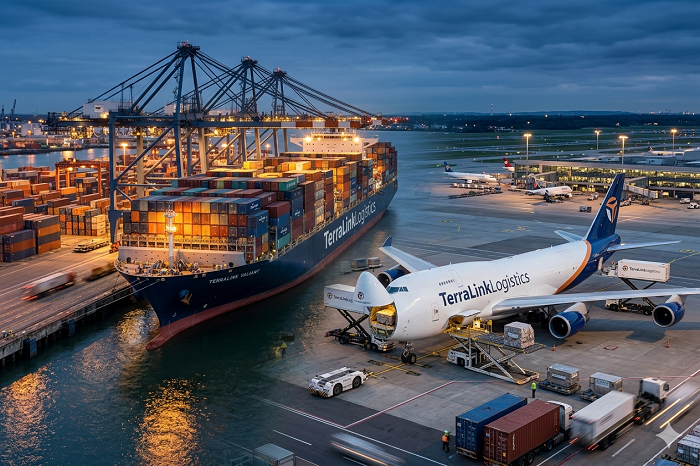
In the modern era of global commerce, the ability to move goods across borders efficiently is the backbone of any successful enterprise. For businesses scaling their operations internationally, the fundamental question often boils down to a choice between the vast capacity of the ocean and the rapid speed of the sky. Selecting the right shipping method is not merely a logistical box to check; it is a strategic decision that impacts profit margins, customer satisfaction, and supply chain resilience. To navigate these complex waters, many companies partner with experts who understand the nuances of global trade. For instance, TerraLinkLogistics offers international freight and forwarding services to help businesses streamline these critical decisions.
Choosing between ocean and air freight requires a deep dive into several variables, including cost, speed, environmental impact, and the nature of the cargo itself. By analyzing these factors through a professional lens, businesses can optimize their shipping strategy to align with their specific commercial goals.
The Financial Landscape: Balancing Budget and Speed
When analyzing shipping methods, cost is often the primary driver for decision-makers. Historically, ocean freight has been the more economical choice, particularly for high-volume shipments. This is largely due to the massive capacity of modern container ships. According to Wikipedia’s definition of containerization, the use of standardized containers has revolutionized the efficiency of sea transport, allowing for the movement of thousands of units at a fraction of the price of other methods.
Air freight, conversely, is priced based on a combination of weight and volume, often referred to as “chargeable weight.” Because airplanes have limited space and strict weight limits, the cost per unit is significantly higher than that of a cargo ship. However, the price gap can narrow for smaller, high-value shipments. While ocean freight might cost cents per kilogram, air freight can cost several dollars. For businesses dealing in commodities or bulk goods, the savings provided by sea transport are indispensable for maintaining competitive pricing.
However, cost is not just about the freight bill. One must also consider the “cost of carry.” If goods are sitting on a ship for 40 days, that is capital tied up in inventory that cannot be sold. For companies with high inventory turnover, the speed of air freight might justify its higher upfront cost by freeing up cash flow faster.
Speed and Reliability: Navigating the Time Factor
In a market driven by “just-in-time” delivery and high consumer expectations, speed is a potent competitive advantage. Air freight is the undisputed champion of velocity. A shipment from Shanghai to New York might take five days via air, including customs clearance, whereas the same journey by sea could take 30 to 40 days.
Reliability also plays a major role in this comparison. Airlines are generally more punctual than shipping lines. While weather affects both, flight schedules are frequent and flexible. If a flight is canceled, the cargo can often be placed on a different flight later that day. In contrast, ocean shipping schedules can be more rigid. A missed port call or a delay at a canal can push a delivery back by a week or more.
Recent trends in the logistics industry highlight how businesses are adapting to these timelines. According to research found on Google News, many companies are now adopting “multimodal” strategies. This involves using air freight for product launches or urgent restocks while relying on ocean freight for steady, predictable inventory replenishment. This hybrid approach allows businesses to stay agile without bankrupting their logistics budget.
Cargo Safety and Environmental Impact
The physical nature of the goods being shipped often dictates the method of transport. Air freight is generally considered safer for fragile or high-value items because the handling is more controlled and the transit time is shorter. There is less risk of moisture damage or the wear and tear associated with the long, swaying journey of a vessel at sea.
On the other hand, certain goods are restricted on aircraft. Hazardous materials, certain chemicals, or oversized machinery that cannot fit through a cargo plane’s door must travel by sea. Ocean freight offers the versatility to move almost anything, from iron ore and crude oil to luxury vehicles and industrial turbines.
Environmental sustainability is another growing concern for the modern executive. According to Forbes’ analysis of corporate sustainability, the carbon footprint of logistics is under intense scrutiny by investors and consumers alike. Ocean freight is significantly more “green” than air freight. Statistics suggest that aircraft emit a much higher amount of $CO_2$ per ton-mile compared to cargo ships. For brands that market themselves on sustainability, opting for sea transport whenever possible is a clear way to reduce their overall environmental impact.
Strategic Decision-Making: Which Is Right for You?
To determine the best path, a business must perform a rigorous audit of its priorities. This is not a one-size-fits-all scenario; the “right” choice can change depending on the season, the product lifecycle, or global economic shifts.
Choose Air Freight if:
-
You are shipping perishable goods (like flowers or fresh seafood).
-
Your product is high-value and low-volume (like electronics or pharmaceuticals).
-
You are meeting an emergency deadline or a sudden surge in demand.
-
You want to minimize inventory holding costs and maximize cash flow.
Choose Ocean Freight if:
-
You are moving large volumes or heavy weight.
-
You have a flexible timeline and can plan 1-2 months in advance.
-
Your primary goal is to minimize the cost per unit.
-
You are looking to reduce your company’s carbon footprint.
Many successful enterprises find that the best results come from a partnership with a logistics provider that can offer a birds-eye view of the entire process. Because TerraLinkLogistics offers international freight and forwarding services, they can provide the data and infrastructure needed to pivot between these methods as market conditions dictate.
Conclusion
The choice between ocean freight and air freight is a balancing act between the “iron triangle” of logistics: cost, speed, and reliability. While ocean freight remains the workhorse of the global economy due to its incredible capacity and low cost, air freight serves as the high-speed nervous system that allows for rapid response and premium service.
In 2026, the most resilient businesses are those that do not choose one exclusively, but rather integrate both into a cohesive supply chain strategy. By understanding the technical definitions of these modes, staying updated on global trends, and maintaining a professional analytical focus on costs, you can ensure your goods move across the world in the most efficient way possible.