

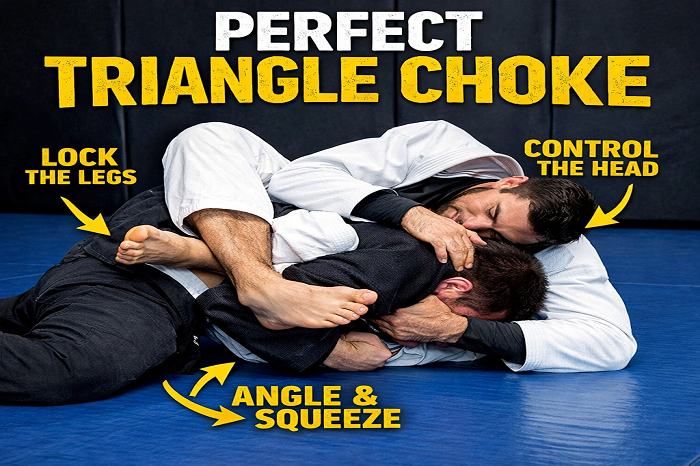
The closed guard is one of the most iconic positions in Brazilian Jiu Jitsu. It offers a unique blend of defensive security and offensive potential. Among the various submissions available from this bottom position, the triangle choke stands out as perhaps the most versatile and devastating. It is a technique that uses the incredible strength of your legs against the vulnerable neck and shoulder of an opponent. Achieving mastery of this move requires more than just raw power; it demands precision, timing, and an understanding of human anatomy.
Whether you are a hobbyist or an aspiring competitor, refining your triangle choke will fundamentally change how opponents approach your guard. In fact, many practitioners find that once they develop a “threat” of a triangle, it opens up a world of other attacks like armbars and sweeps because the opponent becomes so preoccupied with defending their neck. For those looking to sharpen these skills in a structured environment, Piratebjj offers Jiu jitsu madison AL to help students reach their full potential.
Understanding the Mechanics of the Triangle
Before diving into the setup, it is essential to understand what actually makes a triangle choke work. The submission is technically a blood choke. This means you are not crushing the windpipe, but rather constricting the carotid arteries on either side of the neck. According to the technical definitions found on Wikipedia, the move involves encircling the opponent’s neck and one arm with the legs, creating a configuration that resembles a triangle.
The pressure comes from two specific points. One side of the opponent’s neck is compressed by your thigh, while the other side is compressed by their own shoulder, which is being forced into their neck by your other leg. If you do not have an arm inside the “triangle” of your legs, you cannot finish the choke. Conversely, if both arms are inside, the opponent has too much space to breathe and posture up. The “one arm in, one arm out” rule is the golden law of the triangle.
The Anatomy of Pressure
To maximize efficiency, you must focus on the angle of your body. Beginners often try to finish the choke while lying directly in front of their opponent. This is a common mistake that relies too much on squeezing the hamstrings. Instead, you should aim to create a perpendicular angle. By cutting your hips to the side, you shorten the distance your legs have to travel and create a much tighter seal around the neck.
Establishing the Setup: Breaking Posture and Controlling Arms
The biggest obstacle to a successful triangle from closed guard is the opponent’s posture. If an opponent can keep their head up and their spine straight, your legs will never be able to clear their shoulders. Therefore, every setup must begin with a concerted effort to break their posture and control their wrists.
Wrist and Elbow Control
A classic way to enter the triangle is the “push-pull” method. You grab both of the opponent’s wrists. You push one wrist into their chest while pulling the other wrist toward you. Simultaneously, you open your guard and throw your leg over the shoulder of the arm you are pushing. This creates the “one arm in, one arm out” scenario instantly.
Using the Overhook
If an opponent is playing a very tight, heavy game, grabbing wrists might be difficult. In this case, seeking an overhook on one arm can be more effective. By trapping their arm deep under your armpit, you limit their ability to pull away. You can then use your free hand to push their opposite hand down or pull their head toward your chest.
Recent trends in grappling research, often highlighted in Google News, suggest that the most successful submission hunters are those who prioritize “connection” over “speed.” This means maintaining constant contact with the opponent’s torso as you transition your legs into position, ensuring they cannot slip away during the brief moment your guard is open.
Refining the Finish: Cutting the Angle and Squeezing
Once you have locked your legs, the work is not yet done. A common frustration for many practitioners is “locking the figure four” but failing to get the tap. This usually happens because the choke is “long” rather than “wide.”
The “Underhook the Leg” Technique
To finish a stubborn triangle, you should reach under the opponent’s leg or arm on the side of your “locking” leg. This helps you pull yourself around the corner, creating that crucial 90-degree angle. As you rotate, your shin should line up perfectly across the back of their neck.
The Mechanics of the Squeeze
Do not just squeeze your knees together. Instead, think about three distinct motions:
-
Pull the head down: Use both hands to bring their crown toward your chest.
-
Flex your toes: Pointing your toes toward the ceiling (dorsiflexion) engages the muscles in your calves and thighs, making the “walls” of the triangle harder.
-
Bridge your hips: A slight upward movement of the hips can eliminate any remaining “dead air” inside the lock.
Professional athletes often discuss the mental fortitude required for high-level competition, a topic frequently covered by Forbes. In BJJ, this translates to staying calm while finishing a submission. If you rush the squeeze, you will burn out your legs before the opponent taps. Patience is a technical requirement.
Conclusion and Next Steps
The triangle choke from closed guard is a masterpiece of efficiency. It allows a smaller person to control and defeat a much larger adversary by utilizing the strongest parts of their body against the most vulnerable parts of the opponent. By focusing on posture control, creating sharp angles, and maintaining a patient squeeze, you can turn your closed guard into a dangerous place for anyone who enters it.
Remember that Jiu Jitsu is a journey of a thousand repetitions. Every time an opponent escapes your triangle, they are giving you a lesson in where your holes are. Do not get discouraged; instead, refine your grips and try again.
Take your training to the next level. If you are ready to master the nuances of the triangle and other high-level techniques, don’t wait. Join a community of dedicated practitioners and learn from the best. Visit us today to see how Piratebjj offers Jiu jitsu madison AL for students of all skill levels. Start your journey toward the black belt today!






















Leave a Reply