

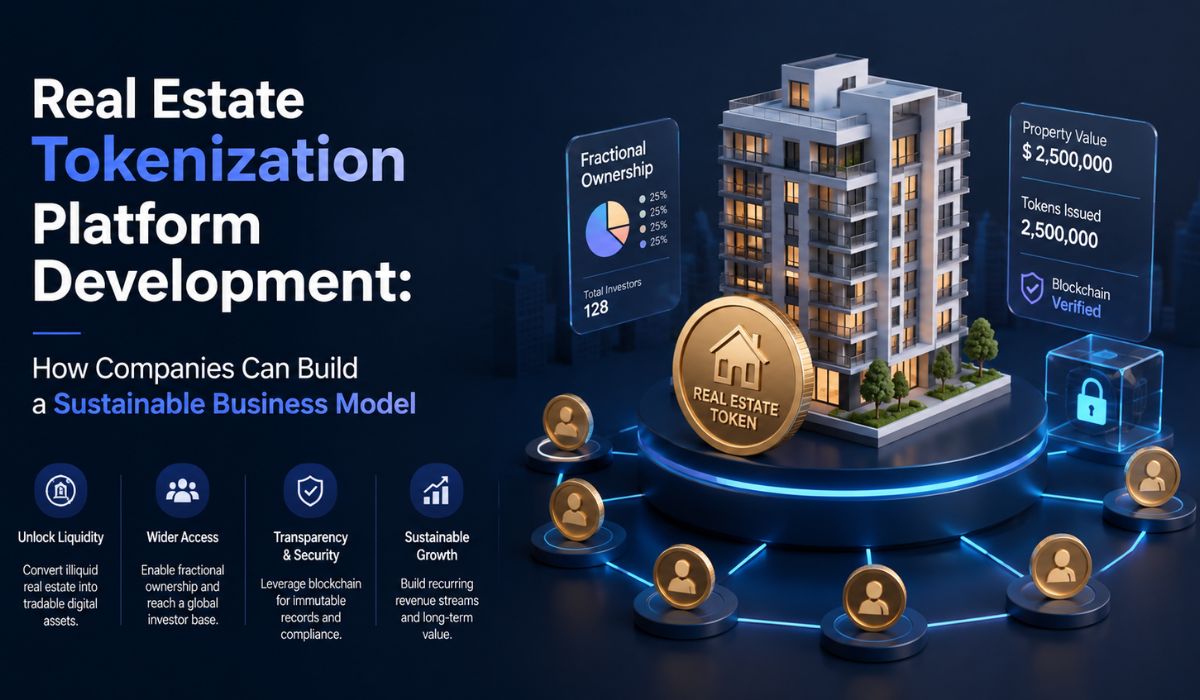
Real estate tokenization has become an important area within the digital asset market as property owners, investment firms, and technology companies look for new ways to structure property ownership and investment. Through tokenization, rights associated with a property or real estate fund can be represented digitally on a blockchain. Investors can then hold tokens that represent an economic interest, ownership right, revenue share, or another legally defined claim.
For companies entering this market, launching a platform is only one part of the business journey. A sustainable model requires suitable revenue sources, a practical property onboarding process, investor protection measures, regulatory planning, technology maintenance, and a strategy for attracting both property issuers and investors. This is where real estate tokenization platform development becomes a business decision rather than only a technology project.
A company entering this field may work with a real estate tokenization company or a real estate asset tokenization company to develop the technology and operational framework. The objective should be to create a business that can generate recurring income while maintaining reliable operations as the property portfolio and user base grow.
1. Select a Real Estate Tokenization Business Model
The first method is to decide how the platform will generate revenue. Companies can choose several models depending on their target customers and the type of properties they plan to tokenize.
A platform can charge property owners an onboarding fee when they list assets for tokenization. Another option is to collect a percentage from each token sale. Subscription plans can also be offered to property developers, asset managers, investment firms, or real estate funds that need recurring access to platform services.
Transaction fees can provide another source of income when investors buy, sell, transfer, or redeem tokens. Additional income may come from custody services, compliance services, property administration, reporting, and secondary-market transactions.
A mixed revenue model is often more practical than relying on one income source. For example, a platform could combine listing fees, token issuance charges, transaction fees, and recurring enterprise subscriptions.
2. Focus on a Specific Property Segment
The second method is to avoid entering every property category at once. A focused market can help a new platform develop its processes around a particular type of asset.
Residential properties, commercial buildings, hotels, student housing, warehouses, healthcare facilities, and vacation rental properties can all have different investment structures. A platform may initially focus on commercial properties or income-producing residential assets where rental revenue can provide an understandable investment proposition.
Market selection should consider property supply, investor interest, legal requirements, average transaction value, and expected holding periods. Companies should also study whether property owners in the selected segment have a genuine reason to use tokenization.
A focused approach can help a real estate tokenization development company create features that match a specific market instead of attempting to support every possible asset from the beginning.
3. Create a Practical Property Onboarding Process
The third method is to make property onboarding a structured business process. Tokenization platforms depend on a continuous supply of suitable real estate assets. Without properties, investor acquisition alone cannot support the business.
Property owners should submit information about ownership, valuation, location, legal status, financial performance, existing liabilities, and intended token structure. The platform operator can then work with legal and property professionals to review the information before an asset is offered to investors.
Due diligence should cover title documentation, property valuation, ownership structure, existing loans, tax considerations, rental income, operating expenses, and applicable securities rules. The exact process will vary according to the jurisdiction and token structure.
A real estate tokenization platform development company can incorporate property submission, document management, approval workflows, and status tracking into the platform so that internal teams can manage listings more effectively.
4. Design Token Structures Around Legal Rights
The fourth method is to treat token design as a legal and financial matter rather than simply a technical function. A token needs to represent a defined right or interest.
Companies may use different structures, including direct property ownership through a legal entity, shares in a special purpose vehicle, revenue-sharing arrangements, debt instruments, or fund interests. Each structure can have different legal and tax implications.
The platform should clearly connect the digital token with the underlying legal agreement. Smart contracts can manage token issuance, transfers, distributions, and other programmed actions, but the legal documentation remains important.
Before launching a real estate token development project, companies should work with legal professionals who understand securities, property ownership, taxation, investment regulations, and digital assets in the intended market.
5. Build Investor-Focused Platform Features
The fifth method is to design the platform around the information investors need before making a decision. A property marketplace should provide useful information about each investment rather than presenting only token prices.
Property pages can include valuation details, rental income, occupancy information, expected returns, holding periods, associated costs, ownership structure, risk disclosures, and relevant documentation. Investors should also have access to their transaction history, token holdings, distributions, and account information.
KYC and AML procedures can be integrated into the registration process where required. Depending on the market, investors may also need to meet eligibility requirements before purchasing specific offerings.
A well-planned investor experience can reduce confusion and support better participation in the real estate tokenization ecosystem.
6. Develop Multiple Revenue Channels
The sixth method is to create several income sources instead of depending entirely on token sale commissions.
For example, the platform may generate revenue through:
- Property listing fees
- Token issuance fees
- Investor transaction fees
- Monthly or annual subscriptions
- Asset administration fees
- Secondary trading fees
- Custody-related services
- Compliance and reporting services
- White-label platform licensing
- Enterprise integrations
Different customer groups may receive different pricing plans. A property developer may prefer a project-based fee, while an investment firm may prefer an annual subscription.
The pricing model should also consider the cost of legal reviews, blockchain transactions, cloud infrastructure, customer support, compliance operations, and ongoing platform maintenance.
7. Plan for Secondary Market Activity
The seventh method is to consider what happens after the initial token sale. Investors may want to transfer or sell their holdings before the underlying property is sold.
A secondary marketplace can provide a place for eligible users to trade tokens according to applicable regulations. The platform can earn transaction fees from these activities while giving investors another potential route for managing their holdings.
However, secondary trading cannot simply be treated as a standard cryptocurrency exchange feature. The rights attached to real estate tokens, investor eligibility, transfer restrictions, jurisdictional requirements, and applicable securities laws need to be considered.
Companies should therefore decide early whether secondary trading will be included in the initial product or introduced during a later stage.
8. Keep Technology Costs Under Control
The eighth method is to plan technology expenses according to actual business requirements. Real estate tokenization platform development can involve blockchain infrastructure, smart contracts, wallets, investor dashboards, property management functions, payment systems, identity verification, compliance tools, APIs, cloud infrastructure, and security testing.
Companies do not necessarily need every feature during the first release. A minimum viable platform can focus on property onboarding, investor registration, compliance checks, token issuance, portfolio management, and basic reporting.
As transaction volume and asset listings increase, additional infrastructure can be introduced based on actual usage. This approach can help a company manage its technology budget without compromising the functions required for its initial business model.
9. Establish Compliance as an Ongoing Business Function
The ninth method is to treat compliance as part of daily operations. Real estate tokenization can involve securities regulations, property laws, tax rules, KYC requirements, AML obligations, investor restrictions, data protection requirements, and financial reporting standards.
These requirements can differ significantly between countries. A company operating across multiple markets may need separate legal structures, investor eligibility rules, disclosure documents, and token models for different jurisdictions.
A real estate tokenization development company can implement compliance-related platform functions, but business operators still need legal and compliance professionals to establish the policies and review changes in regulations.
10. Create Partnerships Across the Real Estate Ecosystem
The tenth method is to establish relationships with organizations that already operate in the property and investment sectors. A tokenization platform may need property developers, brokers, valuation firms, legal advisors, financial institutions, custodians, payment providers, technology providers, and investment managers.
Partnerships can help a platform obtain property listings and reach potential investors. For example, a property developer may provide assets while an investment firm brings qualified investors. A legal partner can assist with documentation, while a technology provider manages blockchain infrastructure.
Companies evaluating the market can also study Top real estate tokenization companies and Best real estate tokenization companies to understand common platform features, pricing approaches, supported assets, and geographic focus. The purpose should be market research rather than simply copying another platform’s model.
11. Build Trust Through Reporting and Property Data
The eleventh method is to provide regular information about tokenized properties. Investors need access to relevant updates throughout the investment period.
A platform can provide rental income reports, occupancy figures, property valuation updates, distributions, expenses, major property events, and other relevant information. The reporting frequency can depend on the investment structure.
For companies offering real estate tokenization, reliable reporting can also support customer retention. Investors are more likely to remain engaged when they can easily track what is happening with their holdings and the underlying property.
12. Use White-Label and Enterprise Opportunities
The twelfth method is to consider business-to-business revenue in addition to direct investor services. Not every property company wants to create its own technology infrastructure.
A platform operator can offer white-label services to real estate firms, investment companies, fund managers, and property businesses. These customers can use the underlying platform while presenting the service under their own brand.
Enterprise contracts can generate recurring revenue and may provide a broader customer base than relying only on individual investors. A real estate tokenization company can therefore position its technology as infrastructure for property businesses rather than only as a consumer investment application.
13. Measure Business Performance With Relevant Metrics
The thirteenth method is to track financial and operational metrics from the beginning. Platform traffic alone does not show whether the business model is working.
Companies can monitor the number of properties onboarded, total tokenized asset value, investor registration rates, completed transactions, average transaction value, recurring revenue, customer acquisition costs, platform operating expenses, and investor retention.
Property-owner retention is another useful measure. If companies repeatedly return to tokenize additional assets, the platform may have found a practical product-market fit.
Regular measurement also helps identify which revenue channels are contributing most to the business and where expenses need adjustment.
14. Prepare the Business for Long-Term Market Changes
The fourteenth method is to plan for changes in regulation, investor behavior, blockchain infrastructure, and property markets. Real estate tokenization is still developing, so companies should expect their business model to evolve.
A platform may initially focus on primary token offerings and later introduce secondary trading, institutional investment products, cross-border offerings, or integrations with property management systems.
The business should also maintain a process for reviewing regulatory changes and technology risks. This makes it easier to update the platform when market conditions change without rebuilding the entire operating model.
Conclusion
A sustainable real estate tokenization business requires more than launching a blockchain-based platform. Companies need a practical revenue structure, reliable property sourcing, suitable legal arrangements, investor-focused features, compliance procedures, controlled technology expenses, useful reporting, and partnerships across the property ecosystem. Real estate tokenization platform development should therefore be planned as a long-term business project that connects real estate operations with digital asset infrastructure. Companies can begin with a focused property segment and a limited feature set, then introduce additional services as demand grows. Choosing the right real estate tokenization development company can also influence the technology, integrations, smart contract structure, and future maintenance of the platform. Blockchain App Factory provides Real estate tokenization development services for businesses looking to establish platforms for tokenized property assets, investor participation, and digital real estate markets.
FAQs
1. What is a real estate tokenization platform?
A real estate tokenization platform is a digital system that allows eligible real estate assets or related ownership interests to be represented through blockchain-based tokens. The platform can manage property listings, investor onboarding, token issuance, transactions, distributions, and reporting.
2. How does a real estate tokenization platform make money?
A platform can earn through property listing fees, token issuance charges, transaction fees, subscriptions, asset administration, custody-related services, secondary trading fees, and white-label licensing.
3. Is real estate tokenization legal?
The legal status depends on the country, asset structure, token rights, investor type, and applicable financial regulations. Companies should obtain legal advice before issuing or selling tokens.
4. What features should a real estate tokenization platform include?
Common features include property onboarding, investor registration, KYC and AML processes, token issuance, wallet integration, investment dashboards, payment processing, transaction records, distribution management, reporting, and administrative controls.
5. Why is property due diligence important?
Due diligence helps verify ownership, valuation, financial information, liabilities, legal documentation, and other property-related details before an asset is offered to investors.
6. Can companies offer tokenized properties to international investors?
International participation may be possible, but it depends on the laws of the property location, platform location, and investor’s jurisdiction. Investor eligibility and cross-border financial rules must be reviewed before offering such investments.
7. What is the role of a real estate tokenization development company?
A real estate tokenization development company can provide blockchain development, smart contract creation, platform engineering, wallet integration, user interfaces, backend systems, security testing, and maintenance services required for a tokenization platform.
8. Can a company launch a white-label real estate tokenization platform?
Yes. A company can license or develop a white-label platform and offer tokenization services under its own brand. This model can be useful for property firms, investment businesses, and financial service providers that want to enter the market without developing every component internally.



















Leave a Reply