

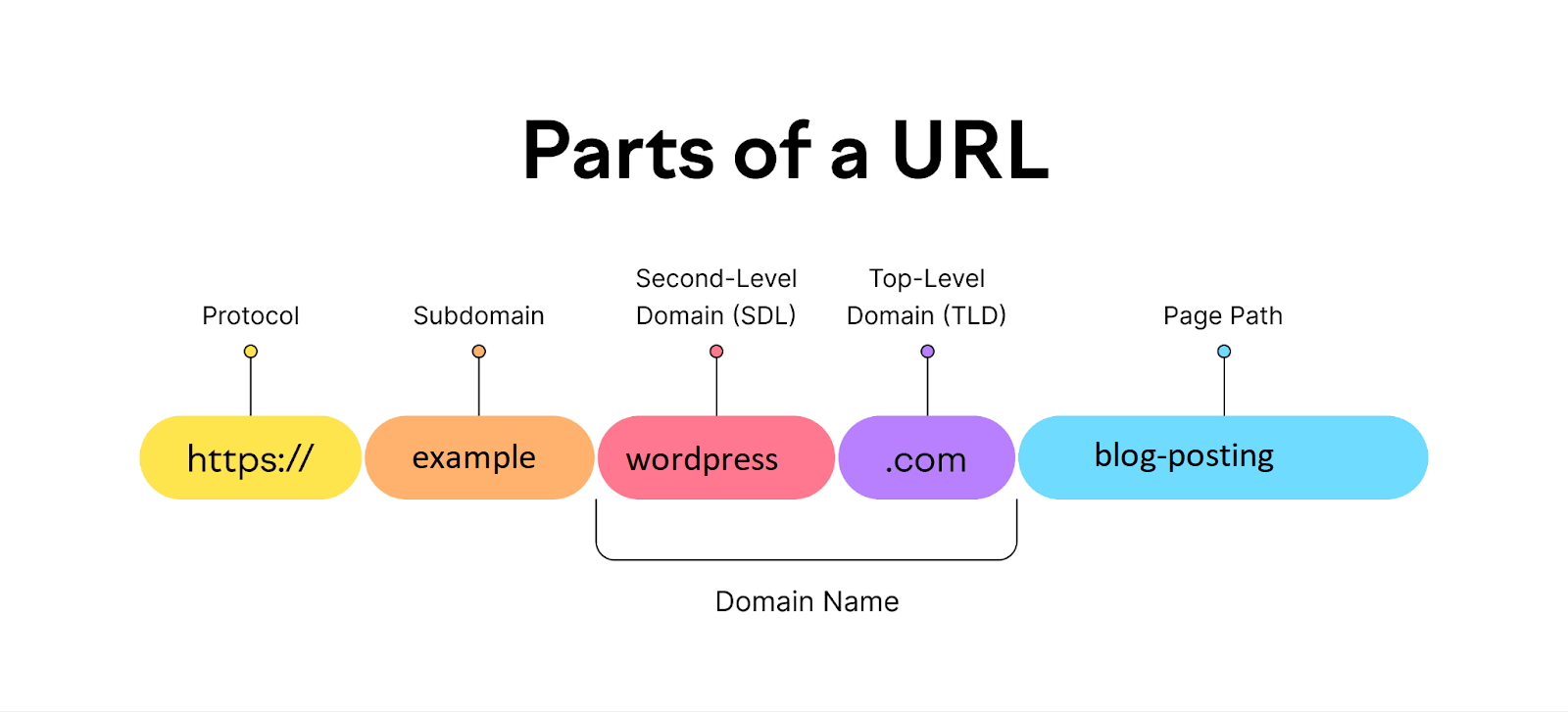
A backlink from example.wordpress.com is counted as a backlink from the subdomain itself, not from the main WordPress.com domain. Google evaluates every WordPress.com subdomain as an independent website with its own authority, trust score, backlink profile, and ranking power. Because of this, the SEO value of your backlink depends on the strength of example.wordpress.com, not on WordPress.com’s overall domain authority.
Why This Question Matters in 2026 SEO & AI Search
With Google’s AI Overview, Gemini AI Search, and Bing’s Deep Search reshaping how SEO works, understanding backlink sources has become more important than ever. Many site owners assume that a link from a WordPress.com subdomain automatically carries heavyweight authority because WordPress.com is one of the most trusted CMS platforms online.
But this is only half-true.
In 2026, Google’s link evaluation system focuses more on content quality, topical relevance, entity authority, and source reputation, not the parent platform’s domain authority. This means that backlinks from WordPress subdomains like:
-
yourblog.wordpress.com
-
technews.wordpress.com
-
example.wordpress.com
are not treated the same as authoritative backlinks from WordPress.com’s core pages.
This article explains exactly how Google treats these backlinks, how they affect your rankings, how to evaluate their value, and how to optimize this for AI search and human search visibility.
What Google Says About Subdomain Backlinks
Google has repeatedly confirmed that subdomains are treated as separate websites.
Here are Google references for user understanding:
-
Google’s official explanation on subdomains vs. subdirectories:
https://developers.google.com/search/docs/crawling-indexing/subdomains-subdirectories -
John Mueller discussing subdomain independence:
https://www.youtube.com/watch?v=vaOK97YmvfA
The summary from Google:
Every subdomain is treated as its own domain unless Google finds strong signals to merge it.
So:
example.wordpress.com ≠ wordpress.com in SEO value.
This is the foundation of understanding WordPress.com backlinks.
Does the Authority of WordPress.com Transfer to Its Subdomains? (No.)
WordPress.com has enormous domain-level trust, but this does not automatically apply to millions of subdomains created by users.
Why the authority doesn’t transfer
-
Different owners
(Anyone can create a free subdomain.) -
Different content quality
One subdomain may be high-quality, another may be spam. -
Different site purposes
Some are personal blogs, some affiliate blogs, some PBN-style networks. -
Different backlinks
Each subdomain builds its own backlink history.
Google treats each one as a unique entity.
Does a Backlink From example.wordpress.com Help SEO?
Yes — but only if the subdomain itself has value.
The SEO power depends entirely on how strong example.wordpress.com is.
Factors that make it a valuable backlink:
-
The subdomain is aged
-
The blog has traffic
-
The content is consistent
-
It has organic backlinks
-
The topic matches your niche
-
The link is placed naturally within content
Factors that make it weak:
-
The subdomain was created only for link selling
-
Content is AI-spun or irrelevant
-
The site has no traffic
-
Posts are thin or repetitive
-
The site has a spammy link profile
Google’s link spam documentation explains how it devalues low-quality links:
https://developers.google.com/search/docs/fundamentals/spam-policies/link-spam
Where Exactly Does Your Backlink Count?
Counts As:
-
Source Domain: example.wordpress.com
-
Platform: WordPress.com
-
Type: Web 2.0 Subdomain Backlink
-
Authority: Based on the subdomain’s metrics
Does Not Count As:
-
A backlink from wordpress.com
-
A high-authority editorial backlink
-
A root-domain authority boost
This distinction is important for anyone evaluating backlinks through Ahrefs, SEMrush, Moz, or Search Console.
How Google AI Overview Evaluates These Backlinks
In 2026, it’s not only Google ranking traditional web pages — AI Overview also reads sources and lists them in AI-based search results.
AI search uses:
-
Page quality
-
Topical alignment
-
Content expertise
-
Entity match
-
Source reliability
-
Natural language patterns
-
Link semantics (contextual meaning of the link, not DA/PA)
A WordPress.com subdomain link will help you appear in AI Overview ONLY if:
1. The subdomain has topical similarity
For example, if your site is about SEO and the subdomain also posts SEO topics, AI systems recognize relevance.
2. The link appears naturally
Contextual citations help AI understand why your page is credible.
3. Anchor text reflects the subject accurately
AI systems prefer anchor text that is clear, descriptive, and relevant.
4. The article linking to you answers a real user query
AI Overview extracts high-value answers.
So backlinks inside helpful, human-friendly articles pass stronger signals.
How AI Search Ranks Your Page When Using This Backlink
AI search models (Google AI Overview, Gemini, Perplexity) evaluate backlinks differently than classic SEO.
They look for:
-
Natural language context
-
Semantic relevance
-
Topic continuity
-
Helpful intent
-
Source clarity
AI models don’t care about DA/DR.
They care about whether the link improves user understanding.
So if example.wordpress.com links to your page while explaining something helpful, this boosts your AI ranking potential.
Example: Evaluating the Backlink Quality (User-Friendly Checklist)
Here’s a simple checklist to judge whether the backlink is good:
✔ Age of the Subdomain
Older = more trust.
✔ Does the blog produce helpful content?
You can check with Wayback Machine:
https://web.archive.org/
✔ Does it have organic traffic?
Check using tools like Similarweb:
https://similarweb.com
✔ Does it link to spam or casinos?
Check outbound links — if it links to spam, avoid it.
✔ Is your niche relevant?
Same topic = stronger impact.
✔ Is the link inside paragraphs (contextual)?
Contextual > sidebar/footer links.
Benefits of Getting a Backlink from a Good WordPress Subdomain
1. Faster indexing
WordPress subdomains are crawled frequently.
2. Higher trust than random new domains
Even small subdomains benefit from WordPress.com infrastructure.
3. Good for diversified link profile
Google doesn’t like backlink patterns — Web 2.0 links create diversity.
4. Helpful for new websites
If your website is new, these links help Google discover your content sooner.
Limitations You Should Know
Not everything about Web 2.0 backlinks is positive.
❌ Not high authority by default
Subdomains start at zero.
❌ Many subdomains get de-indexed eventually
Low-quality ones get removed by WordPress or ignored by Google.
❌ Overuse can trigger link spam signals
Avoid creating unnatural link networks.
❌ Not as strong as editorial backlinks
Guest posts, news mentions, and branded citations are still far superior.
How to Optimize Your Content for AI Search Using This Backlink
1. Use entity-based keywords
Include brand names, locations, products, and niche-specific terms.
2. Maintain clear question–answer formatting
AI systems extract clean answers.
3. Use semantic keyword variants
Example:
“WordPress subdomain backlinks”
“SEO value of WordPress.com link”
“Does subdomain authority pass ranking power?”
4. Keep paragraphs readable
AI models prefer clear, short, meaningful language.
5. Add helpful internal links
This boosts your authority and increases your AI indexing rate.
Frequently Asked Questions
1. Does a backlink from example.wordpress.com count as WordPress.com?
No. It counts only as a backlink from that subdomain.
2. Is a WordPress subdomain backlink valuable?
Yes — if the subdomain is strong, relevant, and active.
3. Does WordPress.com authority pass to subdomains?
No. Every subdomain builds its own authority.
4. Are WordPress subdomain backlinks safe?
Yes, if they come from active and natural blogs.
5. Can this backlink help me appear in Google AI Overview?
Yes — if the linking content is helpful, niche-relevant, and answer-focused.
A backlink from example.wordpress.com is treated as a backlink from that specific subdomain — not from the main WordPress.com domain. Google evaluates each WordPress.com subdomain independently, which means the backlink’s value depends on the quality, age, relevance, and content of the subdomain itself.
These backlinks can help boost your SEO, AI search visibility, and indexing speed, but only when used responsibly and naturally. They are excellent for diversification but should not replace authoritative editorial backlinks.
If you use them strategically — with relevance, quality context, and natural placement — they become a valuable part of your modern AI-focused SEO strategy.






Leave a Reply