

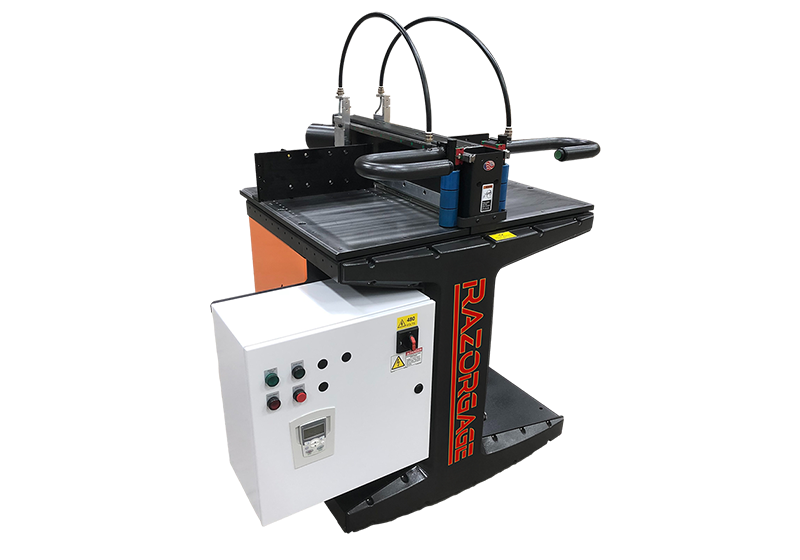
Woodworking and metalworking industries have seen a significant shift in how professionals approach precision cutting. A modern chop saw measuring system has changed the way workshops operate, replacing guesswork with accuracy. For decades, manual measuring tools such as tape measures, rulers, and markers were the standard, but they often left room for human error. Today, digital solutions are proving to be far more reliable, faster, and consistent than traditional approaches.
Understanding The Transition From Manual To Digital
Measuring manually has traditionally been a task that takes skill, patience and precision in order to obtain accurate results. It is not uncommon for even the most skilled of workers to make a mistake while measuring manually. The process and tools used in digital measuring remove much of the guess work that is involved in the manual measuring.
Accuracy in Measuring Makes a Lot of Difference
When it comes to cutting, it’s all about accuracy. Whether you’re cutting wood, metal, or something else, even the smallest mistake in measuring can lead to loss of materials, improper fit and finish, and even structural integrity issues. Digital measuring ensures that there are minimal or no errors in measuring. Unlike manual measuring, digital measuring uses sensors and other tools to ensure precision.
Saves Time and Increases Productivity
Time has always been a precious commodity and it needs to be invested in the best places possible. Manual measuring can cause delays as it requires multiple steps to make sure that accurate measurements are obtained. Having to measure manually can also slow down an entire production line due to the delays that come with it. These factors do not apply when using digital measuring. Digital measuring increases productivity and saves time as it ensures faster measurements with no compromises made when it comes to accuracy.
Avoids Loss of Materials and Saves Costs
Like time, materials are also precious for any business. Any errors that may occur during manual measuring can lead to wastage of materials. In some cases, businesses end up throwing away materials that were supposed to be used due to inaccurate measurements. This causes a lot of losses, especially when dealing with expensive materials. Digital measuring helps prevent the wastage of materials as it ensures that the measurements that are taken are correct to the point.
Ensuring Uniformity of Measurements and Finishes in a Factory Setup
In a factory setting, it is only normal for there to be more than one person measuring. Manual measuring can be tricky as different people can give slightly different results. Digital measuring solves this problem as different people can take measurements and all the results will be uniform. This also ensures that the finishes obtained from the measuring are also uniform.
Technology is Used Almost Everywhere in the World Today
The use of technology has boomed in recent years and it has penetrated deep into almost every sector. Wherever there is automation, it is almost always achieved using advanced technology. As a result people end up adopting the new ways of doing things as opposed to using old manual methods. This has happened in various sectors, including the cutting sectors. Due to the need for higher precision, manual methods have given way to the use of automated calculations as well as automated displays which have been made possible by technology. The need for precision has resulted in the transition from manual to digital.
Digital Measuring Ensures Worker Safety
Manual measuring requires workers to be close to the cutting equipment and this can be very dangerous. When using digital measuring devices, workers do not have to be as close to the cutting equipment as they would have to be when using manual measuring devices. As a result, the risk level is significantly reduced. Digital measuring thus promotes worker safety by reducing the risk levels associated with manual measuring.
Although it might seem that manual measuring is cheaper as compared to digital measuring it is important to note that digital measuring is much more cost-effective in the long run. This is because although the initial set up costs for digital measuring might be high, they save a lot of costs in the long run due to reduced wastage of materials, increased productivity due to faster results and reduced risk levels. This means that the initial costs that seem expensive are offset after a while and the business starts making profits.
It is also important to invest in digital measuring devices so that your business keeps up with the changing trends. Various industries are evolving and with that change comes a need for a higher level of precision. This means that manual measuring will no longer be the best option for measuring. Businesses that still use manual measuring stand a great chance of being overtaken by their competitors who have adopted the use of digital measuring devices in their operations.
Conclusion
The transition from manual to digital measuring methods reflects a broader change in how industries prioritize precision, efficiency, and consistency. While manual tools served their purpose for generations, they simply cannot match the reliability offered by modern technology. Businesses that integrate saw optimization software alongside digital measuring tools often experience improved workflow, reduced waste, and better overall production quality. As competition increases across industries, the shift toward digital solutions is becoming less of an option and more of a necessity for those aiming to stay ahead.
Frequently Asked Questions
Is digital measuring suitable for small workshops?
Yes, digital measuring tools can benefit workshops of any size by improving accuracy and reducing material waste, regardless of production volume.
Do digital tools require special training to operate?
Most digital measuring tools are designed with user-friendly interfaces, meaning operators can learn to use them with minimal training compared to mastering manual techniques.
Are digital measuring tools more expensive than manual ones?
The initial cost may be higher, but the long-term savings from reduced waste and faster operations often make digital tools a more cost-effective choice over time.
Can digital tools completely replace manual measuring?
While digital tools significantly reduce the need for manual measuring, some tasks may still require manual verification depending on the complexity of the project.















Leave a Reply