Modern dentistry no longer relies on guesswork. Before a single filling, implant, or orthodontic bracket is placed, dentists now turn to advanced imaging technology to see exactly what is happening beneath the surface of the teeth, gums, and jawbone. Four tools sit at the heart of this digital transformation: CBCT (Cone Beam Computed Tomography), Intraoral Scanners (IOS), Cephalometric (Ceph) Lateral X-rays, and OPG (Orthopantomogram) X-rays.
Each of these technologies captures a different piece of the puzzle. Used together, they give dentists, orthodontists, oral surgeons, and implantologists a complete, three-dimensional understanding of a patient’s oral and facial anatomy — leading to safer procedures, more accurate diagnoses, and better long-term outcomes.
In this guide, we’ll break down what each of these imaging modalities does, when they’re used, and why they matter for your dental health.
- CBCT Scan: 3D Imaging for Precision Dentistry
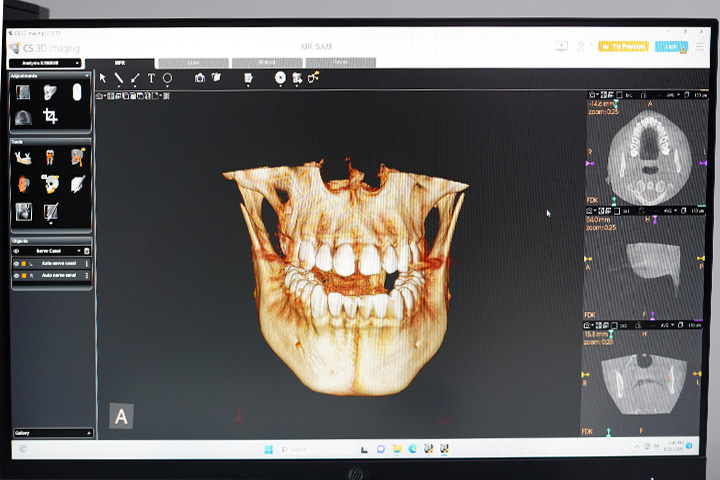
Cone Beam Computed Tomography (CBCT) is a specialized type of dental CT scan that produces highly detailed, three-dimensional images of the teeth, jawbone, nerve pathways, and soft tissues — all in a single scan.
Unlike a traditional 2D X-ray, which flattens overlapping structures into one image, a 3D CBCT scan allows the dentist to rotate, section, and examine the jaw from any angle. This makes it an essential tool for:
- Dental implant planning — measuring bone density, height, and width before implant placement
- Root canal treatment — identifying complex or hidden canal structures
- Impacted teeth assessment — locating impacted wisdom teeth or canines and their proximity to nerves
- TMJ (jaw joint) evaluation
- Complex extractions and oral surgery planning
- Sinus evaluation prior to upper jaw implants
CBCT scans use significantly lower radiation than a medical CT scan, and results are typically ready the same day, giving your dental team the detail they need without unnecessary delay.
- Intraoral Scanner (IOS): Digital Impressions Without the Mess
An Intraoral Scanner (IOS) replaces the traditional putty-based dental impression with a small, handheld wand that captures a highly accurate digital 3D model of your teeth and gums in minutes.
The Intraoral Scanner is widely used for:
- Orthodontic treatment planning — including clear aligners like Invisalign
- Crown, bridge, and veneer fabrication
- Digital smile design
- Monitoring tooth movement and wear over time
- Implant-supported restorations
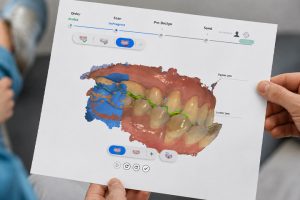
Because the scan is digital, it can be shared instantly with dental labs, eliminating the discomfort of traditional impression trays and reducing the chance of distortion or human error. Patients also benefit from faster turnaround times and a more comfortable overall experience.
- Ceph Lateral X-Ray: The Foundation of Orthodontic Diagnosis
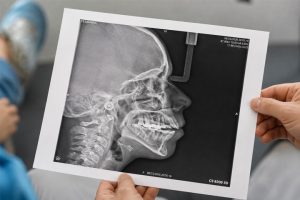
A Cephalometric (Ceph) Lateral X-ray is a standardized side-view image of the skull that captures the relationship between the teeth, jaws, and facial skeleton. It is the single most important diagnostic tool in orthodontics.
The Ceph X-Ray helps orthodontists:
- Analyze jaw growth patterns and facial proportions
- Plan braces, aligners, and orthodontic appliances
- Assess the position of the upper and lower jaws relative to each other
- Evaluate airway space, which is important for patients with breathing-related concerns
- Track treatment progress and growth over time in growing children
Because the Ceph X-ray is taken using a fixed, standardized head position, it allows for precise measurements and reliable comparisons between scans taken months or years apart — something a standard X-ray simply cannot offer.
- OPG X-Ray: The Complete Panoramic Overview
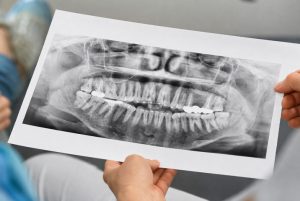
An OPG (Orthopantomogram) X-ray, also called a panoramic dental X-ray, captures the entire mouth — upper and lower jaws, all teeth, jaw joints, and sinuses — in a single rotating scan that takes about 10 to 15 seconds.
The OPG X-Ray is often the very first imaging step in a dental evaluation because it gives a broad, big-picture view that helps identify:
- Cavities, impacted teeth, and wisdom tooth positioning
- Bone loss, infections, cysts, or tumors
- TMJ joint abnormalities
- Sinus-related dental issues
- The overall health of teeth and supporting bone before implants, extractions, or orthodontic treatment
Because it captures the whole mouth in one image, an OPG X-ray reduces the need for multiple individual X-rays and gives dentists a quick, reliable starting point for further diagnosis.
CBCT vs OPG vs Ceph vs IOS: What’s the Difference?
| Imaging Type | Dimension | Best Used For |
| OPG X-Ray | 2D Panoramic | General screening, whole-mouth overview |
| Ceph Lateral X-Ray | 2D Lateral (side profile) | Orthodontic and jaw-growth analysis |
| CBCT Scan | 3D Volumetric | Implants, surgery, complex root canals |
| Intraoral Scanner (IOS) | 3D Digital Model | Impressions, crowns, aligners, smile design |
A general dentist may start with an OPG X-ray for an initial assessment. An orthodontist will almost always request a Ceph Lateral X-ray alongside an OPG before starting braces or aligners. An implant specialist or oral surgeon will rely heavily on a CBCT scan for precise bone measurements, while an Intraoral Scanner is used across nearly every modern restorative and orthodontic case for digital impressions.
Why Accurate Dental Imaging Matters
Choosing the right imaging technology — and having it performed at a facility with modern, well-calibrated equipment — directly affects the accuracy of your diagnosis and treatment plan. Poor-quality imaging can lead to:
- Missed pathologies (cysts, infections, impacted teeth)
- Inaccurate implant placement
- Ill-fitting crowns, bridges, or aligners
- Longer treatment timelines
This is why dentists increasingly refer patients to dedicated diagnostic centers equipped with advanced CBCT, digital OPG, Ceph, and intraoral scanning technology, rather than relying on outdated 2D-only equipment.
Where to Get CBCT, IOS, Ceph & OPG Imaging Done
If your dentist or orthodontist has recommended any of these scans, it’s worth choosing a diagnostic center that offers all four services under one roof — this ensures consistent image quality, faster reporting, and easier coordination with your treating dentist.
Frequently Asked Questions
Is a CBCT scan safe? Yes. CBCT scans use significantly less radiation than a full medical CT scan and are considered safe for routine dental diagnostic use when performed correctly and only when clinically necessary.
Do I need both an OPG and a CBCT scan? Not always. An OPG is often sufficient for general screening. A CBCT scan is typically reserved for cases requiring 3D detail, such as implants, complex extractions, or surgical planning.
Is an intraoral scan more accurate than a traditional impression? Yes, in most cases. Digital scans reduce distortion, improve fit for crowns and aligners, and are more comfortable for patients, especially those with a strong gag reflex.
How long does a Ceph X-ray take? The scan itself takes only a few seconds, though patient positioning takes a few minutes to ensure accuracy.
Final Thoughts
CBCT, Intraoral Scanners, Ceph Lateral X-rays, and OPG X-rays each serve a distinct purpose, but together they form the backbone of modern, precision-based dentistry. Whether you’re planning for braces, dental implants, a root canal, or simply need a routine dental checkup, these imaging technologies help your dental team make informed, accurate decisions — resulting in safer treatments and better outcomes for you.