

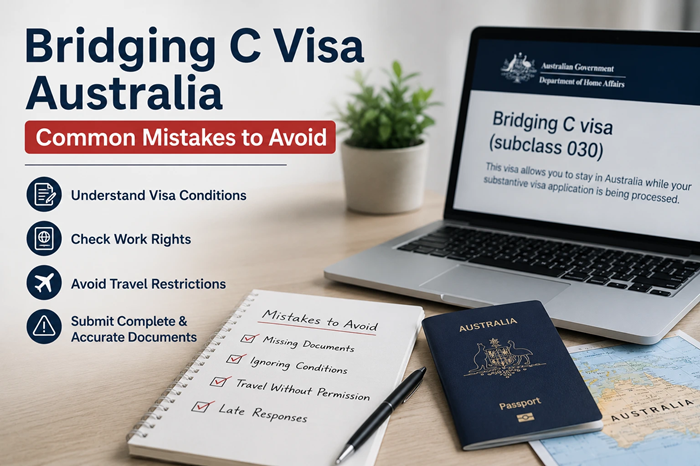
If you’ve applied for another visa while in Australia but don’t currently hold a valid substantive visa, you may be granted a Bridging C visa. This temporary bridging visa allows eligible applicants to remain lawfully in Australia while their substantive visa application is being processed. However, many applicants make avoidable mistakes that can lead to delays, complications, or even affect their future visa options.
In this guide, we’ll explain the purpose of the Bridging C visa, highlight the most common mistakes applicants make, and share practical tips to help you stay compliant throughout your visa journey.
What Is a Bridging C Visa?
A Bridging C visa (Subclass 030) is a temporary visa that allows certain individuals to remain lawfully in Australia after lodging a valid substantive visa application. It is generally available to people who were not holding a substantive visa at the time they applied for their new visa.
Unlike some other bridging visas, a Bridging C visa has specific conditions and limitations, so it’s important to understand your obligations before relying on it.
Who Can Receive a Bridging C Visa?
You may be eligible for a Bridging C visa if you:
- Are currently in Australia.
- Have lodged a valid application for a substantive visa.
- Were not holding a substantive visa when the new application was lodged.
- Meet the eligibility requirements set by the Department of Home Affairs.
Each application is assessed individually, so eligibility depends on your specific immigration circumstances.
Common Mistakes to Avoid
Understanding the most common mistakes can help ensure a smoother visa process.
1. Assuming Every Bridging Visa Is the Same
Many applicants believe all bridging visa types offer identical rights and conditions.
In reality, different bridging visas have different purposes, work rights, travel conditions, and eligibility requirements. Always read your visa grant notice carefully to understand your specific conditions.
2. Applying Too Late
Waiting until after your immigration situation becomes more complicated can reduce your available options.
If you plan to lodge a substantive visa application, ensure it is submitted as early as possible and meets all validity requirements.
3. Providing Incomplete Documents
Missing or inaccurate documents are one of the most common reasons for delays.
Common documents include:
- Passport
- Identity documents
- Previous visa information
- Details of your substantive visa application
- Supporting evidence relevant to your circumstances
Providing complete documentation from the beginning helps avoid requests for additional information.
4. Ignoring Visa Conditions
Every Bridging C visa comes with conditions that must be followed.
Depending on your individual circumstances, these conditions may relate to:
- Work rights
- Reporting requirements
- Maintaining current contact details
- Compliance with Australian laws
Failing to follow visa conditions may affect your current and future visa applications.
5. Assuming You Can Travel Overseas
One of the biggest misunderstandings is believing a Bridging C visa allows international travel. Generally, this visa does not provide travel rights. If you leave Australia while holding a Bridging C visa, the visa is likely to cease, and you may not be able to return under the same visa. Always seek advice before making international travel arrangements.
6. Assuming Work Rights Are Automatic
Not every Bridging C visa holder has permission to work. Some applicants may receive work rights depending on their circumstances, while others may need to apply separately if they experience financial hardship or meet other eligibility requirements. Before accepting employment, always check the conditions attached to your visa.
7. Failing to Respond to Department Requests
During the assessment of your substantive visa application, immigration authorities may request additional information. Ignoring these requests or responding late can delay processing and may negatively affect your application. Monitor your email regularly and respond promptly whenever further information is requested.
8. Keeping Incorrect Contact Details
Many applicants forget to update their:
- Residential address
- Email address
- Phone number
If the Department cannot contact you, important notifications or requests may be missed, resulting in unnecessary delays.
Tips to Avoid Delays
A little preparation can make the visa process much smoother.
Lodge a Complete Application
Double-check every section of your application before submission and ensure all supporting documents are included.
Organise Your Documents
Keep electronic copies of important documents clearly labelled and easy to access if further information is requested.
Understand Your Visa Conditions
Read your visa grant notice carefully so you know exactly what you can and cannot do while holding your Bridging C visa.
Respond Quickly
If immigration authorities request additional documents, provide them as soon as possible to minimise processing delays.
Seek Professional Advice if Needed
If your immigration history is complex or you’re unsure about your eligibility, experienced migration consultants can help you understand your options and prepare a stronger application.
Can a Bridging C Visa Lead to Permanent Residency?
A Bridging C visa itself does not provide a direct pathway to permanent residency. Instead, it allows you to remain lawfully in Australia while your substantive visa application is assessed. If the substantive visa you have applied for leads to permanent residency and your application is approved, you may then become a permanent resident. The Bridging C visa allows you to remain lawfully in the country during the assessment process.
Benefits of a Bridging C Visa
Although temporary, this visa provides several important benefits:
- Allows eligible applicants to remain lawfully in Australia.
- Supports applicants while awaiting a visa decision.
- Helps avoid becoming an unlawful non-citizen.
- Provides continuity during the immigration process.
- May allow work rights in certain circumstances.
Understanding your visa conditions helps you make the most of these benefits while avoiding unnecessary complications.
Final Thoughts
A Bridging C visa is an important temporary bridging visa that helps eligible applicants remain lawfully in Australia while their substantive visa application is being processed. However, simple mistakes such as submitting incomplete documents, misunderstanding work rights, ignoring visa conditions, or travelling overseas without permission can create unnecessary problems.
By preparing a complete application, following all visa conditions, responding promptly to Department requests, and keeping your contact details up to date, you can reduce delays and improve your overall immigration experience. Staying informed and proactive is the best way to ensure a smoother journey while your visa application is under assessment.
























Leave a Reply