Ventilation is essential in the housing industry, where indoor comfort depends on steady air movement. Fenestration products regulate airflow and directly influence livability in residential spaces. Among housing products, casement windows support natural ventilation by enabling efficient air exchange and improving control of fresh air entry, helping maintain balanced and comfortable indoor environments.
Working Mechanism of Casement Windows
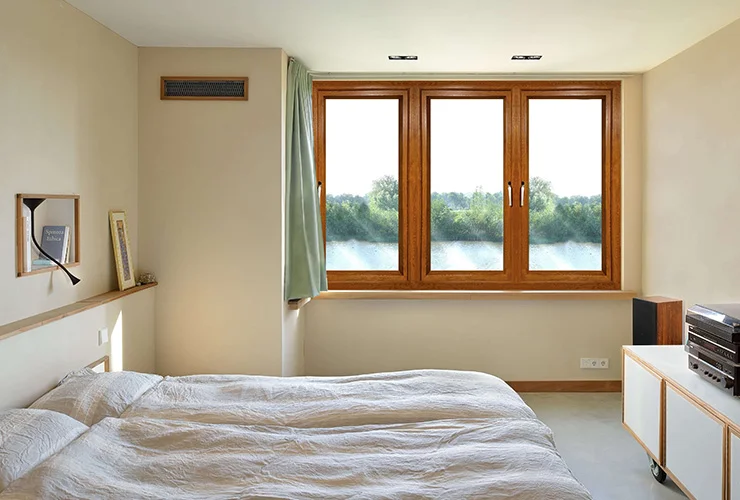
The design of Casement Windows uses a side-hinged system that allows full-swing opening for direct airflow. This structure reduces obstruction and improves air entry into rooms.
The operating features include:
- Side-Hinged Opening: The sash opens fully from one side, allowing maximum air entry.
- Full Swing Movement: Wide opening supports smooth airflow throughout the interiors.
- Wind Direction Control: The opening angle helps guide airflow based on wind direction.
These features ensure that casement windows support controlled ventilation in residential spaces.
Ventilation Efficiency in Residential Spaces
Ventilation efficiency depends on how well indoor air is replaced with fresh outdoor air. Casement systems improve this process through wide-opening capability.
Ventilation performance includes:
- High Air Exchange Rate: Full opening allows quick replacement of stale air.
- Cross-Ventilation Support: Multiple openings improve airflow movement across rooms.
- Unobstructed Airflow: No sliding tracks allow direct air passage.
These advantages make casement windows effective for continuous airflow in housing environments.
Must Read: Soundproof Door for Home That Improves Energy Efficiency
Indoor Comfort Benefits in the Housing Industry
Indoor comfort in the housing industry depends on air quality, temperature balance, and humidity levels. Casement systems improve these conditions through natural airflow.
Key benefits include:
- Temperature Regulation: Air circulation reduces indoor heat build-up.
- Humidity Control: Fresh air movement reduces excess moisture indoors.
- Better Air Quality: Continuous ventilation reduces the accumulation of stale air.
These factors improve everyday comfort in residential spaces.
Application in Modern Housing Design
Modern housing design requires window systems that support both performance and layout flexibility. Casement systems fit well into a variety of residential configurations.
Application aspects include:
- Architectural Fit: Works well with modern façade designs requiring wide openings.
- Spatial Integration: Enhances airflow when paired with a French Door in connected living spaces.
- Design Flexibility: Suitable for different room sizes in residential planning.
These uses highlight the adaptability of casement systems in fenestration products.
Conclusion
Casement systems improve ventilation through full-opening movement and controlled airflow direction. This supports better indoor comfort by balancing temperature, humidity, and air quality. In the housing industry, casement windows offer a reliable solution for enhancing natural ventilation and maintaining healthier living conditions in residential environments.