Travel SEO services play a crucial role in helping travel agencies, tour operators, hotels, and other travel businesses improve their online visibility and attract more potential customers. As more travellers rely on search engines to research destinations, compare travel packages, and make bookings, having a strong SEO strategy has become essential for sustainable business growth.
Why a Strong Online Presence Matters for Travel Businesses
Modern travellers research extensively before making a booking. They compare destinations, read reviews, explore packages, and search for the best available deals. Businesses that appear prominently during these searches have a greater opportunity to capture potential customers.
A well-designed website is the foundation of a successful online presence. It should be visually appealing, easy to navigate, mobile-friendly, and provide visitors with all the information they need to make a booking decision.
However, simply having a website is not enough. Your potential customers need to be able to find it.
The Role of SEO in Travel Marketing
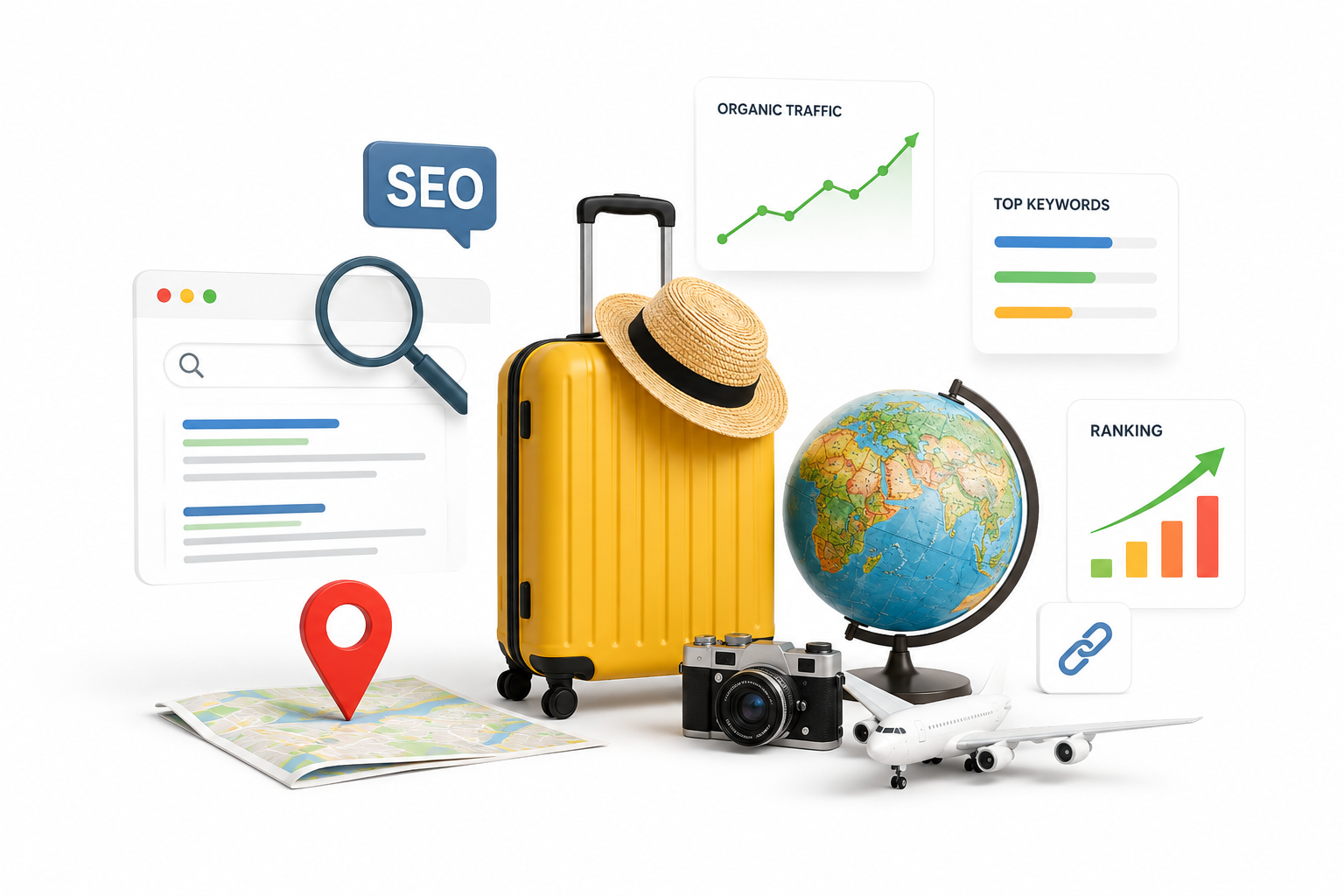
Search engine optimisation plays a vital role in helping travel businesses improve their online visibility. When travellers search for terms related to destinations, accommodation, tours, or holiday packages, businesses that rank higher in search results are more likely to receive valuable organic traffic.
Professional travel SEO services can help businesses optimise their websites for relevant search terms and improve their chances of reaching potential travellers at different stages of the booking journey.
An effective SEO strategy may include:
- Keyword research for travel-related searches
- Destination and location-based optimisation
- Creating informative travel content
- Improving website speed and mobile performance
- Building high-quality backlinks
- Optimising service and package pages
- Improving local search visibility
By implementing these strategies, travel businesses can create a stronger long-term presence in search results.
Create Valuable Content for Your Audience
Content marketing is particularly powerful within the travel industry. Travellers are constantly searching for useful information before choosing a destination or booking a service.
Creating helpful content can establish your business as a trusted source of travel information. For example, travel companies can publish articles about:
- The best places to visit during different seasons
- Travel guides for popular destinations
- Budget travel tips
- Family holiday ideas
- Luxury travel experiences
- Local attractions and hidden destinations
- Packing and travel preparation advice
High-quality content not only helps attract visitors but can also encourage them to explore your services and packages.
Focus on Local and Destination-Based Searches
Location plays an important role in the travel industry. Many users search for specific services using destination-related keywords, such as hotels in a particular city or guided tours in a specific location.
Optimising your website for relevant locations can help attract highly targeted visitors. Creating dedicated destination pages with useful and original information can improve both the user experience and search visibility.
For example, a tour company offering services across multiple destinations could create individual pages highlighting the attractions, experiences, packages, and travel options available in each location.
Make the Booking Experience Simple
Generating website traffic is only one part of the customer journey. Once visitors arrive on your website, the booking process should be as simple as possible.
Complicated navigation, slow-loading pages, or unclear calls to action can cause potential customers to leave without completing an enquiry or booking.
Travel websites should include clear options such as:
- Book Now
- Request a Quote
- View Available Packages
- Contact Our Travel Experts
Customer reviews, destination images, detailed package information, and transparent pricing can also help build trust and encourage conversions.
Build Trust Through Reviews and Social Proof
Travellers often depend on the experiences of others before making a booking decision. Positive reviews, testimonials, and customer stories can significantly influence potential customers.
Travel businesses should actively encourage satisfied customers to leave genuine reviews. These reviews can be displayed on websites and relevant online platforms to strengthen credibility.
Sharing customer experiences, travel photographs, and success stories through social media can also create valuable social proof for your brand.
The Future of Digital Travel Marketing
The way people discover and book travel experiences will continue to evolve. Businesses that invest in their digital presence today will be better positioned to compete in the future.
A combination of quality content, user-friendly website design, targeted marketing, and professional travel SEO services can help travel businesses attract the right audience and achieve sustainable online growth.
Use Social Media to Inspire Potential Travellers
Social media has become an essential marketing channel for travel businesses. Platforms such as Instagram, Facebook, YouTube, and Pinterest allow brands to showcase destinations, travel experiences, accommodation, and special packages through engaging visual content.
High-quality images and videos can inspire people to explore new destinations and begin planning their next trip. Travel businesses can use social media to share:
- Destination highlights
- Travel tips and guides
- Customer experiences
- Behind-the-scenes content
- Seasonal holiday packages
- Limited-time offers
- Videos of popular attractions
Consistent and valuable social media content can help businesses build an engaged audience while increasing brand awareness.
Optimise Your Website for Mobile Users
A large number of travellers search for travel information and make bookings directly from their smartphones. For this reason, a mobile-friendly website is essential for every travel business.
Your website should load quickly and provide a seamless experience across smartphones, tablets, and desktop devices. Important information, including travel packages, pricing, contact details, and booking options, should be easy to access.
A poor mobile experience can lead to higher bounce rates and lost booking opportunities. Regular website optimisation can help ensure visitors enjoy a smooth experience regardless of the device they use.
Target Different Stages of the Customer Journey
Not every website visitor is ready to make a booking immediately. Some people may simply be researching destinations, while others may already be comparing travel packages.
A successful digital marketing strategy should create content for different stages of the customer journey.
For example, informative travel guides can attract people who are still researching, while detailed service pages and special offers can target users who are ready to book.
By understanding customer behaviour, travel businesses can create relevant content and marketing campaigns that guide potential customers towards making a final decision.
Invest in Long-Term Digital Growth
While paid advertising can deliver quick visibility, organic marketing strategies can provide long-term benefits. Creating useful content, improving website performance, and investing in travel SEO services can help businesses generate consistent traffic over time.
The key is to develop a balanced marketing strategy that combines immediate opportunities with sustainable growth.
Travel businesses that consistently improve their digital presence are more likely to remain visible as customer preferences and online search trends continue to change.
Final Thoughts
The travel industry offers enormous opportunities for businesses that understand how to connect with customers online. A strong website, valuable content, effective search optimisation, and a seamless booking experience can make a significant difference in attracting and converting travellers.