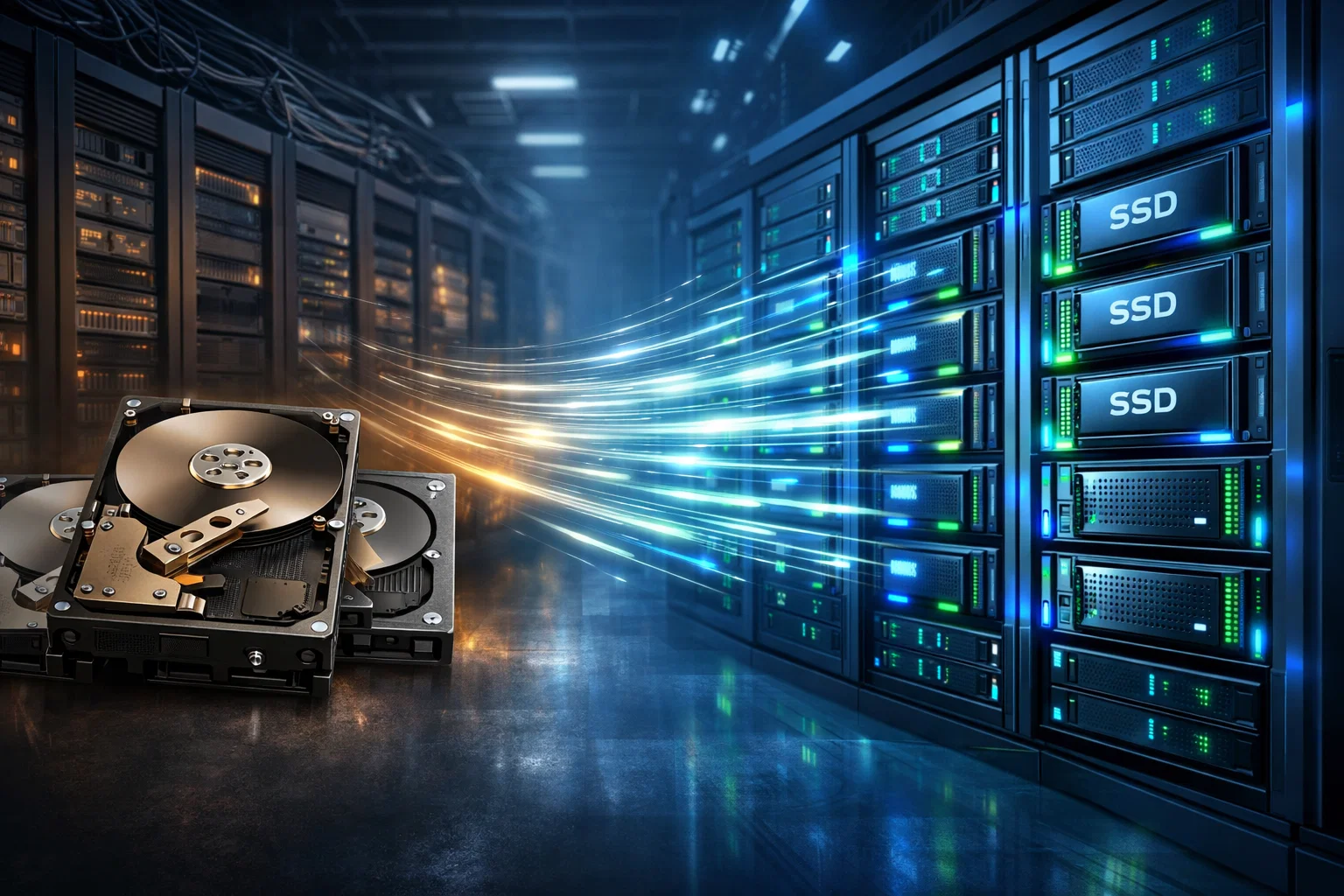
The modern data center is undergoing a quiet but powerful transformation. As businesses generate and process more data than ever before, the need for faster, more reliable, and energy-efficient storage solutions has become impossible to ignore. This growing demand has fueled a significant shift from traditional hard disk drives to solid-state drives, reshaping the infrastructure of enterprise IT environments worldwide. The transition is not just a trend but a strategic move toward performance optimization and long-term scalability.
In today’s competitive digital landscape, organizations are looking beyond cost alone and focusing on performance, durability, and operational efficiency. This is why many enterprises are actively choosing to buy bulk SSDs as part of their infrastructure upgrades, recognizing the long-term value these devices deliver. As workloads become more data-intensive and latency-sensitive, the shift from HDD to SSD is no longer optional but essential.
Understanding the HDD to SSD Transition in Enterprise Storage
To fully appreciate the enterprise SSD boom, it is important to understand the fundamental differences between HDDs and SSDs. Hard disk drives rely on spinning disks and mechanical read and write heads, which inherently limit their speed and increase the risk of mechanical failure. In contrast, SSDs use flash memory with no moving parts, enabling significantly faster data access and improved reliability.
This technological distinction has a direct impact on performance. SSDs can process input and output operations at a much higher rate, which is crucial for modern applications such as real-time analytics, cloud computing, and artificial intelligence. As a result, the HDD to SSD transition is driven largely by the need for speed and efficiency in handling massive data workloads.
Moreover, latency reduction plays a critical role in enterprise environments. Even milliseconds can make a difference in high-frequency trading platforms or customer-facing applications. SSDs provide near-instant data retrieval, allowing businesses to deliver seamless user experiences and maintain a competitive edge.
Why Data Centers Are Embracing HDD to SSD Migration
The shift from HDD to SSD is not happening in isolation. It is part of a broader evolution in how data centers are designed and operated. Several key factors are accelerating this migration.
Performance Gains That Redefine Efficiency
One of the most compelling reasons for adopting SSDs is their unmatched performance. SSDs can deliver several times the read and write speeds of HDDs, significantly reducing application load times and improving system responsiveness. This is particularly beneficial for databases, virtualization platforms, and high-performance computing environments.
As enterprises scale their operations, performance bottlenecks can become costly. SSDs eliminate many of these bottlenecks, enabling smoother workflows and faster data processing. Consequently, organizations can achieve higher productivity and better utilization of their IT resources.
Energy Efficiency and Cost Savings
Although SSDs typically have a higher upfront cost compared to HDDs, they offer substantial savings over time. SSDs consume less power and generate less heat, reducing the need for extensive cooling systems in data centers. This leads to lower energy bills and a smaller carbon footprint.
In large-scale data centers, even a small reduction in power consumption can translate into significant cost savings. Therefore, the HDD to SSD transition is often justified not only by performance improvements but also by long-term operational efficiency.
Reliability and Reduced Downtime
Mechanical components in HDDs are prone to wear and tear, increasing the likelihood of failure over time. SSDs, on the other hand, are more durable because they lack moving parts. This results in lower failure rates and improved data integrity.
For enterprises, downtime can be extremely costly, both financially and in terms of reputation. By adopting SSDs, organizations can minimize the risk of hardware failures and ensure more consistent system availability. This reliability is a major factor driving the shift toward SSD-based storage solutions.
The Role of HDD to SSD in Cloud and Virtualization
Cloud computing and virtualization technologies have transformed how businesses manage their IT resources. These environments demand high-speed storage systems that can handle multiple workloads simultaneously without performance degradation.
Enhancing Virtual Machine Performance
In virtualized environments, multiple virtual machines share the same physical hardware. This can create intense demand on storage systems, especially when using HDDs. SSDs address this challenge by providing faster data access and improved input and output operations per second.
As a result, virtual machines can operate more efficiently, with reduced latency and better overall performance. This makes SSDs an ideal choice for cloud service providers and enterprises running complex virtualized infrastructures.
Supporting Scalable Cloud Architectures
Scalability is a key requirement for modern data centers. As businesses grow, their storage needs increase rapidly. SSDs offer the flexibility and performance needed to support scalable cloud architectures.
The shift from HDD to SSD enables data centers to handle higher workloads without compromising speed or reliability. This is particularly important for organizations that rely on real-time data processing and dynamic resource allocation.
Challenges in the HDD to SSD Transition
While the benefits of SSDs are clear, the transition is not without its challenges. Enterprises must carefully plan and execute their migration strategies to maximize the advantages of SSD technology.
Initial Investment Considerations
The upfront cost of SSDs can be a barrier for some organizations, especially those with large existing HDD infrastructures. However, it is important to consider the total cost of ownership rather than just the initial expense.
When factoring in energy savings, reduced maintenance costs, and improved performance, SSDs often prove to be more cost-effective in the long run. Organizations that take a strategic approach to the HDD to SSD transition can achieve a strong return on investment.
Data Migration Complexity
Migrating data from HDDs to SSDs requires careful planning to avoid disruptions. This process can involve data transfer, system reconfiguration, and testing to ensure compatibility and performance.
To minimize risks, enterprises should adopt a phased migration approach. This allows them to gradually transition their workloads to SSDs while maintaining operational stability.
Storage Capacity Planning
Although SSD capacities have increased significantly in recent years, they may still be more expensive per gigabyte compared to HDDs. This can pose challenges for organizations with massive data storage requirements.
However, advancements in SSD technology continue to improve capacity and reduce costs. Additionally, many enterprises adopt hybrid storage solutions, combining SSDs for high-performance workloads with HDDs for archival data.
Future Outlook of HDD to SSD Adoption
The momentum behind SSD adoption shows no signs of slowing down. As technology continues to evolve, SSDs are becoming more affordable and accessible to a wider range of organizations.
Advancements in Flash Technology
Innovations in flash memory, such as 3D NAND, are driving improvements in SSD performance and capacity. These advancements are making SSDs an increasingly viable option for enterprise storage at scale.
As manufacturing processes become more efficient, the cost gap between SSDs and HDDs is expected to narrow further. This will accelerate the HDD to SSD transition across industries.
Integration with Emerging Technologies
Emerging technologies such as artificial intelligence, machine learning, and edge computing require high-speed data processing capabilities. SSDs are well-suited to meet these demands, providing the performance needed for next-generation applications.
Data centers that adopt SSDs will be better positioned to leverage these technologies and drive innovation. This makes the shift from HDD to SSD a strategic investment in future readiness.
The Decline of Traditional HDDs
While HDDs are unlikely to disappear entirely, their role in enterprise storage is gradually diminishing. They are increasingly being used for backup and archival purposes rather than primary storage.
As SSD prices continue to fall and performance advantages become more pronounced, the balance will continue to shift in favor of SSDs. This trend underscores the inevitability of the transition toward solid-state storage.
Strategic Considerations for Enterprises
For organizations planning their storage strategy, the decision to move from HDD to SSD should be guided by specific business needs and objectives.
Enterprises should evaluate their workloads, performance requirements, and budget constraints to determine the most suitable storage solution. In many cases, a hybrid approach may offer the best balance between cost and performance.
Additionally, partnering with experienced vendors and leveraging advanced storage management tools can help streamline the migration process. This ensures a smooth transition and maximizes the benefits of SSD technology.
Conclusion
The enterprise SSD boom represents a fundamental shift in how data centers operate. Driven by the need for speed, efficiency, and reliability, the transition from HDD to SSD is reshaping the storage landscape.
While challenges such as initial costs and migration complexity exist, the long-term benefits far outweigh the drawbacks. From improved performance and energy efficiency to enhanced reliability and scalability, SSDs offer a compelling value proposition for modern enterprises.
As technology continues to advance, the adoption of SSDs will only accelerate, making them the cornerstone of future data center infrastructure. Organizations that embrace this change today will be better equipped to handle the demands of tomorrow’s data-driven world.