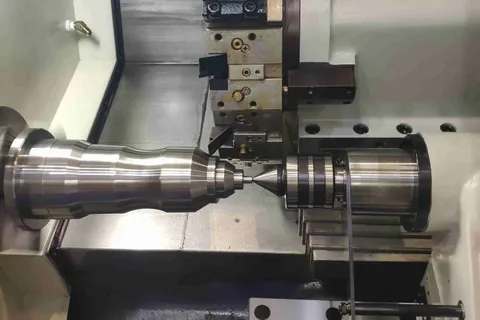
In modern manufacturing, rapid CNC machining has become a critical process for producing high-accuracy components with speed and consistency. Industries such as aerospace, automotive, medical devices, and electronics depend on this technology to reduce production time while maintaining tight tolerances and excellent surface finishes.
This article explores key techniques used in rapid CNC machining to achieve high precision, improve efficiency, and ensure reliable output across complex manufacturing applications.
Advanced CAD/CAM Integration for Precision Design
The foundation of successful rapid CNC machining lies in advanced CAD/CAM integration. Computer-Aided Design (CAD) allows engineers to create highly detailed 3D models, while Computer-Aided Manufacturing (CAM) translates those designs into machine-readable instructions. This seamless connection reduces errors and improves machining accuracy.
Modern CAD/CAM systems also enable simulation before production, helping manufacturers identify potential issues such as tool collisions or inefficient toolpaths. This ensures that high-accuracy components are produced right the first time, reducing waste and rework.
- Enables precise 3D modeling of complex parts
- Reduces human error in programming
- Simulates machining processes before execution
- Optimizes toolpaths for efficiency and accuracy
By integrating CAD and CAM effectively, manufacturers can significantly improve production reliability while maintaining high-speed machining performance.
The ability to simulate and refine designs digitally is especially important in industries where tolerances are extremely tight. It ensures that every stage of production aligns with design expectations.
High-Speed Spindle Technology for Efficiency
High-speed spindle technology is a core element of rapid CNC machining, allowing machines to operate at significantly higher rotations per minute (RPM). This enables faster material removal rates without sacrificing precision, making it ideal for both prototyping and mass production.
These spindles are engineered to reduce vibration and heat generation, ensuring that the cutting tool maintains stability even at high speeds. As a result, manufacturers can achieve smooth surface finishes and accurate geometries in less time.
- Increases cutting speed and productivity
- Reduces machining cycle times
- Enhances surface finish quality
- Minimizes vibration and thermal distortion
High-speed spindles also support a wide range of materials, from aluminum to hardened steel, making them versatile in different manufacturing environments.
The combination of speed and stability allows manufacturers to meet tight deadlines while maintaining strict quality standards in complex part production.
Multi-Axis Machining for Complex Geometries
Multi-axis machining is another essential technique in rapid CNC machining, enabling the production of highly complex parts in a single setup. Unlike traditional 3-axis machines, 4-axis and 5-axis CNC systems allow tools to move across multiple directions simultaneously.
This reduces the need for repositioning the workpiece, which not only saves time but also improves accuracy by minimizing alignment errors. It is especially useful in industries requiring intricate components such as turbine blades, medical implants, and aerospace structures.
- Reduces number of machine setups
- Improves dimensional accuracy
- Allows production of complex geometries
- Shortens overall manufacturing time
Multi-axis systems also enhance tool accessibility, enabling machining of difficult angles and undercuts that are impossible with conventional machines.
As a result, manufacturers benefit from both increased efficiency and superior precision, making this technique essential for advanced production environments.
Toolpath Optimization and Intelligent Programming
Toolpath optimization plays a major role in enhancing rapid CNC machining performance. By calculating the most efficient route for cutting tools, manufacturers can reduce unnecessary movements and shorten machining time.
Intelligent programming software uses algorithms to determine optimal cutting strategies, such as adaptive clearing and high-efficiency milling. This not only improves speed but also extends tool life by reducing wear and tear.
- Minimizes unnecessary tool movement
- Reduces machining time significantly
- Extends tool lifespan
- Improves cutting efficiency and consistency
Optimized toolpaths also help maintain consistent chip load, which is crucial for achieving high-accuracy components without defects.
By leveraging smart programming, manufacturers can ensure smoother operations, lower costs, and more reliable production outcomes.
Real-Time Monitoring and Quality Control Systems
Real-time monitoring systems are essential in modern rapid CNC machining processes. These systems use sensors and software to track machine performance, tool condition, and part quality during production.
By continuously analyzing data, manufacturers can detect issues such as tool wear, vibration, or dimensional deviations early in the process. This prevents defects and reduces the risk of producing faulty components.
- Detects tool wear in real time
- Improves overall production quality
- Reduces scrap and material waste
- Ensures consistent dimensional accuracy
Quality control systems also integrate with CNC machines to automatically adjust parameters, ensuring stable and precise machining conditions throughout production.
This level of automation significantly improves reliability, especially in high-volume manufacturing environments where consistency is critical.
Conclusion
Rapid CNC machining has revolutionized the manufacturing industry by combining speed, precision, and automation. Through advanced CAD/CAM integration, high-speed spindle technology, multi-axis machining, optimized toolpaths, and real-time monitoring systems, manufacturers can produce high-accuracy components more efficiently than ever before.
As industries continue to demand faster production cycles and tighter tolerances, these techniques will remain essential for maintaining competitiveness and delivering high-quality results in modern engineering applications.