As enterprise data volumes continue to grow exponentially, organizations are facing a paradox: they possess more information than ever before, yet accessing meaningful insights often remains slow and technically demanding. Traditional reporting tools, dashboards, and structured query systems still require users to understand database schemas, filters, and metrics definitions. For many business stakeholders, this creates friction between curiosity and clarity.
Custom AI database chatbots are emerging as a transformative solution to this challenge. By enabling users to interact with databases through natural language, these systems eliminate technical barriers and bring conversational simplicity to complex data environments. Instead of writing SQL queries or navigating layered dashboards, users can simply ask questions and receive contextual responses in seconds. This article explores how organizations can implement custom AI database chatbots, the architecture behind them, and the strategic considerations involved in building such systems responsibly and effectively.
The Growing Demand for Conversational Data Access
Modern digital ecosystems generate structured and unstructured data at unprecedented scale. Yet access to this data often remains centralized among analysts or IT teams. When business users require insights, they typically depend on pre-built dashboards or request custom reports, introducing delays and inefficiencies.
Conversational AI changes this paradigm. A chatbot connected directly to an enterprise database enables users to interact with data as naturally as they would with a colleague. Instead of navigating dashboards, they might ask:
-
“What were last month’s sales by region?”
-
“Which customers increased their spending this quarter?”
-
“How does this year’s churn compare to last year?”
This approach reduces dependency on technical intermediaries and accelerates decision-making cycles. It also supports broader data democratization by empowering non-technical teams to access insights independently.
However, successful implementation requires a clear understanding of the underlying concept and system design.
Understanding the Foundation of Database Chatbots
To appreciate how these systems function, it is useful to explore what is database chatbot in conceptual terms. A database chatbot is an AI-powered conversational interface that translates natural language input into structured database queries, retrieves relevant data, and presents the results in a readable format.
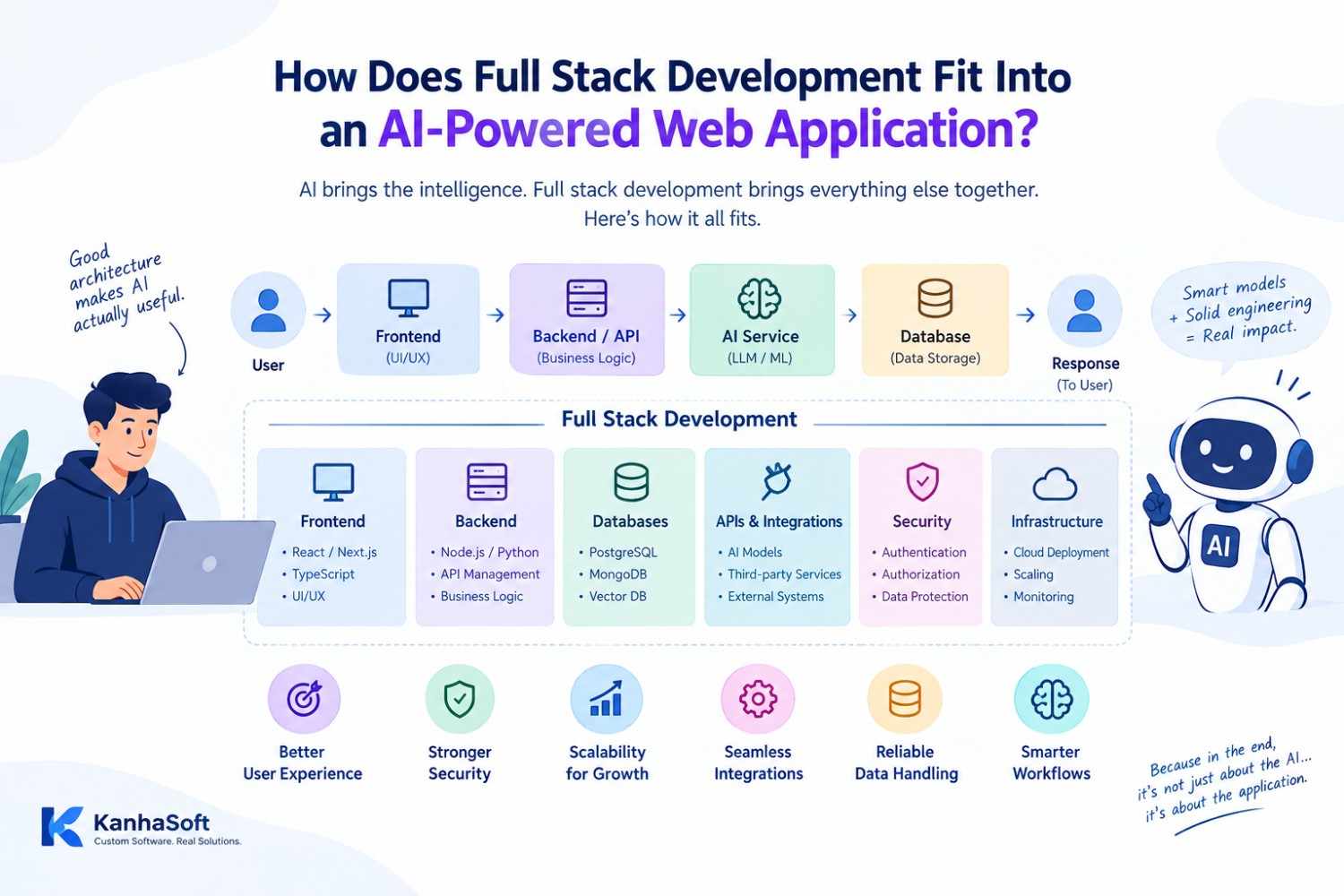
Rather than operating as a generic chatbot, it is tightly integrated with a structured data environment. Its intelligence depends on several coordinated components:
-
Intent recognition – Identifies what the user is asking
-
Entity extraction – Detects specific metrics, timeframes, or categories
-
Schema mapping – Aligns user terminology with database fields
-
Query generation – Produces structured queries such as SQL
-
Access control validation – Ensures users only access permitted data
-
Response formatting – Converts raw results into conversational summaries, tables, or charts
Importantly, large language models alone are insufficient. They must be grounded in the organization’s schema and governed by strict validation rules to avoid inaccuracies or unintended data exposure.
How Custom AI Database Chatbots Work in Practice
Organizations seeking clarity on practical implementation often explore frameworks explaining how to chat with database through chatbot systems. In practice, the workflow follows a structured sequence designed to balance flexibility with control.
Step 1: Natural Language Input
A user submits a query in conversational language through a web interface, product dashboard, or internal application.
Step 2: Intent and Context Interpretation
The AI model analyzes the question, identifying metrics, filters, time ranges, and relational constraints.
Step 3: Schema Alignment
The system maps user-friendly terms (e.g., “revenue,” “active users”) to corresponding database fields.
Step 4: Query Construction
A validated query is generated using predefined logic templates to reduce ambiguity and prevent injection vulnerabilities.
Step 5: Security and Permission Checks
The system verifies role-based access rights before executing the query.
Step 6: Response Delivery
The results are presented conversationally, often accompanied by visualizations or summaries.
Advanced implementations also support:
-
Multi-turn conversations
-
Clarification prompts when ambiguity is detected
-
Follow-up queries referencing previous context
-
Automatic aggregation and comparison logic
This layered architecture ensures both usability and reliability.
Core Architectural Components
Building a production-ready AI database chatbot involves multiple technical layers working in synchronization.
1. Natural Language Processing Layer
This component interprets user intent. While large language models form the foundation, domain-specific fine-tuning significantly improves precision. Enterprises often train models using historical query data to improve contextual alignment.
2. Semantic Data Layer
A semantic layer acts as a bridge between business terminology and technical schemas. For example, “monthly recurring revenue” may involve multiple aggregated database fields. This layer ensures consistent metric definitions across conversations.
3. Query Validation Engine
Before execution, generated queries are examined to:
-
Prevent unauthorized table access
-
Avoid high-cost operations
-
Enforce rate limits
-
Detect structural inconsistencies
This validation step is essential for enterprise environments.
4. Governance and Compliance Framework
Data privacy regulations require strict monitoring of who accesses what data and when. Logging mechanisms and audit trails must be integrated into the chatbot’s backend.
5. Infrastructure and Scalability
To support high user volumes, systems often leverage:
-
API orchestration layers
-
Load balancing
-
Cloud-native scaling
-
Observability tools
Without this infrastructure, performance bottlenecks may undermine user trust.
Build Internally or Partner Strategically
While the concept appears straightforward, delivering an enterprise-grade solution demands expertise across AI engineering, backend architecture, security compliance, and user experience design.
Organizations often evaluate whether to develop the solution internally or collaborate with providers offering specialized AI development services. These services can accelerate time-to-market while ensuring alignment with security and governance standards.
For example, Triple Minds—an AI development company—works with enterprises to design and implement custom conversational AI systems aligned with structured data environments. Firms like Triple Minds typically contribute domain expertise in model grounding, schema alignment, and secure deployment frameworks, helping organizations reduce implementation risk while maintaining architectural integrity.
The decision to build or partner depends on internal capability, project scale, and long-term maintenance strategy.
Implementation Roadmap
A structured rollout minimizes risk and ensures alignment between AI capabilities and business objectives. Organizations pursuing structured database chatbot development generally follow a phased approach.
Phase 1: Data Readiness Assessment
This stage involves evaluating:
-
Schema clarity
-
Data consistency
-
Documentation completeness
-
Role-based access configurations
Without clean and well-documented data, conversational accuracy suffers.
Phase 2: Conversational Design
Here, teams define:
-
Common user intents
-
Query templates
-
Clarification rules
-
Response formatting standards
This design phase ensures that conversational outputs align with business expectations.
Phase 3: Integration and Validation
The chatbot is connected to live systems through APIs or direct database connections, with strict sandbox testing to measure:
-
Query accuracy rates
-
Response latency
-
Edge-case behavior
Phase 4: Controlled Deployment
A limited rollout allows teams to gather feedback and monitor performance before full-scale implementation.
Phase 5: Continuous Optimization
Ongoing improvement includes:
-
Refining prompt strategies
-
Updating schema mappings
-
Monitoring usage patterns
-
Enhancing contextual memory
Conversational AI systems are not static products; they require iterative refinement.
Common Challenges and Mitigation Strategies
Despite its advantages, conversational database access introduces risks that must be proactively addressed.
Hallucinated Outputs
Language models may fabricate responses if insufficiently grounded. Mitigation involves schema-bound query generation and response verification layers.
Ambiguous Queries
Users may submit vague questions. Systems should request clarification rather than guessing intent.
Data Exposure Risks
Improper role enforcement could expose sensitive information. Strict access control validation is essential.
Performance Constraints
Large datasets may slow query response times. Optimized indexing and caching strategies improve responsiveness.
Addressing these risks ensures that conversational interfaces maintain enterprise reliability standards.
Industry Applications
Custom AI database chatbots are gaining traction across multiple sectors.
SaaS Platforms
Customers analyze usage metrics and revenue insights without leaving the product interface.
E-Commerce
Merchants review sales performance, inventory levels, and seasonal trends conversationally.
Financial Services
Advisors query portfolio performance and risk metrics securely.
Healthcare Systems
Administrators assess operational efficiency and patient flow metrics.
Across industries, the common objective remains consistent: simplify access to complex structured data while preserving security and governance.
The Future of Conversational Data Interfaces
As natural language models evolve and enterprise data ecosystems mature, conversational interfaces are expected to become a standard layer in digital products. Rather than replacing traditional dashboards, database chatbots complement them by offering immediate, user-driven insight retrieval.
The shift represents more than a user experience enhancement. It reflects a structural transformation in how organizations think about data accessibility. When users can ask questions in plain language and receive accurate, governed responses instantly, data becomes not just available—but actionable.
Custom AI database chatbots therefore represent a significant step toward more intuitive, inclusive, and responsive digital systems. By combining structured architecture with conversational intelligence, organizations can unlock the full value of their data assets while maintaining the rigor required for enterprise environments.