

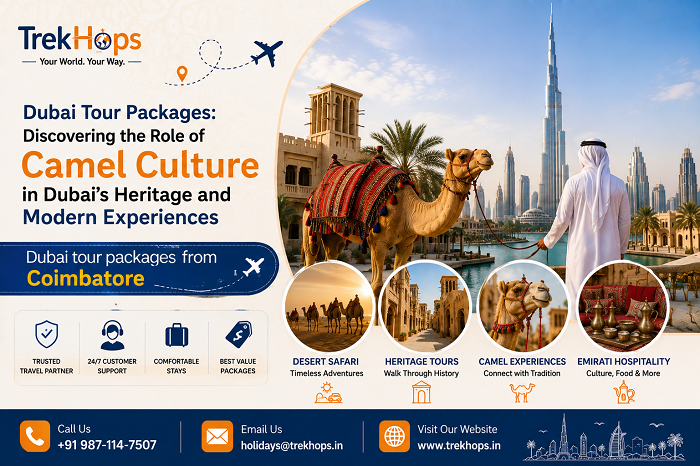
Dubai is known for its futuristic skyline, luxury shopping, world-class attractions, and modern lifestyle. However, beneath this contemporary identity lies a deep connection with desert traditions. Camel culture is an important part of this heritage, reflecting how communities historically traveled, traded, worked, and adapted to life in the Arabian desert are most famous attration for Dubai tour packages.
For travelers exploring Dubai Tour Packages, discovering the role of camels provides a meaningful way to understand Dubai beyond its modern landmarks. Today, camel-related experiences allow visitors to connect with traditional Emirati culture while enjoying the unique landscapes surrounding the city.
Dubai tour packages from Coimbatore
Dubai is often presented as a city of futuristic skyscrapers, luxury shopping, spectacular attractions, and modern infrastructure. Yet beneath this contemporary identity lies a heritage shaped by desert landscapes, maritime traditions, trade, and community life. Among the strongest symbols of this heritage is the camel.
The Historical Importance of Camels in Dubai
The relationship between people and camels developed from the practical realities of desert life.
Camels as Desert Transportation
Travel across the Arabian Peninsula could be challenging because of high temperatures, limited water sources, and long distances between settlements. Camels were particularly valuable because they could travel through arid environments while carrying people and supplies.
Before modern roads and vehicles, camel journeys connected communities across desert routes. A caravan could transport food, water, textiles, spices, and other goods between coastal settlements and inland markets.
This made camels an important part of both everyday life and regional commerce.
Supporting Communities and Trade
Dubai developed as a trading settlement through a combination of maritime and overland connections. Goods arriving through coastal trading routes could be transported onward through desert areas.
Camels therefore formed part of a larger commercial network. Their ability to carry heavy loads over long distances made them useful for merchants and communities moving between different locations.
The animal became closely associated with resilience, mobility, and adaptation to the desert environment.
Camels and Traditional Desert Life
Camel culture was not limited to transportation. Camels became integrated into different aspects of traditional life.
A Source of Food and Everyday Resources
Camel milk has traditionally been consumed in the Arabian Peninsula and remains associated with regional food heritage. Camel meat has also been part of traditional cuisine.
Beyond food, camels provided materials and resources that could be useful to communities living in demanding environments.
Their importance illustrates how desert communities developed relationships with animals that could provide practical benefits while surviving in harsh conditions.
Camels and Family Heritage
Knowledge about caring for camels could be passed from older generations to younger family members.
Understanding how to feed, manage, and travel with camels was part of traditional desert knowledge. This helped preserve practical skills and strengthened the cultural relationship between communities and their animals.
Today, the connection is more often visible through cultural programs, heritage activities, and organized experiences.
Camel Culture and Emirati Identity
Camels have become a recognizable symbol of Arabian and Emirati heritage.
More Than a Symbol
The camel represents important ideas associated with traditional desert life, including patience, endurance, adaptability, and mobility.
Its cultural significance can be seen in heritage events, traditional artwork, literature, storytelling, and public celebrations.
For visitors, learning about this symbolism provides context for understanding why camel-related experiences remain popular in modern Dubai.
Camel Racing as a Traditional Sport
Camel racing is another important part of the region’s heritage.
From Traditional Competition to Organized Sport
Camel racing has historical roots in Gulf communities. Traditionally, races were connected with gatherings and celebrations.
Today, the activity has developed into a more organized sport supported by dedicated racing facilities and modern technologies.
The continued popularity of camel racing demonstrates how a traditional activity can adapt to contemporary conditions while retaining its cultural identity.
Technology and Modern Camel Racing
Modern camel racing can involve specialized equipment, organized training, veterinary care, and technological systems.
This combination of tradition and innovation is particularly representative of the UAE’s broader approach to heritage.
Rather than treating traditional practices as something belonging only to the past, modern systems can help preserve and present them in new ways.
Camel Experiences in Dubai’s Desert Tourism
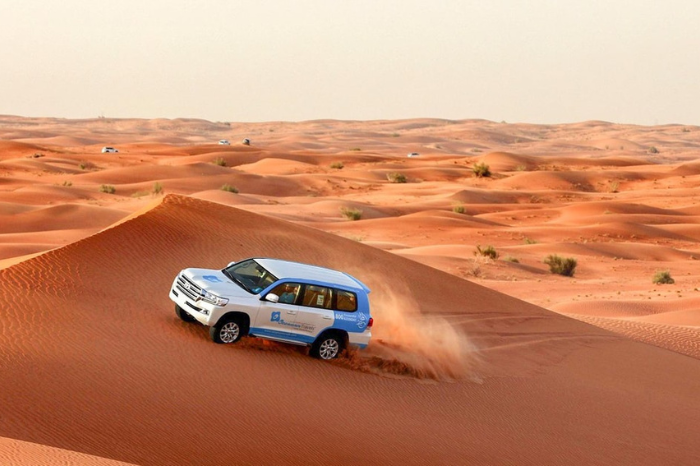
One of the easiest ways for visitors to experience camel culture is through desert tourism.
Traditional Camel Rides
Camel rides allow travelers to experience the desert landscape using a form of transportation that was once essential to life in the region.
A short ride can provide a different perspective compared with traveling by vehicle. The slower pace allows visitors to observe the landscape, dunes, changing light, and surrounding environment.
For many tourists, the experience becomes a memorable part of their Dubai itinerary.
More Than a Desert Ride
Modern camel experiences can be combined with other cultural and recreational activities.
Depending on the experience, travelers may encounter:
- Traditional desert camps
- Local-style meals
- Cultural demonstrations
- Falconry presentations
- Desert photography
- Traditional music
- Sunset experiences
- Educational heritage activities
These combinations can provide a broader introduction to desert culture.
Why the Desert Remains Important to Dubai Tourism
Dubai’s urban landscape has expanded dramatically, but the surrounding desert remains an important part of the destination’s identity.
A Contrast With the Modern City
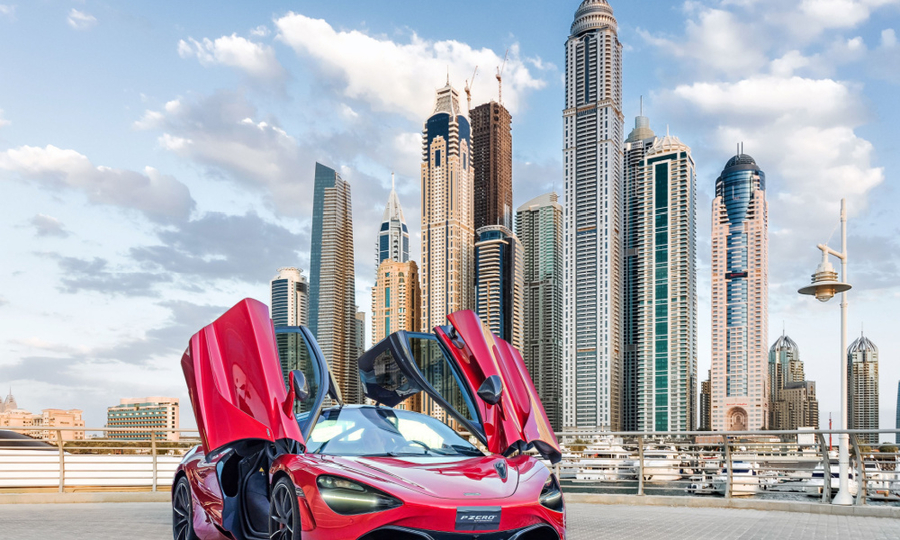
Visitors can spend part of a day surrounded by skyscrapers and shopping centers and later travel into the desert.
This contrast demonstrates the different environments that exist within and around Dubai.
Camel experiences make that contrast even more meaningful because they connect visitors with a traditional way of moving through the landscape.
Camels and Environmental Adaptation
One of the most interesting aspects of camel culture is the animal’s adaptation to arid conditions.
Understanding Life in a Desert Environment
Camels have physical characteristics that allow them to survive in hot and dry environments. Their ability to travel through desert terrain made them particularly valuable to communities living in the region.
For travelers, learning about this relationship can provide a broader understanding of how traditional communities adapted their lifestyles to local environmental conditions.
This also highlights why camels became such an important part of regional heritage.
Camel Culture in Modern Cultural Experiences
Dubai’s tourism industry has created new ways for visitors to learn about traditional lifestyles.
Heritage and Educational Programs
Some cultural experiences use camels to introduce visitors to traditional desert transportation and daily life.
Rather than presenting a camel ride as an isolated activity, educational programs can explain the historical role of camels in transportation, trade, food, and community life.
This approach helps connect tourism with cultural understanding.
The Role of Camels in Dubai’s Hospitality Traditions
Hospitality is an important part of Gulf cultural heritage.
Welcoming Visitors
Traditional desert experiences often incorporate elements of hospitality, such as refreshments, food, seating areas, and cultural demonstrations.
Camel experiences can therefore become part of a broader presentation of traditional desert hospitality.
For international visitors, this creates an opportunity to learn about customs while enjoying the natural surroundings.
Camel Milk and Culinary Heritage
Camel milk has a long history in the region.
From Traditional Food to Contemporary Products
Historically, camel milk provided an important source of nutrition for desert communities.
Today, visitors may encounter camel milk and camel-milk-based products in selected culinary settings.
Its continued presence demonstrates how traditional food practices can remain relevant while becoming part of modern tourism and dining experiences for any type of Dubai tour packages.
Exploring Traditional Food
Travelers interested in cultural cuisine can combine desert experiences with opportunities to discover regional dishes.
Food provides another way of understanding the relationship between people, animals, environment, and traditional lifestyles.
Camels in Art, Stories, and Cultural Memory
The camel has also appeared in regional artistic and storytelling traditions.
A Familiar Figure in Heritage
Because camels were closely connected with transportation, trade, and everyday life, they naturally became part of stories and cultural representations.
Traditional stories could describe desert journeys, trading routes, family experiences, and life in difficult environments.
Today, the camel remains a familiar cultural image in art, souvenirs, festivals, and heritage displays.
How Camel Culture Connects Dubai’s Past and Present
Dubai’s rapid development could easily make its traditional history seem distant. However, camel culture provides a visible connection between earlier generations and modern life.
From Caravan Routes to Tourism
The same animal that once helped merchants cross desert routes can now be encountered by international visitors participating in organized cultural experiences.
The purpose has changed, but the connection remains.
This transformation demonstrates how cultural heritage can be adapted rather than forgotten.
Choosing Dubai Tour Packages With Cultural Experiences
Travelers who want to understand more than Dubai’s modern attractions can look for Dubai Tour Packages that include cultural and desert experiences.
A well-balanced itinerary can combine contemporary attractions with traditional activities.
Experiences Worth Considering
Depending on personal interests, travelers can consider adding:
- Desert camel rides
- Heritage villages
- Traditional markets
- Museums
- Cultural performances
- Desert camps
- Traditional food experiences
- Historic neighborhoods
- Waterfront heritage areas
Combining these activities with Dubai’s modern attractions can create a more complete travel experience.
Planning the Timing of Your Desert Experience
The timing of outdoor activities can affect comfort, particularly during hotter periods.
Consider the Weather
Travelers should consider the season and daily temperatures when planning desert activities.
Early morning and evening experiences can provide more comfortable conditions than the hottest part of the day.
A well-organized itinerary can place indoor sightseeing during hotter periods and outdoor experiences during more suitable times.
Planning Dubai Tour Packages From Coimbatore
Travelers from Tamil Nadu can compare Dubai holidays based on their preferred travel dates, accommodation preferences, sightseeing interests, and overall budget.
For those considering Dubai tour packages from Coimbatore, it is useful to compare flight arrangements, hotel categories, airport transfers, sightseeing inclusions, transportation, and package costs.
Travelers interested in camel culture can look for itineraries that allow sufficient time for desert activities and cultural experiences rather than trying to fit too many attractions into a single day.
Creating a Balanced Itinerary
A cultural itinerary could combine a desert camel experience with visits to traditional markets, museums, historic districts, and modern attractions.
This approach allows travelers to experience different sides of Dubai without focusing exclusively on either its past or present.
Responsible Tourism and Camel Experiences
As interest in cultural tourism grows, responsible travel practices become increasingly important.
Respecting Animals and Local Traditions
Travelers should choose organized experiences that demonstrate appropriate care for animals and prioritize safe conditions.
It is also important to respect cultural customs, photography guidelines, and local expectations during heritage experiences.
Responsible tourism allows visitors to enjoy traditional activities while contributing to a respectful and sustainable travel environment.
Why Camel Culture Still Matters
Dubai’s modern identity is built around innovation, international business, architecture, and tourism, but its heritage remains an important part of the city’s character.
Camel culture demonstrates how the environment shaped traditional lifestyles and how communities developed practical ways to travel, trade, and live in the desert.
A Living Heritage
Camel-related activities continue to provide opportunities for younger generations and international visitors to learn about the past.
The goal is not simply to recreate historical life but to keep important cultural knowledge visible in a modern context.
Final Thoughts
Camel culture provides an important window into Dubai’s history. Before modern roads, aircraft, and advanced transportation systems transformed mobility, camels helped communities cross deserts, transport goods, support trade, and adapt to challenging environmental conditions.
Today, camels remain part of Dubai’s cultural landscape through desert tourism, heritage programs, camel racing, traditional food, storytelling, and public events.
For travelers exploring Dubai Tour Packages, experiencing camel culture can add historical and cultural depth to a holiday. It allows visitors to move beyond Dubai’s famous skyline and discover the traditions that existed long before the city’s modern transformation.
From ancient desert journeys and trading caravans to modern camel experiences and cultural programs, camel culture continues to connect Dubai’s past with its present, offering travelers customized Dubai tour packages and a meaningful way to understand the heritage behind one of the world’s most modern cities.




















Leave a Reply