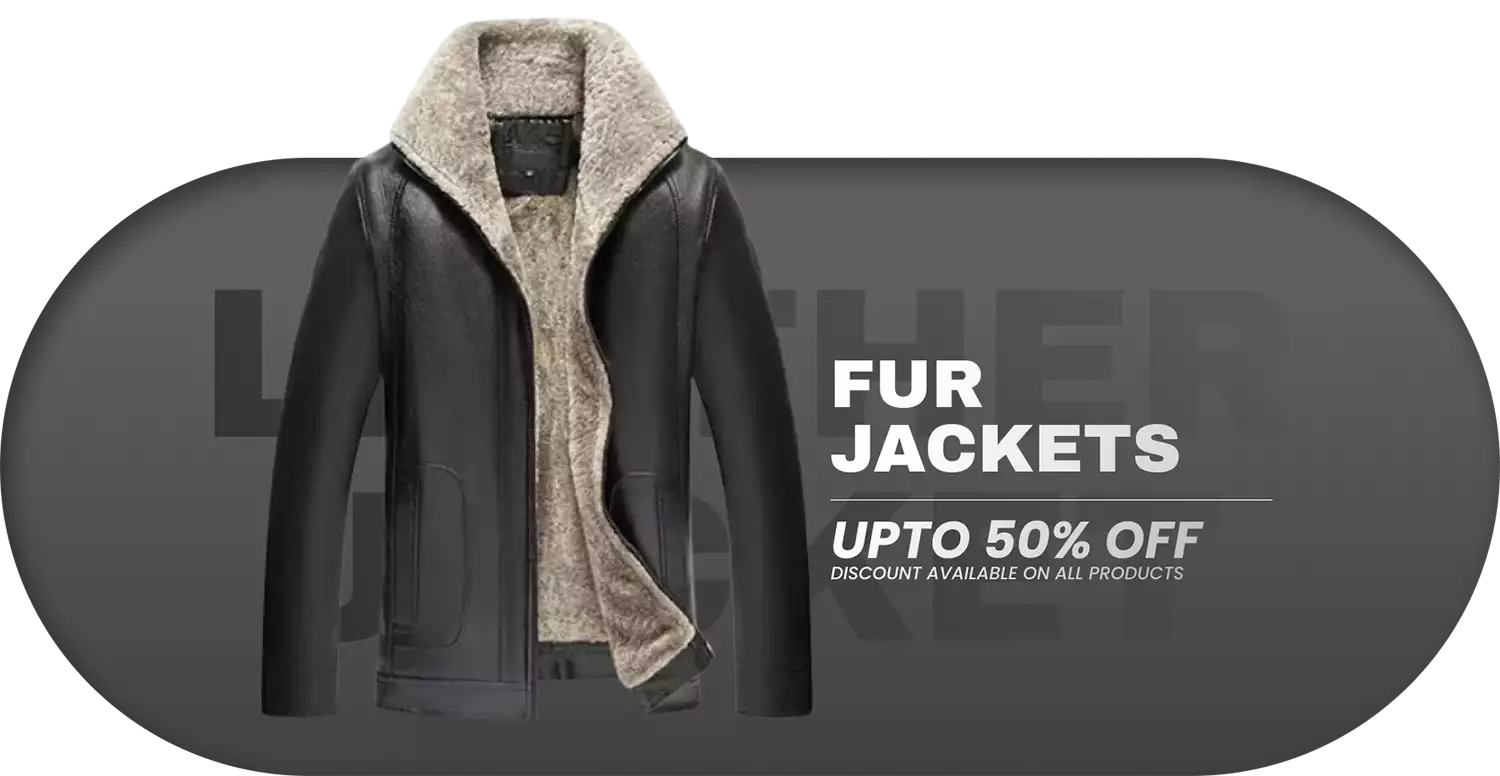
Winter shopping has a blind spot, and it’s fur. Everyone can tell good leather from bad with a quick look and a squeeze. Fur is trickier — a jacket can look identical in photos whether the collar is genuine shearling or a synthetic panel stapled on for the season. That gap is where most buyers get it wrong.
Three Fur Leather Jacket, One Word
The phrase fur jacket covers ground that’s wider than most people assume, and the differences matter more than the marketing suggests.
At the top sits genuine shearling — the pelt still attached to the leather it grew on, tanned as one piece rather than sewn together after the fact. This is what you’re getting in a true B-3 bomber or an aviator with a shearling collar. It’s warm in a way synthetic fill can’t quite match, because it’s insulating the way it was designed to.
Below that is detachable or trim fur — real fur, but added as an accent rather than a structural lining. Collars and cuffs, mostly. Warm where it touches you, but the jacket underneath is doing most of the actual insulating work.
Then there’s faux fur, which has genuinely improved over the last decade. A well-made synthetic collar can fool most people at a glance, and for city winters that rarely dip far below freezing, it does the job fine. The honesty problem starts when a listing blurs the line between the two on purpose.
The Fastest Way to Tell Real From Fake
You don’t need lab equipment for this — just a minute and some attention.
Part the fur at the base, near the leather. Real fur grows from visible skin or a hide backing; you’ll see the individual strands rooted into something solid. Faux fur is usually woven into a fabric backing instead — flatter, more uniform, often with a slight sheen the real thing doesn’t have.
Texture tells a second story. Genuine fur has some coarseness mixed with softness, and no two patches look perfectly identical. Synthetic fur tends toward a suspicious uniformity — every strand roughly the same length, the same density, arranged a little too evenly to be biological.
And if you can get close enough — smell matters here too, though online shopping obviously limits this one. Real fur and shearling carry a faint, earthy, animal note. Synthetic fur usually smells like nothing at all, or faintly of plastic.
Buying for Mens Leather Jackets With Fur: Match the Jacket to Your Winter
The category people search as leather jacket with fur mens actually splits into two very different use cases, and conflating them leads to buyer’s remorse.
If your winters are genuinely harsh — sustained cold, wind, snow on the ground for weeks — a full shearling-lined jacket earns its price. The warmth-to-weight ratio beats almost anything else short of a technical parka, and it looks considerably better doing it.
If your “winter” is mostly 40-degree evenings and the occasional cold snap, a fur-trimmed leather jacket with a standard lining gives you the aesthetic without the bulk. You’ll actually wear it more, because it won’t leave you sweating the second you step indoors.
Be honest with yourself about which category you’re in before you shop. The jacket that photographs best isn’t always the one that fits your actual weather.
Fit Considerations Fur Adds to the Equation
A fur collar changes how a jacket sits around your neck and shoulders in ways a plain collar doesn’t. It adds visible bulk, so a jacket that looks snug on a hanger can feel noticeably fuller once the collar is up around your neck.
Sleeve length deserves a second look too, particularly with cuff trim. At The Genuine Leather, we offer Real fur cuffs that compress less than fabric ones, so a sleeve that seems fine unworn can end up sitting slightly short once the fur settles against your wrist.
Keeping It Looking Right
Shearling and real fur don’t respond well to standard leather care. Brushing — gently, in the direction the fur naturally lies — keeps it from matting, and it should happen regularly if you’re wearing the jacket often through the season.
Moisture is the real enemy. A light rain won’t ruin a quality shearling jacket, but repeated soaking will, especially if it’s left to dry near direct heat instead of air-drying naturally. If the fur gets flattened or damp, letting it dry fully before brushing again prevents the kind of matting that’s hard to reverse.
Storage matters as much as wear does. Cramming a fur-lined jacket into a tight closet space crushes the pile over time in a way that doesn’t fully recover. Give it room, ideally on a wide hanger, away from direct sunlight that can dull both the leather and the fur.
A genuine fur leather jacket is one of the few winter pieces that actually earns the price difference between “looks warm” and “is warm.” Know what you’re buying, match it to your actual climate, and it’ll outlast several cheaper alternatives combined.