The Grammarly AI checker claims 99% accuracy. Independent testers have watched the same tool score an AI-written essay at 95%, then drop to 16% after two minutes with a paraphrasing tool. Both of those things are true at the same time, and if that sounds impossible, stick around, because the gap between those two numbers is exactly what this article is about.
I’ve spent a lot of time inside AI writing tools, detectors, and the messy space between them. This one is among the most searched detection tools on the planet, mostly because millions of people already have Grammarly installed. So the real question isn’t “does it exist” or “is it free.” It’s simpler and more uncomfortable: can you actually trust the number it gives you?
Short answer: sometimes. Long answer below.
What Is the Grammarly AI Checker?
The Grammarly AI checker is a free AI detection tool that scans your text and returns a percentage score showing how much of it appears to be AI-generated. It’s trained to spot writing from models like ChatGPT, Gemini, and Claude, works without a sign-up, and sits inside Grammarly’s wider suite of writing and plagiarism tools.
That’s the snippet-friendly definition. Here’s the practical one: it’s a probability estimate, not a verdict. The tool looks at patterns in your text and guesses how likely a language model produced it. It cannot see your writing process, your drafts, or your intent. Keep that framing in mind for everything that follows.
How the Grammarly AI Detector Actually Works
AI detectors, Grammarly’s included, don’t “know” whether a machine wrote something. They measure statistical fingerprints. Large language models tend to write with unusually even sentence rhythm, predictable word choices, and transitions that feel a little too smooth. Human writing is messier. We ramble, we use odd phrasing, we vary sentence length without thinking about it.
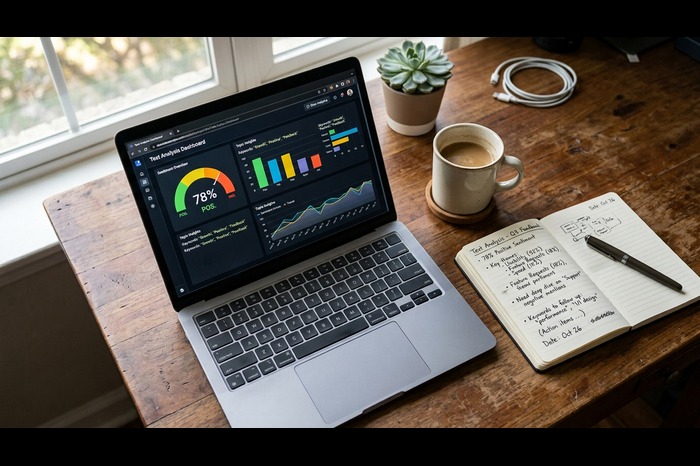
The Grammarly AI detector compares your text against those learned patterns and outputs a likelihood score. Grammarly also points to its performance on RAID, an independent detection benchmark, where it claims the top spot among leading detectors. That benchmark result is real, and it matters. But benchmarks test detectors under controlled conditions. Your professor’s inbox and a paraphrased essay are not controlled conditions.
One more detail that trips people up: most AI checkers need a minimum amount of text to work with, and results get more reliable as the sample grows. Feeding it a two-sentence caption and treating the score as gospel is a mistake.
Grammarly AI Checker Accuracy: The 99% Claim vs Real Tests
This is where things get interesting, because the marketing and the independent testing tell two different stories, and neither side is lying.
Where it performs well
On clean, untouched text, the detector is genuinely solid. Independent reviewers who fed it raw ChatGPT output saw high detection scores, and fully human-written pieces frequently came back at or near 0% AI. If your use case is “I wrote this myself and want a quick sanity check before submitting,” it does that job reasonably well, and for free.
Where it falls apart
The failure mode is paraphrasing. In one academic-focused test, AI-generated text that initially scored 95% dropped to 16% after being run through a standard paraphrasing tool. A creative writing sample went from 76% down to 31% with the same trick. The paraphrasing took about two minutes. That’s not a small blind spot; that’s the exact evasion technique most people trying to hide AI use would reach for first.
There’s a second structural problem: the free version gives you a single percentage with no sentence-level breakdown. If the tool says your document is 40% AI, it won’t tell you which 40%. You can’t fix what you can’t see, and an unexplained number is nearly useless in any formal dispute about academic integrity.
Users have also reported score instability, meaning the same unchanged text can return different percentages on different runs. For casual checks, annoying. For high-stakes decisions, disqualifying.
So is Grammarly AI detection accurate or not?
Here’s the honest reconciliation: the 99% figure reflects performance on benchmark datasets against unmodified AI text. Real-world accuracy against edited, paraphrased, or hybrid human-AI writing is dramatically lower. Both numbers are true. Only one of them matches how people actually write in 2026, where most “AI writing” is really AI-assisted writing that’s been reworked by a human.
Free vs Premium: What You Actually Get
Grammarly bundles the AI checker into both its free and paid tiers, and the differences matter more than the pricing page makes obvious.
- Free plan: AI detection with a character cap of roughly 10,000 characters per check, a single percentage score, no sentence highlighting, and no detailed report. Fine for short checks, cramped for essays or long articles.
- Pro plan (from around $12/month): longer document support, sentence-level highlighting of flagged passages, plus the full toolkit: plagiarism detection, rewriting suggestions, tone adjustment, and citation help.
- The catch: multiple independent reviews note that the underlying detection accuracy is essentially the same on both tiers. Paying gets you better reporting, not a smarter detector.
If you’re only after AI detection, the free tier tells you most of what the paid one would. If you want a full writing assistant that happens to include detection, that’s a different calculation, and it depends on how the rest of the suite fits your workflow. We’ve compared where Grammarly sits among the best AI productivity tools if you’re weighing that bigger decision.
AI Detector vs Plagiarism Checker vs Authorship: Stop Mixing These Up
This confusion causes more panic than any accuracy problem, so let’s kill it properly.
- The AI detector answers one question: does this text look machine-generated? It says nothing about where the ideas came from.
- The plagiarism checker answers a completely different question: does this text match existing published content? It scans against billions of web pages and academic databases. Original AI-generated text can pass a plagiarism check at 100% while failing an AI check, and vice versa.
- Grammarly Authorship is the newer, more interesting piece. Instead of guessing after the fact, it tracks provenance while you write, recording which parts you typed, which were pasted, and which came from generative AI. It’s proactive proof of process rather than reactive probability.
If you’re a student facing strict AI policies, Authorship is arguably more valuable than the detector itself, because a documented writing history beats arguing with a percentage score every single time.
False Positives: When the Grammarly AI Checker Flags Human Writing
It happens, and it happens to careful writers more than you’d expect. Clean, well-structured, grammatically polished prose looks statistically similar to AI output, because AI was trained on exactly that kind of writing. One business coach publicly described running a cover letter she wrote herself through Grammarly, only to watch entire self-written sections get flagged as AI.
If your genuine work gets flagged, here’s the playbook:
- Don’t rewrite in a panic. Making your writing deliberately worse to dodge a detector is a losing game.
- Gather process evidence: version history in Google Docs or Word, notes, outlines, earlier drafts. This is your real defense.
- Run the text through a second detector. If tools disagree wildly, that disagreement itself is evidence of how unreliable single scores are.
- Vary your rhythm naturally. Short sentences next to long ones, personal detail, specific examples. Not to game the tool, but because it’s better writing anyway.
And if you’re an educator or editor: never make an integrity decision on a Grammarly score alone. The tool’s own positioning frames it as guidance, and the paraphrasing test results show exactly why treating it as proof is indefensible.
Who Should Use It, and Who Needs Something Stronger
Good fit
- Students doing a pre-submission sanity check on their own original work
- Bloggers and freelancers making sure AI-assisted drafts still read as human
- Casual users who want a fast, free ai content detector without creating an account
Bad fit
- Universities or employers making formal integrity rulings
- Anyone screening text that may have been paraphrased or heavily edited
- Publishers who need sentence-level forensic reporting on the free tier
For those heavier use cases, purpose-built academic detectors with sentence-level analysis and consistent scoring are the right category, and even then, no detector on the market should be treated as infallible.
Alternatives Worth a Look
QuillBot’s detector offers sentence-level highlights even on free checks and supports 20+ languages. Turnitin remains the institutional standard for academic plagiarism with AI reporting layered in. Originality.ai targets publishers and SEO teams. Each trades convenience for depth in different ways. Grammarly’s edge is that it’s already where you write, embedded in the browser alongside your other productivity Chrome extensions, which is a genuine advantage for quick checks even if it’s not the most forensic option available.
How to Use the Grammarly AI Checker the Smart Way
After all the testing and all the caveats, here’s the workflow that actually holds up:
- Treat the score as a smoke alarm, not a courtroom verdict. It tells you to look closer, nothing more.
- Check text in meaningful chunks, not fragments. Longer samples produce steadier results.
- Pair the AI check with the plagiarism check. They catch entirely different problems.
- If you write with AI assistance regularly, turn on Authorship and let provenance tracking do the arguing for you.
- Cross-check anything high-stakes with at least one other detector before acting on it.
For a deeper, hands-on breakdown of exactly what this tool catches and what slips past it, including test-by-test results, see the full Grammarly AI detector field test where every claim in this space gets put under real pressure.
FAQs About the Grammarly AI Checker
Is the Grammarly AI checker free?
Yes. The Grammarly AI checker is free and requires no sign-up. The free version caps checks at roughly 10,000 characters and returns only an overall percentage score. Sentence-level highlighting and longer document support require a Pro subscription, which starts at about $12 per month.
How accurate is Grammarly’s AI detection?
On unedited AI text, accuracy is high, and Grammarly ranks first on the independent RAID benchmark. On paraphrased or human-edited AI text, accuracy drops sharply; independent tests saw scores fall from 95% to 16% after basic paraphrasing. Treat results as an estimate, not proof.
Can Grammarly detect ChatGPT?
Yes, the Grammarly AI detector is specifically trained to identify text from ChatGPT, along with Gemini, Claude, and Grammarly’s own generative features. Detection is strongest on raw, unmodified output and weakest once that output has been rewritten or paraphrased by a human or another tool.
Is the AI checker the same as the plagiarism checker?
No. The AI checker estimates whether text was machine-generated by analyzing writing patterns. The plagiarism checker compares your text against billions of existing sources to find copied material. A document can pass one and fail the other, so serious writers should run both.
Why did Grammarly flag my own writing as AI?
Polished, grammatically clean, evenly structured writing statistically resembles AI output, so false positives happen. If it occurs, keep draft history as evidence, verify with a second detector, and remember that no percentage score from any tool constitutes proof of AI use on its own.
The Bottom Line
The Grammarly AI checker is a genuinely useful free tool and all the data available on Cripsy Wire wearing a slightly overconfident marketing badge. Use it to sanity-check your own work, catch obviously robotic drafts, and stay transparent about AI assistance. Don’t use it to accuse anyone of anything, and don’t assume a low score means invisible. In 2026, detection is a probability game, and the smartest move is knowing exactly which probabilities you’re playing with.