

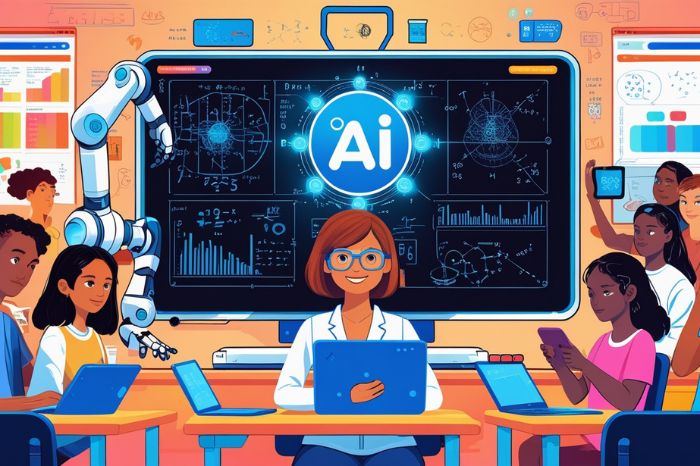
The education sector is becoming increasingly competitive, and institutions can no longer rely only on traditional advertising or manual admissions outreach to attract students. Prospective learners now research courses, compare institutions, read reviews, and interact with brands across multiple digital channels before making enrollment decisions. This has created a need for smarter, faster, and more personalized student acquisition strategies.
Artificial Intelligence (AI) is changing how educational organizations identify prospective students, communicate with them, and guide them toward enrollment. From predictive analytics and intelligent chatbots to personalized campaigns and automated follow-ups, AI is making education lead generation more data-driven and efficient. Institutions that adopt these technologies can improve lead quality, reduce response times, and create more meaningful experiences for prospective students.
Why AI Matters for Education Lead Generation
Traditional lead generation often involves collecting inquiries through forms, advertisements, landing pages, and phone calls. While these methods remain useful, manually processing every inquiry can be time-consuming and may cause valuable prospects to be overlooked.
AI helps institutions automate repetitive processes while analyzing large volumes of student data. It can identify behavioral patterns, determine which prospects are more likely to enroll, and recommend appropriate communication strategies.
For institutions using professional education lead generation services, AI can become an important part of a broader strategy focused on attracting qualified prospects rather than simply increasing the number of inquiries.
AI-Powered Student Personalization
Every prospective student has different goals, interests, educational backgrounds, and career plans. Sending the same message to every lead may therefore produce limited engagement.
AI allows educational organizations to personalize communication based on available user data and behavior. For example, a student researching postgraduate business programs can receive content related to MBA courses, career opportunities, admission requirements, and scholarships.
Personalized recommendations can be used across:
- Email campaigns
- Website content
- Course recommendations
- Advertising campaigns
- Follow-up messages
- Landing pages
This creates a more relevant experience and can increase the likelihood that prospects continue through the admissions journey.
Intelligent Chatbots for Faster Responses
Prospective students often have questions about tuition fees, courses, eligibility, application deadlines, scholarships, and admission procedures. If these questions remain unanswered for too long, a potential lead may move to another institution.
AI-powered chatbots can provide immediate responses around the clock. They can answer frequently asked questions, collect basic prospect information, recommend relevant courses, and direct students toward appropriate admissions resources.
For an education lead generation company, integrating intelligent chatbots into campaigns can help institutions capture and qualify leads even outside normal office hours.
Chatbots can also transfer complex inquiries to admissions staff when human assistance is required. This combination of automation and human support creates a more efficient lead management process.
Predictive Analytics for Lead Qualification
Not every inquiry has the same potential. Some prospects may be actively preparing to enroll, while others may only be exploring their options.
AI-powered predictive analytics can analyze factors such as website behavior, content engagement, form submissions, campaign interactions, and other available signals to identify patterns associated with stronger enrollment intent.
Admissions teams can use these insights to prioritize high-intent prospects.
Instead of manually reviewing every inquiry, staff can focus their attention on leads that demonstrate stronger engagement. This can help improve productivity and make follow-up activities more strategic.
Automated Lead Nurturing
Many prospective students do not enroll immediately after their first interaction. They may need weeks or months to compare institutions, discuss options with family, arrange finances, or complete eligibility requirements.
AI can support automated lead nurturing by delivering relevant information at different stages of the decision-making process.
For example:
- A prospect downloads a course guide.
- AI identifies the student’s area of interest.
- The system sends relevant course information.
- Follow-up content addresses common concerns.
- The prospect receives an application reminder when appropriate.
- A counselor is notified when the lead demonstrates strong intent.
This approach keeps institutions connected with prospective students without requiring admissions teams to manually manage every interaction.
Smarter Advertising Campaigns
AI is also influencing how education providers approach digital advertising. Instead of relying entirely on broad audience targeting, AI-based systems can analyze campaign performance and help identify audience segments that are more likely to engage.
Institutions can use these insights to improve:
- Audience targeting
- Ad personalization
- Budget allocation
- Campaign performance
- Landing-page experiences
- Retargeting strategies
This can make digital marketing campaigns more efficient and help institutions focus their resources on audiences with stronger potential.
AI for Content and SEO Strategies
Content plays an important role in attracting students through organic search. Prospective learners may search for information about courses, career opportunities, admission requirements, tuition fees, scholarships, and educational destinations.
AI can help marketing teams analyze search behavior, identify content opportunities, and organize large amounts of information more efficiently. It can also support content personalization based on different stages of the student journey.
However, AI-generated content should not replace human expertise. Educational content needs to be accurate, useful, original, and aligned with the institution’s actual offerings.
A strong strategy combines AI-assisted research and optimization with human review and subject expertise.
Improving Lead Scoring
Lead scoring helps admissions teams determine which prospects require immediate attention. Traditional scoring methods may assign points based on predefined actions, but AI can make the process more dynamic by identifying patterns across multiple interactions.
For example, a prospect who repeatedly visits a course page, downloads an application guide, watches an information video, and interacts with admissions content may demonstrate stronger intent than someone who only submits a basic inquiry.
AI can help identify these patterns and assign more meaningful priority levels.
This allows counselors to spend more time engaging with prospects who are closer to making an enrollment decision.
Better CRM and Marketing Automation
AI becomes even more valuable when connected with customer relationship management (CRM) systems and marketing automation platforms.
An integrated system can help institutions manage:
- Lead information
- Communication history
- Campaign interactions
- Follow-up schedules
- Lead scores
- Admissions status
- Conversion data
This creates a centralized view of each prospect’s journey. Marketing and admissions teams can work from the same information rather than relying on disconnected spreadsheets or manual records.
For organizations investing in education lead generation services, CRM integration can make it easier to track whether marketing efforts are producing qualified leads and actual enrollments.
Enhancing the Student Experience
Lead generation should not focus only on acquiring inquiries. The quality of the prospective student’s experience also matters.
AI can make interactions more convenient by providing relevant answers, recommending courses, simplifying information discovery, and reducing unnecessary waiting times.
A prospective student who receives useful information quickly is more likely to remain engaged with an institution.
AI can therefore support the complete journey from initial discovery to application rather than functioning as a standalone marketing tool.
Challenges of Using AI in Education Marketing
Despite its advantages, AI adoption requires careful planning. Educational organizations handle sensitive student information, making privacy and data protection especially important.
Institutions should establish clear policies regarding data collection, storage, access, and usage. AI systems should also be monitored to prevent inaccurate recommendations, biased outcomes, or inappropriate automated communication.
Human oversight remains essential. Admissions counselors should be able to review important interactions and intervene when a situation requires empathy, judgment, or specialized knowledge.
How to Choose an Education Lead Generation Partner
Organizations considering AI-driven marketing should evaluate potential partners carefully. A capable education lead generation company should understand both digital marketing and the specific requirements of student acquisition.
Consider factors such as:
- Experience in the education sector
- SEO and content marketing expertise
- AI and automation capabilities
- CRM integration experience
- Lead qualification strategies
- Analytics and reporting
- Data privacy practices
- Campaign optimization processes
The right partner should focus on generating qualified opportunities rather than simply increasing lead volume.
Future of AI in Education Lead Generation
AI is likely to become increasingly integrated into student acquisition strategies. Predictive analytics, conversational AI, personalization, automated campaigns, and intelligent recommendation systems will continue to evolve.
Institutions may also use AI to better understand student behavior and identify opportunities for improving their admissions processes.
However, successful adoption will depend on balancing automation with human interaction. Education is ultimately a people-focused industry, and technology should enhance—not replace—the relationships between institutions, counselors, and students.
Conclusion
AI is transforming education lead generation by helping institutions identify better prospects, personalize communication, automate follow-ups, and make more informed marketing decisions. From intelligent chatbots and predictive lead scoring to personalized advertising and CRM automation, these technologies can improve both operational efficiency and the student experience.
For institutions seeking sustainable growth, investing in AI-enabled education lead generation services can provide a competitive advantage when implemented strategically. Working with an experienced education lead generation company can also help organizations combine technology with proven marketing practices.
The most successful institutions will not simply adopt AI because it is trending. They will use it thoughtfully to understand prospective students better, respond faster, deliver relevant experiences, and build stronger relationships throughout the enrollment journey.















Leave a Reply