

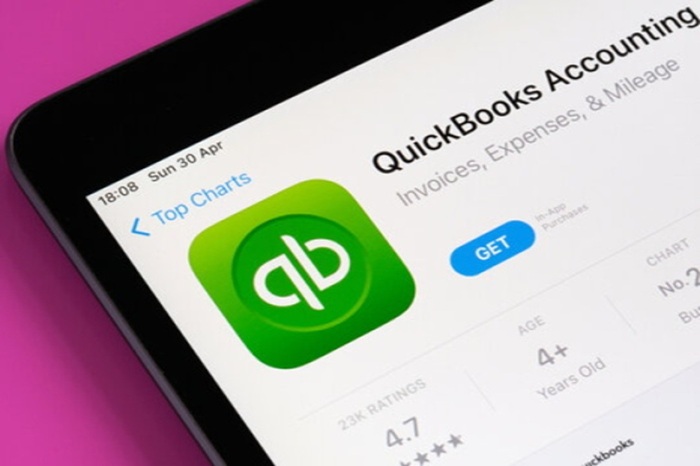
One of the best assumptions outside the accounting industry is that CPA firms must be using large, enterprise-grade accounting systems. In reality, the software landscape inside CPA firms is far more nuanced.
So, what do CPA firms actually rely on? Let’s break it down.
Most CPA firms don’t lock themselves into only Use QuickBooks or Enterprise Accounting software. They use both, depending on the type of client they’re serving.
For small and mid-sized businesses, QuickBooks is still the dominant choice. It’s widely adopted, cost-effective, and easy to support across multiple clients. CPAs like it because hiring staff with QuickBooks experience is easy, troubleshooting is fast, and cleanup work doesn’t turn into a nightmare. For routine bookkeeping, payroll coordination, tax prep, and financial reporting, QuickBooks does the job without unnecessary complexity.
However, QuickBooks or Enterprise Accounting software. As businesses grow, CPAs start hitting limits—multi-entity accounting, advanced consolidations, custom approval workflows, or industry-specific compliance requirements. When those needs show up, CPA firms shift clients toward enterprise or ERP-level accounting systems. These platforms are built for scale, tighter controls, and deeper financial visibility.
That said, enterprise software isn’t “better” by default. It’s heavier, more expensive, and requires trained users. CPA firms won’t recommend it unless the business structure actually demands it. Forcing a small business onto enterprise software usually creates more problems than it solves.
In real practice, CPA firms make the decision based on business complexity, reporting requirements, and internal controls—not revenue alone. A simple, service-based company can run efficiently on QuickBooks for years, while a smaller but operationally complex business may need an enterprise system early.
Why QuickBooks Is Still Widely Used by CPA Firms
Despite the rise of cloud ERP platforms, Intuit QuickBooks remains deeply embedded in the CPA ecosystem. The reason is simple: client demand.
A large percentage of small and mid-sized businesses still run their books on QuickBooks or Enterprise Accounting software. CPA firms supporting these clients must work within the same environment to ensure accuracy, compatibility, and efficiency.
QuickBooks excels in:
- Day-to-day bookkeeping and write-up work
- Payroll processing and reconciliations
- Financial statements for small businesses
- Year-end close and tax prep handoff
For many CPA firms, QuickBooks is not optional—it’s a necessity.
The Role of QuickBooks Cloud Hosting in Modern CPA Firms
While QuickBooks Desktop remains powerful, it was never designed for remote teams or multi-location firms. That’s where QuickBooks Cloud Hosting becomes relevant.
Using Best QuickBooks hosting providers, CPA firms can:
- Access QuickBooks Desktop securely from anywhere
- Allow multiple accountants to work on the same file simultaneously
- Maintain centralized data control
- Support seasonal and remote staff without local installations
This setup gives firms the flexibility of the cloud without forcing a full migration away from Desktop workflows that still work well.
When CPA Firms Move to Enterprise Accounting Software
QuickBooks or Enterprise Accounting Software typically enters the picture when CPA firms QuickBooks or Enterprise Accounting software serve larger, more complex clients. These systems are not designed for basic bookkeeping; they’re built for scale, compliance, and advanced financial operations.
Popular enterprise platforms include:
- NetSuite
- Sage Intacct
- Microsoft Dynamics ERP
These tools are commonly used for:
- Multi-entity and multi-currency accounting
- Advanced revenue recognition
- Complex consolidations
- Enterprise-level reporting and controls
CPA firms typically don’t use enterprise software for their own internal accounting—but they do support and audit clients who operate on these platforms.
What CPA Firms Actually Use in 2026
In practice, most CPA firms follow a hybrid model:
- QuickBooks (Desktop or Online) for the majority of small business clients
- QuickBooks Hosting to enable remote work and collaboration
- QuickBooks or Enterprise Accounting Software for high-complexity or large-scale clients
- Dedicated tax software layered on top for compliance and filing
Firms that attempt to force all clients onto enterprise platforms often face resistance, higher costs, and longer onboarding cycles. On the other hand, firms that rely solely on entry-level tools struggle with scale.
The firms operating most efficiently in 2026 are those that adapt their software stack to client reality—not trends.
Final Thoughts
So, QuickBooks or Enterprise Accounting software? The honest answer is both—but for very different reasons.
QuickBooks continues to dominate small and mid-sized business accounting, especially when paired with reliable QuickBooks Cloud Hosting. Enterprise accounting software plays a critical role for complex clients but is not a universal replacement.
For CPA firms, success lies in flexibility: using the right tool for the right client, supported by secure infrastructure and proven workflows.
CPA firms don’t choose sides. They choose the tool that minimizes risk, controls cost, and keeps financial reporting accurate. QuickBooks remains a core tool for CPAs, while enterprise accounting software is reserved for clients that truly need it.
Frequently asked Question and Answer?
1. Do CPA firms really use QuickBooks, or is that just for small businesses?
Yes, QuickBooks or Enterprise Accounting Software — but not blindly. It’s widely used for small to mid-sized clients because it’s affordable, standardized, and easy to support. CPAs don’t worship it; they use it where it fits.
2. Which version of QuickBooks do CPA firms use most?
QuickBooks Desktop (Pro, Premier, Enterprise) and QuickBooks Online.
-
Desktop/Enterprise → clients with inventory, payroll, or heavy reporting
-
Online → startups, service businesses, and remote collaboration
CPAs pick based on client complexity, not brand loyalty.
3. When do CPA firms move away from QuickBooks?
When the business outgrows it.
Triggers include:
-
Multi-entity accounting
-
Advanced consolidations
-
Custom workflows
-
Industry-specific compliance
At that point, QuickBooks becomes a bottleneck.
4. What QuickBooks or Enterprise Accounting Software do CPA firms recommend?
Common picks:
-
NetSuite
-
Sage Intacct
-
Microsoft Dynamics 365 Business Central
-
SAP Business One
These are used for mid-market to large enterprises, not mom-and-pop shops.
5. Is QuickBooks Enterprise considered “enterprise-level” software?
Not really.
Despite the name, QuickBooks or Enterprise Accounting Software is upper-SMB software, not true enterprise accounting. It scales better than Pro/Premier but still lacks deep ERP capabilities.
6. Why do CPAs still recommend QuickBooks or Enterprise Accounting Software is more powerful?
Because power without necessity is waste.
QuickBooks:
-
Costs less
-
Requires less training
-
Is easier to audit and clean up
-
Has a massive talent pool
CPAs prioritize efficiency and ROI, not bragging rights.
7. Do large CPA firms avoid QuickBooks?
No — they use both.
Large CPA firms serve thousands of clients across size ranges. They’ll manage:
-
QuickBooks for SMB clients
-
ERP systems for mid-market and enterprise clients
It’s about matching tools to the client, not firm size.
8. Is QuickBooks acceptable for GAAP-compliant accounting?
Yes — if configured correctly.
QuickBooks can support GAAP reporting, but it doesn’t enforce it by default. CPA oversight is what makes it compliant, not the software itself.
9. Do CPA firms prefer cloud accounting over desktop systems now?
Increasingly, yes — but not universally.
Cloud tools win on collaboration and remote access.
Desktop systems still win on:
-
Performance
-
Custom controls
-
Legacy workflows
CPAs care about control more than trends.
10. What’s the real deciding factor: QuickBooks or Enterprise Accounting Software?
Business complexity, not revenue alone.
A $2M company with simple operations may stay on QuickBooks.
A $1M company with multiple entities and locations may need an ERP.
CPAs decide based on structure, risk, and reporting needs — not hype.
Also, Visit Here: https://www.smilebox.co.za/offshore-bookkeepings/







Leave a Reply