


QuickBooks Running Slow? 10 Proven Ways to Speed Up QuickBooks Desktop & Online
QuickBooks Running Slow can turn routine accounting work into a frustrating wait. Reports may take longer to open, transactions can lag, screens may freeze, and multi-user access can become unreliable. The good news is that slow performance is usually diagnosable.
The right solution depends on where the slowdown occurs. QuickBooks Online performance is often affected by browser settings, extensions, connectivity, or account data volume, while QuickBooks Desktop may slow down because of company-file health, network configuration, outdated components, or system resources.
This comprehensive guide explains 10 practical ways to speed up QuickBooks, covering Desktop, Online, multi-user environments, company-file maintenance, networking, and common related problems.
Expert note: Before changing company-file settings, creating a backup is strongly recommended. If performance problems are accompanied by corruption warnings, missing transactions, or repeated crashes, focus on data integrity before attempting aggressive cleanup.
Why Is QuickBooks Running Slow?
QuickBooks can become slow because of:
- A large or damaged company file
- Outdated QuickBooks Desktop
- Browser cache and extensions in QuickBooks Online
- Slow or unstable internet
- Poorly configured multi-user networking
- Windows performance limitations
- Background applications consuming system resources
- Problems with QuickBooks processes or services
- Excessive historical data
- Damaged company-file components
- Firewall or security software interference
- Remote access or VPN latency
The fastest way to identify the cause is to determine whether only one computer is slow, every workstation is slow, or QuickBooks Running Slow.
1. Determine Whether the Problem Is QuickBooks or Your Computer
Before changing anything, perform a simple diagnostic test.
If only one workstation is slow
The problem may be related to:
- RAM or processor usage
- Windows configuration
- Local QuickBooks installation
- Background applications
- Antivirus software
- Damaged installation components
If every workstation is slow
If QuickBooks Online is slow
Focus on:
- Browser cache
- Browser extensions
- Internet connection
- Supported browser version
- Account data volume
- Temporary browser problems
This simple comparison prevents you from spending time repairing the wrong component.
2. Restart QuickBooks and Your Computer to Fix QuickBooks running Slow
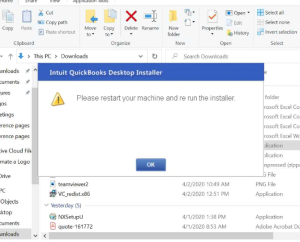
It sounds basic, but restarting should be your first troubleshooting step.
QuickBooks may leave background processes running after a crash, failed update, or interrupted operation. Windows can also accumulate temporary processes and memory usage.
Try this first:
- Save your accounting work.
- Close QuickBooks.
- Make sure all QuickBooks windows are closed.
- Restart Windows.
- Open QuickBooks again.
- Test the operation that was previously slow.
If the application becomes faster temporarily but slows down again later, continue with the following diagnostics.
3. Use QuickBooks Tool Hub for Desktop Performance Problems
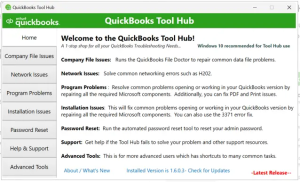
For QuickBooks Desktop users, the QuickBooks Tool Hub can help diagnose several program and company-file problems.
One useful option is Quick Fix My Program, which closes background QuickBooks processes and performs a quick program-level refresh. QuickBooks Running Slow
Recommended procedure
- Close QuickBooks Desktop.
- Open QuickBooks Tool Hub.
- Select Program Problems.
- Choose Quick Fix My Program.
- Allow the process to finish.
- Restart the computer if prompted.
- Open QuickBooks and test performance.
If the slowdown is associated with a damaged company file, additional company-file diagnostics may be necessary.
Related troubleshooting sentence
If QuickBooks continues freezing after a program repair, QuickBooks File Doctor may be relevant when the symptoms suggest company-file or network problems rather than a simple performance issue.
4. Verify and Rebuild Your QuickBooks Company File
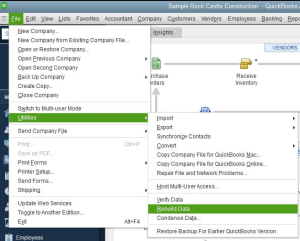
A company file can develop data-integrity problems over time. If QuickBooks is becoming increasingly slow while reports, lists, or transactions behave unusually, checking the file should be a priority.
Run Verify Data
- Open the company file.
- Select File.
- Choose Utilities.
- Select Verify Data.
- Allow QuickBooks to complete the analysis.
If QuickBooks reports no problems, you can continue troubleshooting performance elsewhere.
If Verify Data identifies an issue, consider Rebuild Data.
Run Rebuild Data
- Create a current backup first.
- Open File > Utilities.
- Select Rebuild Data.
- Follow the backup prompts.
- Allow the repair process to complete.
- Run Verify Data again afterward.
Important: Don’t repeatedly rebuild a company file simply because QuickBooks feels slow. Rebuild is primarily a data-integrity repair procedure, not a general-purpose speed booster.
This is particularly important when symptoms overlap with QuickBooks Unrecoverable Error, unexpected crashes, or unusual report behavior.
5. Reduce the Impact of an Oversized Company File
Large company files can require more processing time, especially when generating reports or working with extensive historical lists.
Before removing anything, determine whether historical information is actually required for tax, accounting, audit, or operational purposes.
Possible cleanup options include:
- Reviewing unnecessary list entries
- Merging appropriate duplicate names
- Cleaning unused records
- Reviewing old transactions
- Archiving information when appropriate
- Considering data-condensing options where suitable
Be careful with Condense Data
Condensing can change how historical transactions are represented. It should never be treated as a casual cleanup operation.
Always maintain a reliable backup before attempting major data reduction.
If the file contains years of accounting history and performance has deteriorated gradually, professional file analysis may be safer than deleting records manually.
6. Check Multi-User Mode and Network Performance
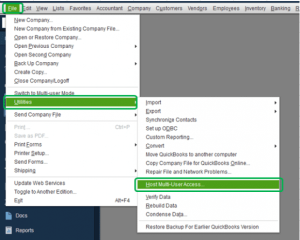
If QuickBooks becomes slow only when several employees are connected, the problem may be network-related rather than related to the company file itself.
A properly configured environment generally uses a dedicated computer or server to host the company file, with workstations accessing it across the network.
Check these areas:
- Is the company file stored on the correct computer?
- Is QuickBooks Database Server Manager installed and functioning?
- Is the correct hosting mode enabled?
- Are firewall rules allowing required QuickBooks communication?
- Is the network stable?
- Are users connecting through a slow VPN?
- Is the server running low on resources?
Problems involving QBDBMgrN Not Running on This Computer can interfere with multi-user access and may need to be resolved before performance troubleshooting continues.
7. Check QuickBooks Database Server Manager
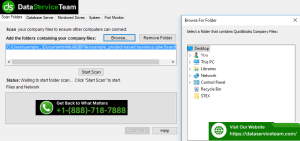
The QuickBooks Database Server Manager is important in multi-user environments because it manages access to company files stored on a network.
If the service isn’t functioning correctly, users may experience:
- Slow company-file access
- Connection failures
- Multi-user errors
- Delayed reports
- Repeated requests to reconnect
- Problems switching between single-user and multi-user modes
If you encounter an H-series problem such as QuickBooks Error H202, don’t assume the company file itself is corrupted. H202 can indicate a communication or hosting problem between the workstation and the computer hosting the company file.
Similarly, errors such as H101, H303, and H505 can point toward hosting or network configuration problems.
8. Investigate Windows Firewall and Security Software
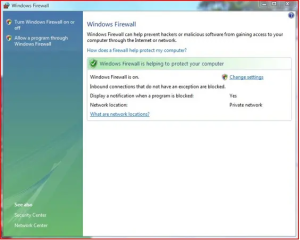
Security software can sometimes interfere with accounting applications when required processes or network communication are restricted.
If QuickBooks is slow only after a firewall, antivirus, or Windows security change, investigate whether the security configuration is contributing to the problem.
Check:
- Windows Firewall rules
- Antivirus exclusions
- Network profile
- QuickBooks program permissions
- Security software logs
- Recently quarantined QuickBooks files
Don’t permanently disable security protection simply to test performance.
Instead, use your security software’s documented application-allow or exclusion mechanism when appropriate.
This is especially relevant if you also encounter Windows Firewall blocking QuickBooks or QuickBooks Not Connecting to Server symptoms.
9. Keep QuickBooks Desktop and Windows Updated
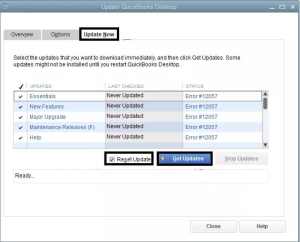
Outdated software can cause compatibility and performance problems.
For QuickBooks Desktop, check the current product version and release before troubleshooting further.
Update QuickBooks Desktop
- Open QuickBooks Desktop.
- Select Help.
- Choose Update QuickBooks Desktop.
- Open the Update Now tab.
- Select the appropriate update options.
- Click Get Updates.
- Close and reopen QuickBooks.
- Allow the update to install.
Also keep Windows and essential system components maintained.
An update can be particularly important when QuickBooks is freezing, crashing, or showing installation-related problems.
For example, QuickBooks Update Stuck or Freezing, Error 15276, Error 15215, Error 15241, and Error 15243 can require separate investigation rather than being treated as ordinary performance problems.
10. Optimize QuickBooks Online Performance
QuickBooks Online works differently from QuickBooks Desktop because it operates through a web browser.
If QBO is slow, start with the browser rather than changing company-file settings.
Test Private or Incognito Mode
Open a private browsing window and sign in.
If QuickBooks Online works noticeably better there, the problem may involve:
- Cached browser data
- Cookies
- Extensions
- Browser settings
- A conflicting session
Private browsing is a diagnostic test, not a permanent performance solution.
Clear Browser Cache
If the private-window test is faster:
- Open your browser settings.
- Locate privacy or browsing-data controls.
- Clear cached files.
- Clear relevant site data if necessary.
- Restart the browser.
- Sign in again.
Disable Browser Extensions
Extensions can consume memory and interfere with web applications.
Try:
- Disable nonessential extensions.
- Restart the browser.
- Open QuickBooks Online.
- Test performance.
- Re-enable extensions individually if needed.
This helps identify whether a particular extension is responsible.
QuickBooks Running Slow: Desktop vs. Online Troubleshooting
| Problem | QuickBooks Desktop | QuickBooks Online |
| Slow startup | Program installation, Windows resources | Browser/session |
| Slow reports | Company file, data integrity | Browser, account data, connection |
| Multi-user lag | Network/server configuration | Usually browser/connectivity |
| Freezing | Program/file/system issue | Browser/session/network |
| Company-file problems | Verify/Rebuild Data | Account/service-side investigation |
| Update problems | Desktop update process | Browser/service updates |
| Network problems | Server/firewall/database services | Internet/browser |
This distinction can save significant troubleshooting time.
Real-World Troubleshooting Scenarios
Scenario 1: QuickBooks Became Slow After Years of Growth
A business noticed that QuickBooks had gradually become slower as its accounting history expanded. Opening lists was still possible, but large reports took significantly longer.
Diagnostic approach
The company file was backed up first. Performance was then tested in single-user mode, followed by a data-integrity check.
Lesson
Gradual performance degradation can point toward company-file growth rather than a sudden software failure. File maintenance should be approached carefully because historical accounting information may be important.
Scenario 2: QuickBooks Was Slow Only for Network Users
The server itself operated normally, but employees experienced delays when opening the same company file from workstations.
Diagnostic approach
The network configuration, hosting settings, firewall permissions, and Database Server Manager were examined before making changes to the company file.
Lesson
When all users experience the same network-related slowdown, investigate the server and network before attempting data repair.
Scenario 3: QuickBooks Online Was Slow on One Computer
A user reported that QuickBooks Online was extremely slow on one workstation, while colleagues had normal performance.
The first test was a private browser session. Performance improved significantly.
Diagnostic approach
Browser cache and extensions were then investigated.
Lesson
When only one QBO user experiences slow performance, browser-level troubleshooting is often a logical starting point.
Related QuickBooks Problems You Shouldn’t Ignore
Slow performance sometimes appears alongside other symptoms. If QuickBooks is not simply slow but repeatedly crashes, investigate the underlying issue.
For example:
- QuickBooks Has Stopped Working may indicate program or Windows-level problems.
- QuickBooks Won’t Open requires startup troubleshooting rather than performance optimization.
- QuickBooks Freezing may involve program processes, data, or system resources.
- QuickBooks Display Issues can indicate graphics or display-component problems.
- WDDM Service Not Running in QuickBooks may require graphics-related troubleshooting.
- QuickBooks Missing PDF Component is more specifically associated with PDF/printing functionality.
- ABS PDF Driver Issue in QuickBooks should be investigated when printing or PDF creation is affected.
- QuickBooks Outlook is not responding points toward an email integration issue rather than general application speed.
- Intuit Data Protect Has Stopped Working requires separate backup-service troubleshooting.
- QuickBooks Company File Not Found indicates a file-location or access problem.
- QuickBooks Multi-User Mode Not Working should be investigated as a hosting/network issue.
- QuickBooks Hosting Mode is Off can prevent the intended multi-user configuration from functioning correctly.
The key is to diagnose the symptom instead of assuming every performance problem has the same cause.
When QuickBooks Performance Problems Become Data Problems
Performance troubleshooting becomes more serious when you also notice:
- Missing transactions
- Incorrect balances
- Damaged reports
- Repeated unrecoverable errors
- Company files that fail to open
- Repeated Verify Data failures
- Unexpected reconciliation differences
- Frequent crashes while saving transactions
In these situations, don’t immediately delete configuration files or condense historical data.
Protect the original company file first.
Create a secure backup and, where appropriate, work from a copy while diagnosing the problem.
This is particularly important when performance issues occur alongside QuickBooks Bank Reconciliation discrepancies or unexpected changes in financial reports.
QuickBooks Performance Maintenance Checklist
| Maintenance Task | Recommended Approach | Purpose |
| Back up company file | Regularly | Protects accounting data |
| Verify Data | When symptoms indicate integrity issues | Detects possible data problems |
| Update QuickBooks | When releases are available | Maintains compatibility |
| Update Windows | Regularly | Supports system stability |
| Review network | When multi-user access slows | Identifies connectivity bottlenecks |
| Review browser | When QBO slows | Eliminates browser-related causes |
| Monitor company-file growth | Periodically | Helps identify performance trends |
| Review security software | When connectivity changes | Detects blocked processes |
| Restart systems | When temporary issues occur | Clears stuck processes |
What Not to Do When QuickBooks Is Slow
Avoid these common mistakes:
Don’t immediately delete company-file data
Removing transactions may create accounting problems without solving the performance issue.
Don’t repeatedly rebuild a healthy company file
Rebuild Data is designed for data-integrity problems, not as a routine speed-maintenance tool.
Don’t permanently disable antivirus protection
Security protection should remain enabled. Investigate application permissions or exclusions instead.
Don’t assume a large file is automatically corrupted
A large company file and a damaged company file are two different problems.
Don’t ignore recurring crashes
Repeated crashes can indicate an underlying program, Windows, network, or data issue.
QuickBooks Running Slow FAQs
1. Why is QuickBooks running slow?
Common causes include a large company file, data-integrity issues, outdated software, insufficient system resources, network problems, browser issues, or security software interference.
2. How can I make QuickBooks Desktop faster?
Start by restarting QuickBooks and Windows, checking for updates, using Quick Fix My Program, testing the company file in an appropriate environment, and running Verify Data if you suspect data-integrity problems.
3. Why is QuickBooks Online running slowly?
Browser cache, extensions, internet connectivity, browser performance, account data volume, and temporary service-side conditions can contribute to slow QBO performance (QuickBooks Running Slow).
4. Does QuickBooks Tool Hub make QuickBooks faster?
Tool Hub isn’t a general speed booster, but tools such as Quick Fix My Program can address certain program-level problems that cause freezing or poor responsiveness.
5. Can a large QuickBooks company file cause slow performance?
Yes, increasing data volume can contribute to slower operations, particularly during complex reports and data-intensive tasks. However, there is no single file-size number that automatically means a company file is too large.
6. Should I rebuild my QuickBooks company file because it is slow?
Not automatically. Run Verify Data first. If QuickBooks identifies data-integrity problems, follow the appropriate repair procedure and create a backup beforehand.
7. Why is QuickBooks slow only in multi-user mode?
Possible causes include network latency, server resources, hosting configuration, firewall restrictions, Database Server Manager problems, or company-file access issues.
8. Can a VPN make QuickBooks slow?
Yes. Remote connections can introduce latency, particularly when users access a Desktop company file across a VPN. The network architecture should be evaluated before changing accounting data.
9. Will updating QuickBooks fix performance problems?
An update can resolve known software issues and compatibility problems, but it won’t necessarily fix a damaged company file, slow network, inadequate hardware, or browser problem.
10. When should I get professional help?
Consider professional assistance when QuickBooks repeatedly crashes, Verify Data reports persistent problems, company-file access fails, financial data appears incorrect, or performance remains poor after standard troubleshooting to fix QuickBooks Running Slow.
11. Does available hard-drive space affect QuickBooks performance?
Limited storage can affect overall Windows performance and may contribute to application slowdowns. Keeping sufficient free disk space and maintaining a healthy Windows environment can support better QuickBooks performance.
12. Why does QuickBooks run slowly on one computer but normally on another?
If the same company file performs differently across computers, compare system resources, QuickBooks versions, network connections, Windows settings, and installed security software. This comparison can help determine whether QuickBooks Running Slow is caused by the computer rather than the company file itself.
13. Can antivirus software contribute to QuickBooks performance problems?
Security software can sometimes interfere with applications or network communication when its settings are overly restrictive. If QuickBooks Running Slow began after a security-software change, review the relevant settings carefully rather than disabling protection permanently.
14. Why does QuickBooks slow down after working for several hours?
Performance may decline when system resources become heavily used by QuickBooks and other applications. Restarting the affected application or computer may temporarily restore responsiveness, but recurring slowdowns should be investigated to identify the underlying cause.
15. How can I prevent QuickBooks Running Slow problems in the future?
Keep QuickBooks and Windows maintained, monitor available storage and system resources, maintain reliable network connectivity, back up company data regularly, and investigate recurring performance problems early. Preventive maintenance can reduce the likelihood of persistent QuickBooks Running Slow issues.
Expert Checklist: Find the Cause Before the Fix
When QuickBooks Running Slow, use this sequence:
- Step 1: Determine whether you’re using Desktop or Online.
- Step 2: Check whether one user or everyone is affected.
- Step 3: Restart QuickBooks and Windows.
- Step 4: Test browser performance if using QBO.
- Step 5: Check QuickBooks and Windows updates.
- Step 6: Use QuickBooks Tool Hub for appropriate Desktop program issues.
- Step 7: Check company-file integrity when symptoms suggest data problems.
- Step 8: Investigate the server, network, and firewall in multi-user environments.
- Step 9: Protect your data before performing major cleanup.
- Step 10: Escalate persistent or data-related problems to an experienced professional.
Conclusion
QuickBooks Running Slow is not one single problem, so there isn’t one universal fix. The most effective troubleshooting approach is to identify whether the slowdown originates from the browser, QuickBooks Desktop program, company file, computer, network, server, or security configuration.
For QuickBooks Desktop, begin with basic program troubleshooting, updates, Tool Hub utilities, and appropriate company-file diagnostics. For QuickBooks Online, investigate browser cache, extensions, connectivity, and account performance. In multi-user environments, pay particular attention to the hosting computer, Database Server Manager, network configuration, and firewall.
Most importantly, protect your accounting data before attempting major repairs or cleanup. If performance problems are accompanied by corruption, crashes, missing information, or reconciliation discrepancies, treat the situation as a potential data-integrity issue rather than simply a speed problem.
Need Expert Help?
If QuickBooks Running Slow after these troubleshooting steps, or you’re dealing with company-file performance, multi-user configuration, data integrity, migration, or recurring errors, Data Service Team can assist with advanced QuickBooks diagnostics and accounting-data troubleshooting.
Data Service Team Contact Number: +1-(888)-718-7888






















Leave a Reply