

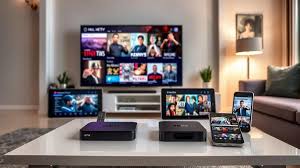
Television entertainment has changed dramatically in recent years. Instead of relying only on traditional cable packages and fixed broadcasting schedules, viewers can now organize live television and compatible streaming content through modern IPTV players. This approach offers greater flexibility, especially for households that want a convenient way to browse channels, manage playlists, and discover programs from one screen.
A TiviMate IPTV Free Trial can be a useful way to explore an IPTV setup before making a longer-term commitment. It gives viewers an opportunity to assess practical factors such as channel availability, streaming stability, electronic program guide functionality, picture quality, device compatibility, and overall usability. However, we should understand that TiviMate is primarily an IPTV player. It does not automatically provide television channels or guarantee the quality of an IPTV service.
The best way to approach an IPTV trial is to test the complete viewing experience. By checking the application, compatible content source, internet connection, streaming device, and television together, we can make a more informed decision about whether the setup suits our entertainment needs.
What Is TiviMate?
TiviMate is an IPTV player designed for compatible Android-based television and streaming environments. Its main purpose is to provide an organized interface for managing and viewing compatible IPTV playlists.
Instead of replacing a television content provider, TiviMate works as the platform through which compatible IPTV content can be organized and played. This distinction is important because the quality, availability, and legality of programming depend on the content source being used.
For viewers with large channel libraries, a dedicated IPTV player can make navigation considerably easier. Features such as categories, favorites, search, and electronic program guides help transform a large playlist into a more manageable television experience.
What Is a TiviMate IPTV Free Trial?
A TiviMate IPTV Free Trial generally describes a limited opportunity to evaluate an IPTV setup before paying for a longer subscription. The exact terms of a trial vary depending on the IPTV service offering the access.
A trial may allow us to examine:
- Channel availability
- Streaming stability
- Picture quality
- Electronic program guide information
- Channel organization
- Device compatibility
- Channel switching speed
- Audio and video synchronization
- Live programming
- Customer support and service responsiveness
We should always review the specific trial terms before beginning. A trial provided by an IPTV service should not automatically be confused with the features or licensing terms of the TiviMate application itself.
Why Should We Test IPTV Before Subscribing?
Choosing an IPTV service based only on promotional information can create unrealistic expectations.
A provider may advertise an extensive channel selection or high-resolution streaming, but actual performance depends on numerous practical factors. These include network conditions, device capabilities, source quality, stream bitrate, compression, and infrastructure.
A trial gives us the chance to test the service under real viewing conditions.
For example, we can watch several channels during the evening, test live sports, examine movie channels, check EPG accuracy, and observe whether playback remains stable over an extended period.
This real-world evaluation is much more useful than simply checking a channel list.
Check Compatibility Before Getting Started
Before testing an IPTV setup, we should confirm that our intended streaming device supports the application and required playback features.
Performance can vary significantly between devices. A newer streaming device may handle demanding video formats smoothly, while older hardware may struggle.
We should consider:
- Processing power
- Available memory
- Video decoding support
- Operating system compatibility
- Network connectivity
- HDMI output
- Display resolution
- HDR capabilities
A compatible device with sufficient resources creates a stronger foundation for smooth IPTV playback.
Choose a Reliable Network Connection
Internet connectivity is one of the most important parts of IPTV entertainment.
Streaming quality depends not only on download speed but also on consistency. Latency, packet loss, congestion, wireless interference, and router performance can all affect playback.
For stationary streaming devices, Ethernet can be an excellent choice because it provides a direct connection to the network.
Wi-Fi can also work effectively when the signal is strong and the router is positioned appropriately. However, walls, appliances, distance, and other wireless devices can reduce performance.
During a trial, we should test the service using the same connection we expect to use regularly.
Test the Service at Different Times
An IPTV service that performs well in the afternoon may behave differently during busy evening periods.
For this reason, testing at different times provides a more realistic assessment.
We can check:
- Morning playback
- Afternoon streaming
- Evening viewing
- Weekend performance
- Live events when available
Testing during different periods helps us determine whether performance remains consistent.
This is particularly useful for viewers who primarily watch live sports, news, or other programming during peak hours.
Explore Different Channel Categories
One channel cannot represent an entire IPTV service.
During a trial, we should explore multiple categories to understand the overall experience.
Useful categories to test include:
News Channels
News programming can help us evaluate text clarity, picture stability, and long-duration playback.
Sports Channels
Sports are excellent for testing motion, buffering, audio synchronization, and live-event stability.
Movie Channels
Movies allow us to assess image quality, color accuracy, contrast, and audio.
Entertainment Channels
General entertainment programming provides a useful representation of everyday television viewing.
Documentary Channels
Detailed scenery can reveal differences in compression, sharpness, and overall source quality.
Testing multiple categories helps us determine whether the service consistently performs well across different types of content.
Evaluate Picture Quality
Resolution is important, but it is not the only measure of video quality.
A high-resolution stream can still look poor if it has aggressive compression or insufficient bitrate.
During a TiviMate IPTV Free Trial, we should look for:
- Clear details
- Natural colors
- Smooth motion
- Correct aspect ratio
- Minimal compression artifacts
- Stable resolution
- Consistent brightness
- Good shadow detail
It is useful to compare several channels because individual streams can vary significantly.
Understand Resolution and Upscaling
Modern televisions support resolutions ranging from HD and Full HD to 4K and 8K.
However, the television’s resolution does not automatically determine the source resolution.
For example, an 8K television can upscale a lower-resolution stream, potentially making it appear cleaner. However, upscaling does not create all the original detail of a native high-resolution source.
This distinction helps us evaluate IPTV quality realistically.
Instead of focusing only on labels such as 4K or 8K, we should consider the actual appearance of the stream, its bitrate, compression quality, and stability.
Check the Electronic Program Guide
The electronic program guide, or EPG, is an important part of a convenient IPTV experience.
A functional EPG lets us see what is currently playing and what is scheduled next. It can also make large channel collections easier to navigate.
During the trial, we should check whether:
- Program information loads correctly
- Listings match actual broadcasts
- Information extends far enough into the future
- Categories are organized properly
- Guide data updates consistently
An inaccurate EPG can make even a large channel library frustrating to use.
Create a Useful Favorites List
Favorites can dramatically simplify IPTV navigation.
Instead of scrolling through hundreds of channels, we can create a smaller collection containing the channels we watch most frequently.
A useful favorites list might contain preferred news, sports, entertainment, movie, and local programming.
We should avoid adding every available channel to favorites. The purpose is to create a focused list that makes everyday viewing faster.
Use Search for Large Playlists
Search functionality becomes especially valuable when an IPTV playlist contains hundreds or thousands of entries.
Rather than scrolling through categories, we can search directly for a channel or program.
During the trial, we should test how easily content can be located.
An IPTV player should reduce navigation complexity rather than create additional work.
Test Live Sports During the Trial
Sports are one of the best ways to evaluate live IPTV performance.
Fast-moving action places greater demands on playback stability, frame-rate handling, and network consistency.
We should pay attention to:
- Buffering
- Motion smoothness
- Channel switching
- Audio synchronization
- Picture clarity
- Stability during longer sessions
If sports are a major reason for using IPTV, this should be one of the highest-priority tests.
Check Audio and Video Synchronization
Picture quality means little if the audio does not match the video.
During the trial, we should watch presenters, interviews, sports commentary, and other content where synchronization is easy to observe.
Noticeable audio delay across several channels may indicate a playback or source problem.
Testing different channels can help determine whether the issue is isolated or widespread.
Test Channel Switching
Channel switching speed contributes to the overall user experience.
We should try moving between several channels and observe how quickly playback begins.
Some loading time can be expected with certain streaming technologies, but unusually long delays across many channels can affect everyday convenience.
Fast and predictable navigation makes an IPTV player feel more responsive.
Configure Playback Settings Carefully
Playback settings should be changed carefully.
The exact options available can depend on the device and software environment. Where hardware decoding is supported, it may reduce the workload placed on the device’s processor.
However, not every setting works equally well on every device.
We should change one setting at a time and test the result. This makes troubleshooting much easier.
If playback becomes less stable after a change, returning to the previous configuration can help identify the cause.
Optimize Television Picture Settings
The television can have a significant impact on perceived IPTV quality.
We should begin with a balanced picture mode and adjust only the settings that genuinely improve the image.
Important options may include:
- Brightness
- Contrast
- Sharpness
- Color temperature
- Motion processing
- Noise reduction
- HDR
- Local dimming
Excessive sharpening can create artificial edges, while aggressive motion processing can introduce unwanted artifacts.
A natural picture is often more enjoyable for long viewing sessions.
Use HDR Correctly
High Dynamic Range, or HDR, can improve compatible content by expanding the range of brightness and preserving more detail between shadows and highlights.
However, HDR should be used appropriately.
If the source does not support HDR, forcing an HDR mode can sometimes produce unnatural colors or brightness.
We should allow compatible devices and televisions to handle supported HDR content correctly.
Avoid Unnecessary Network Congestion
Household networks often support many devices at the same time.
Smartphones, laptops, gaming consoles, security cameras, cloud backups, and downloads can all consume bandwidth.
If IPTV playback becomes unstable, we should check whether other devices are using significant network resources.
Reducing unnecessary traffic can sometimes improve streaming without changing the IPTV configuration.
Use Ethernet When Practical
Ethernet can provide a more consistent connection for a television or streaming device.
Wi-Fi remains useful and can perform extremely well, but wireless conditions can change due to interference and congestion.
For a permanent home entertainment setup, connecting the streaming device directly to the router can eliminate several potential variables.
If Ethernet is not practical, we should ensure strong Wi-Fi coverage and minimize physical obstacles between the router and streaming device.
Keep Streaming Hardware Cool
Streaming devices need proper ventilation.
High-resolution playback can increase processing demands, and excessive heat may eventually affect performance.
We should avoid placing streaming hardware inside cramped cabinets or directly on top of equipment that produces significant heat.
If playback becomes less stable after extended viewing but returns to normal after the device cools down, overheating may be worth investigating.
Keep Software Updated
Software and firmware updates can improve compatibility, performance, and security.
We should keep compatible applications, streaming devices, televisions, and routers reasonably updated.
However, updates should be installed through legitimate channels.
Maintaining current software can reduce avoidable compatibility problems and help keep the overall entertainment system stable.
Security Tips for IPTV Users
We should treat IPTV applications and content sources with the same security awareness applied to other digital services.
It is sensible to:
- Use legitimate software sources
- Avoid suspicious files
- Avoid unknown applications
- Protect account credentials
- Use strong passwords where appropriate
- Keep devices updated
- Review payment terms carefully
- Avoid sharing sensitive information unnecessarily
A free trial should not require us to compromise basic security practices.
TiviMate IPTV Free Trial Tips for First-Time Users
For newcomers, the first trial can feel overwhelming if the playlist contains a large number of channels.
We can simplify the experience by creating a structured routine.
First, confirm that the application and device work correctly. Next, test several channels. Then check the EPG and create favorites. After that, test live programming and higher-quality streams.
This approach gives us a clear picture without requiring constant configuration changes.
Common Mistakes to Avoid
Testing Only One Channel
One stable channel does not prove that the entire service is reliable.
Testing Only During Quiet Hours
Peak-time performance can be different from daytime performance.
Ignoring the Network
Local connectivity problems can cause buffering that appears to be an IPTV issue.
Using an Underpowered Device
Older hardware may struggle with demanding streams.
Overusing Picture Enhancements
Too much processing can make high-quality content look artificial.
Changing Multiple Settings Simultaneously
Changing several variables makes it difficult to identify what actually improved or harmed playback.
How to Evaluate a Trial Properly
A simple evaluation process can make the decision easier.
Step 1: Test Installation and Navigation
Make sure the application responds properly to remote commands and that menus are easy to understand.
Step 2: Test Multiple Channels
Explore different categories and resolutions.
Step 3: Check the EPG
Verify that program information is accurate and easy to browse.
Step 4: Test Peak Hours
Watch during the periods when the service will normally be used.
Step 5: Test Live Events
If sports or live programming are important, evaluate them carefully.
Step 6: Review Picture and Audio
Look for clarity, smooth motion, natural colors, and synchronization.
Step 7: Evaluate Long-Term Comfort
Consider whether the interface remains convenient after repeated use.
TiviMate IPTV Free Trial for Different Viewing Needs
Different households have different priorities.
Sports viewers may focus on stability and motion. Movie enthusiasts may care more about picture quality and audio. Families may prioritize channel organization and favorites. News viewers may value accurate EPG information and clear text.
A good trial should therefore be personalized around actual viewing habits.
Instead of testing random channels, we should focus on the content we expect to watch most frequently.
Is a Free Trial Enough to Judge IPTV Quality?
A trial cannot predict every future situation, but it can provide valuable information.
The longer and more varied the testing period, the more reliable the assessment becomes.
We should test different times, channels, resolutions, and devices when possible.
A trial should answer practical questions:
- Are the channels we need available?
- Does playback remain stable?
- Is the picture quality acceptable?
- Does the EPG work properly?
- Is the interface convenient?
- Does the service perform well on our network?
- Does the overall experience justify further consideration?
If these questions can be answered confidently, the trial has served its purpose.
Best Practices for Long-Term IPTV Entertainment
After a successful trial, maintaining a reliable setup remains important.
We should keep the streaming device updated, maintain a stable network connection, organize favorites, review EPG information, and monitor any recurring playback problems.
The television should also be configured according to the content being watched.
Most importantly, we should avoid constantly changing settings when everything is already working well. A stable configuration is often better than endless experimentation.
Final Verdict
A TiviMate IPTV Free Trial can provide a practical opportunity to evaluate IPTV entertainment before making a longer-term commitment. TiviMate’s role is primarily to organize and play compatible IPTV content, while the underlying source determines the available programming and much of its quality.
The best evaluation goes beyond counting channels. We should examine picture quality, playback stability, EPG accuracy, channel switching, audio synchronization, device compatibility, network performance, and everyday usability.
When the source, player, streaming device, internet connection, and television are properly matched, IPTV can become a convenient part of a modern home entertainment setup.
A careful trial allows us to identify strengths and limitations before making a decision. By testing the features that matter most to our viewing habits, we can create a more reliable and enjoyable IPTV experience.
Conclusion
A TiviMate IPTV Free Trial gives viewers an opportunity to explore the practical side of IPTV entertainment before making a longer-term commitment. Instead of relying only on advertised channel counts or resolution claims, we can use the trial to examine the features and performance that matter in everyday viewing.
The most useful evaluation includes multiple channels, different content categories, peak-hour testing, EPG checks, picture-quality assessment, audio synchronization, and network stability. Testing the service on the actual device and connection we plan to use also provides a much more realistic impression.
TiviMate can provide an organized interface for compatible IPTV content, while the source, network, hardware, and television determine much of the final viewing experience. With careful testing and sensible configuration, we can build an IPTV environment that is convenient, responsive, and enjoyable for everyday home entertainment.
FAQs
1. What is a TiviMate IPTV Free Trial?
A TiviMate IPTV Free Trial generally refers to a limited opportunity to test compatible IPTV access before considering a longer subscription. The exact duration, channels, features, and conditions depend on the IPTV service offering the trial.
2. Does TiviMate provide television channels by itself?
No. TiviMate is primarily an IPTV player and interface. Compatible IPTV playlists or services provide the programming. We should use legitimate content sources and review the terms of any service before using it.
3. What should we test during an IPTV trial?
We should test channel availability, video quality, buffering, EPG accuracy, channel switching, audio synchronization, device compatibility, and performance during different times of day.
4. Can IPTV work reliably over Wi-Fi?
Yes. A strong and stable Wi-Fi connection can support IPTV effectively. However, Ethernet can be preferable for stationary streaming devices because it reduces wireless interference and congestion variables.
5. How can we get the most value from an IPTV trial?
We should test the service using our actual device and network, explore multiple categories, watch during peak hours, check the EPG, evaluate live programming, and focus on the channels we are most likely to watch regularly.


















Leave a Reply