In today’s fast-paced business environment, maintaining uninterrupted operations is more important than ever. Unexpected events such as natural disasters, hardware failures, cyberattacks, power outages, or sudden shifts to remote work can disrupt critical business processes and impact productivity. For organizations that rely heavily on accounting software, ensuring continuous access to financial data is a key component of business continuity planning.
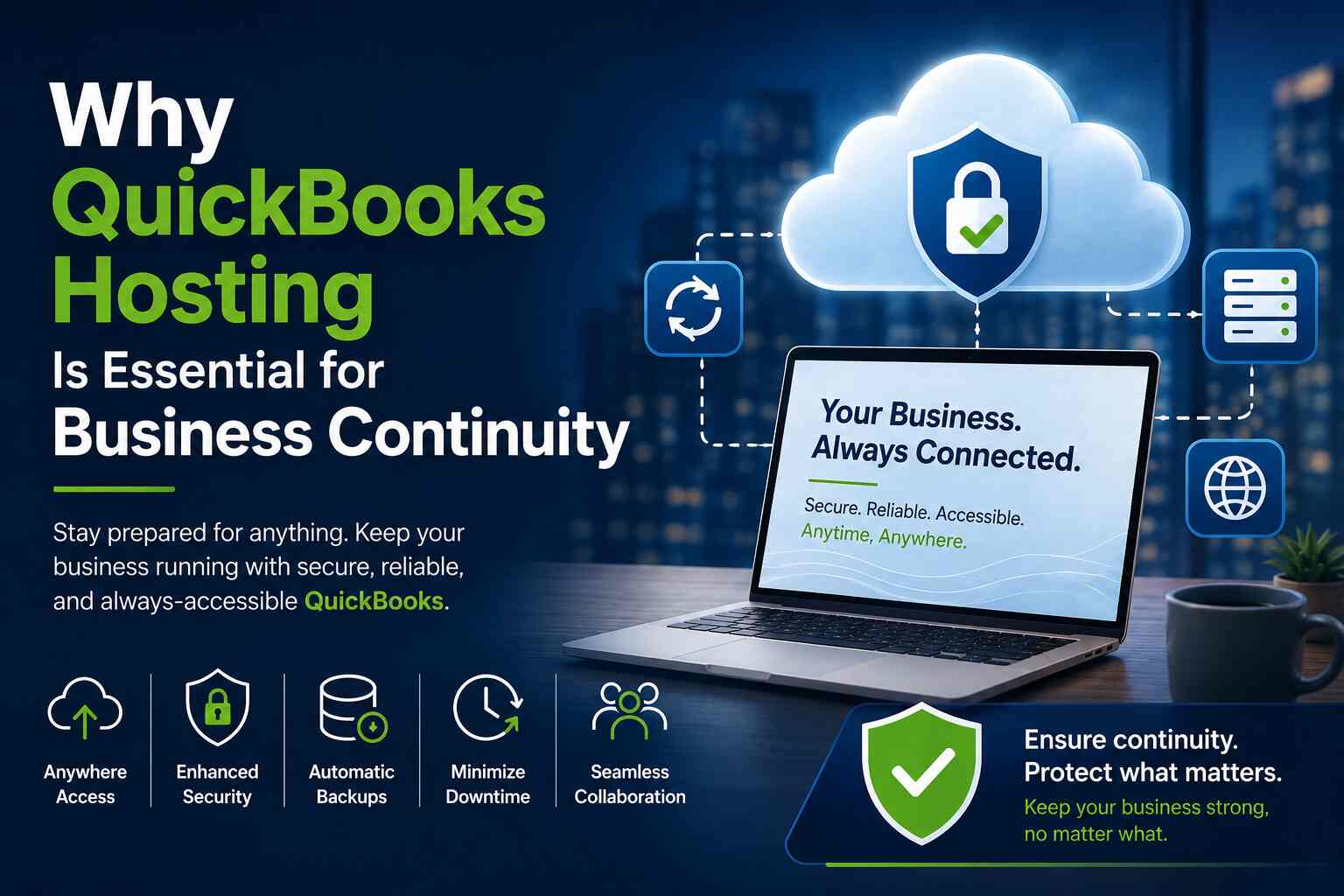
This is where quickbooks hosting plays a vital role. By moving QuickBooks to a secure cloud environment, businesses gain the flexibility, reliability, and resilience needed to keep operations running smoothly, regardless of external challenges. From remote accessibility to automated backups, hosted QuickBooks solutions help organizations minimize downtime and protect essential financial information.
Understanding Business Continuity
Business continuity refers to an organization’s ability to continue delivering products and services during and after a disruptive event. A comprehensive continuity strategy ensures that employees can access critical systems, communicate effectively, and maintain business operations without significant interruptions.
Accounting systems are among the most important business applications because they manage financial records, payroll, invoicing, reporting, and compliance-related activities. Any disruption in access to these systems can create delays, financial inaccuracies, and operational inefficiencies.
By adopting quickbooks hosting, businesses can strengthen their continuity plans and reduce the risks associated with traditional on-premises accounting environments.
Access Your Accounting Data from Anywhere
One of the biggest challenges during unexpected disruptions is maintaining access to critical business applications. Traditional desktop-based accounting systems often require employees to be physically present in the office or connected to a specific computer.
With quickbooks hosting, users can securely access their QuickBooks environment from virtually any location using an internet connection. Whether employees are working remotely, traveling, or operating from a temporary office, they can continue managing financial tasks without interruption.
This flexibility became especially important during global events that forced businesses to rapidly adopt remote work models. Companies with cloud-hosted accounting solutions were able to adapt more quickly and maintain operational continuity.
Protection Against Hardware Failures
Hardware failures can occur without warning and result in significant downtime. Server crashes, damaged hard drives, and aging infrastructure can jeopardize access to critical accounting data.
Hosted QuickBooks environments eliminate the dependency on local hardware by storing applications and data in professionally managed cloud data centers. If a local device experiences issues, employees can simply log in from another device and continue working.
This level of redundancy helps businesses avoid costly interruptions and ensures accounting operations remain available when needed most.
Automated Data Backups and Recovery
Data loss can be devastating for any organization. Accidental deletions, cyber incidents, software corruption, or equipment failures can compromise valuable financial records.
A major advantage of quickbooks hosting is the inclusion of automated backup systems. Regular backups help ensure that business data remains protected and recoverable in the event of an unexpected incident.
Instead of manually creating backups and storing them on local devices, organizations can rely on cloud-based recovery solutions that preserve important accounting information and support faster restoration processes.
Enhanced Security for Business-Critical Data
Business continuity is closely linked to data security. A security breach can disrupt operations, damage customer trust, and result in financial losses.
Cloud hosting providers typically implement multiple layers of protection, including:
- Advanced firewalls
- Data encryption
- Multi-factor authentication
- Network monitoring
- Regular security updates
- Intrusion detection systems
These measures help protect financial information from unauthorized access and cyber threats. By leveraging secure cloud infrastructure, businesses can reduce security risks while maintaining access to critical accounting resources.
Support for Multi-User Collaboration
Many businesses rely on multiple employees, accountants, and financial advisors to access accounting systems simultaneously. During disruptions, collaboration becomes even more important.
Hosted QuickBooks environments allow authorized users to work on the same company file from different locations in real time. This capability improves communication, streamlines workflows, and ensures financial processes continue without delays.
Whether reviewing reports, processing payroll, or managing invoices, team members can collaborate efficiently without being restricted by location.
Improved Scalability During Growth
Business continuity planning should account not only for disruptions but also for future growth. As organizations expand, their accounting requirements often become more complex.
Cloud-hosted QuickBooks solutions provide the scalability needed to support changing business demands. Companies can add users, increase storage resources, and integrate additional applications without investing heavily in new hardware infrastructure.
This flexibility ensures that accounting systems can adapt to evolving business needs while maintaining consistent performance and availability.
Reduced Downtime and IT Burden
Managing on-premises servers requires ongoing maintenance, updates, troubleshooting, and monitoring. These responsibilities can place a significant burden on internal IT teams.
With cloud hosting, much of the infrastructure management is handled by the hosting provider. Regular maintenance, software updates, server monitoring, and performance optimization are performed behind the scenes.
As a result, businesses experience less downtime and can focus more on core operations rather than technology management.
Disaster Recovery Preparedness
Natural disasters, severe weather events, power failures, and unforeseen emergencies can affect physical office locations. Without a proper disaster recovery strategy, businesses may struggle to access essential financial data.
Cloud-hosted accounting environments support disaster recovery by storing data in secure offsite facilities designed for high availability. Even if a primary office location becomes inaccessible, employees can continue working from alternative locations.
This capability significantly strengthens an organization’s ability to recover quickly and maintain business operations during challenging situations.
Conclusion
Business continuity is no longer optional in an increasingly digital and unpredictable business landscape. Organizations must ensure that critical systems remain accessible, secure, and resilient in the face of disruptions. By providing remote access, automated backups, enhanced security, disaster recovery capabilities, and reliable performance, quickbooks hosting helps businesses maintain operational stability and protect their financial processes.
For companies looking to improve resilience and support long-term growth, partnering with a trusted hosting provider is an important step. Apps4Rent offers secure and reliable QuickBooks hosting solutions designed to help businesses maintain uninterrupted access to their accounting applications while enhancing productivity, collaboration, and business continuity.