

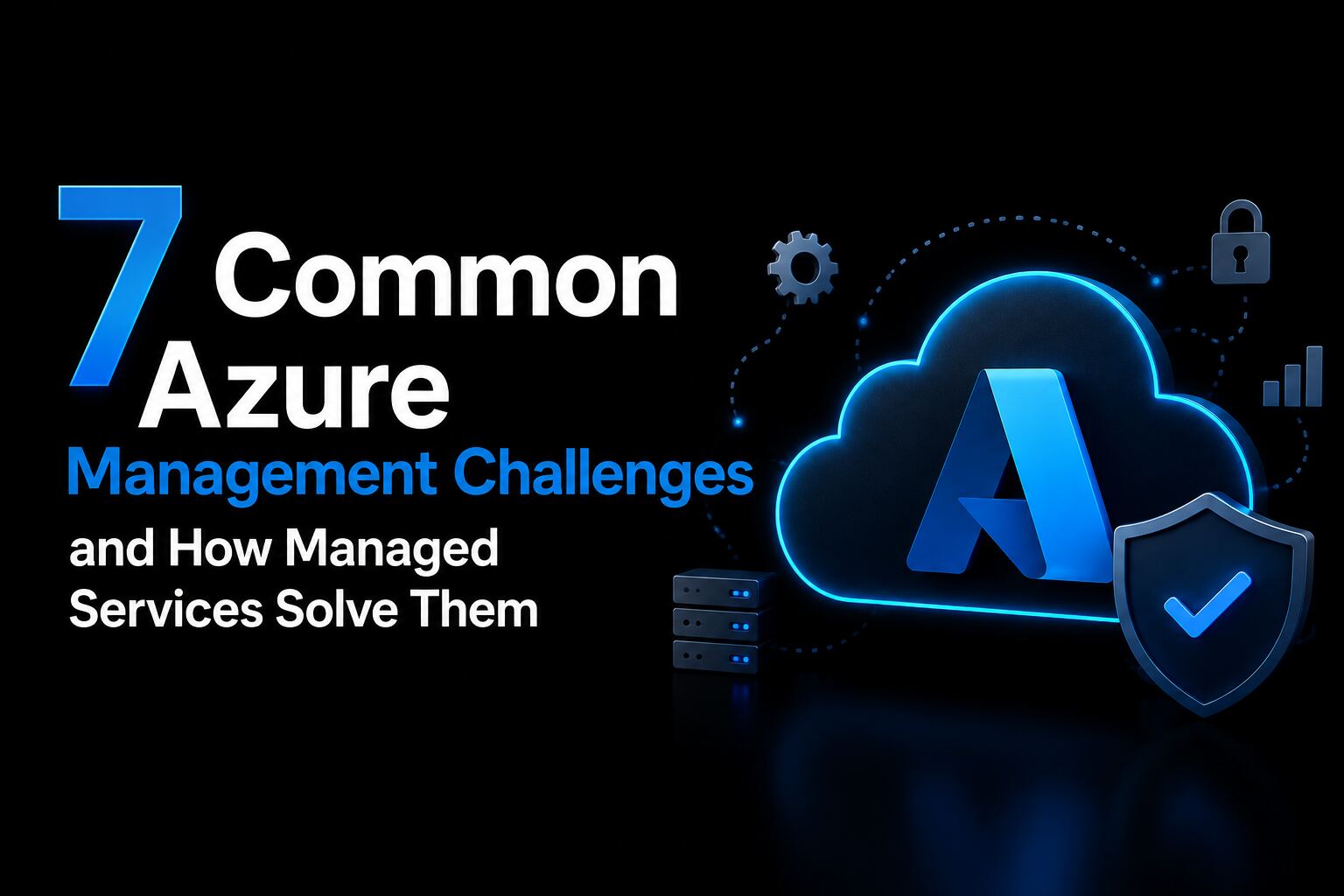
Microsoft Azure has become a core part of modern IT infrastructure, supporting virtual machines, databases, applications, AI workloads, virtual desktops, backup environments, and disaster recovery. While getting started with Azure is relatively straightforward, managing a growing cloud environment efficiently over time can be much more demanding.
As Azure environments become more complex, IT teams often have to balance cloud costs, security, compliance, performance, backups, migrations, and resource scaling. These responsibilities can consume valuable time and make it difficult for internal teams to focus on business-critical projects. This is where Microsoft Azure managed services can provide practical support.
With the right managed services partner, businesses can receive ongoing monitoring, technical expertise, security management, cost control, and infrastructure support without placing the entire responsibility on their internal IT staff.
1. Uncontrolled Cloud Costs
Azure’s consumption-based pricing gives businesses flexibility, but cloud expenses can become difficult to manage when resources are not regularly reviewed. Oversized virtual machines, unused storage, idle workloads, and unnecessary resources can continue generating charges even when they provide little business value.
The challenge becomes greater as organizations add more workloads and departments to their Azure environment. Without centralized visibility, it can be difficult to determine which resources are driving costs or where savings opportunities exist.
How managed services help: Providers offering Microsoft Azure managed services can monitor resource consumption, identify unused or oversized resources, and recommend rightsizing strategies. They can also establish budgets, spending alerts, and cost-management policies to help businesses maintain better control over monthly Azure expenses. Regular reviews allow organizations to balance performance requirements with responsible cloud spending.
2. Security and Compliance Gaps
Azure includes extensive security capabilities, but having access to security tools does not automatically mean an environment is properly protected. Identity settings, access permissions, network configurations, storage resources, endpoint security, and security policies all require ongoing attention.
As infrastructure changes, security gaps can also develop. A permission that was appropriate several months ago may no longer be necessary, while a newly deployed resource may not follow the organization’s existing security standards.
How managed services help: Managed service providers can continuously monitor Azure environments and apply established security practices across workloads. Support may include identity and access management, multi-factor authentication, vulnerability monitoring, patch management, endpoint protection, and security policy reviews. Providers can also assist with compliance requirements and documentation, helping organizations maintain a more consistent security posture.
3. Limited In-House Azure Expertise
Azure covers a broad range of technologies, including computing, networking, databases, storage, containers, security, analytics, and AI. Keeping up with the platform’s constantly expanding capabilities can be difficult for a small or overstretched IT department.
Hiring dedicated Azure specialists can also increase staffing costs, particularly when an organization needs expertise across multiple areas rather than a single technical discipline.
How managed services help: Working with a managed services provider gives businesses access to experienced Azure professionals without requiring a large internal cloud team. These specialists can assist with architecture, configuration, troubleshooting, performance management, security, and ongoing administration. This additional expertise can also help internal IT staff handle complex projects with greater confidence.
4. Inadequate 24/7 Monitoring and Support
Azure workloads can support business operations around the clock, but internal IT teams may not have the resources to monitor infrastructure continuously. Problems that occur outside normal working hours can remain unresolved until someone becomes available to investigate them.
A performance issue, failed service, connectivity problem, or infrastructure alert can quickly affect employees and customers if it is not addressed promptly.
How managed services help: Managed service providers can provide continuous infrastructure monitoring and technical support. Automated alerts and monitoring systems can identify unusual activity, resource issues, and performance changes before they develop into larger problems. Around-the-clock support also reduces the need for internal teams to respond to every incident outside normal business hours.
5. Complex Migrations and Hybrid Environments
Migrating applications and data to Azure requires more than simply moving workloads from one environment to another. Businesses need to consider application dependencies, networking, security, data transfer, compatibility, downtime, user access, and performance.
Hybrid environments can introduce another layer of complexity when organizations need to manage on-premises infrastructure alongside Azure resources. Without proper planning, businesses may encounter configuration inconsistencies, connectivity problems, or unexpected migration costs.
How managed services help: Managed service providers can assess existing infrastructure, identify dependencies, develop migration strategies, and coordinate phased migrations. They can also help organizations manage hybrid environments and integrate on-premises systems with Azure services. A structured approach reduces unnecessary disruption while creating a more manageable cloud infrastructure.
6. Inconsistent Backup and Disaster Recovery Planning
Hardware failures, accidental deletion, ransomware, application failures, and other incidents can put business data at risk. Although Azure provides tools for backup and disaster recovery, organizations still need to configure, monitor, test, and maintain those solutions properly.
A backup strategy that has never been tested may not provide the level of protection a business expects when an actual incident occurs.
How managed services help: Managed services providers can design backup and disaster recovery strategies around business requirements. Solutions such as Azure Backup and Azure Site Recovery can be configured to support defined recovery point objectives and recovery time objectives. Regular testing and monitoring can help verify that backups are available and recovery procedures work as expected when they are needed.
7. Difficulty Scaling Resources Efficiently
Cloud infrastructure is designed to provide flexibility, but managing that flexibility manually can become challenging. Businesses may experience sudden increases in demand that require additional resources, while workloads may remain overprovisioned during quieter periods.
If resources are not adjusted appropriately, organizations can face either performance problems or unnecessary cloud expenses.
How managed services help: Managed service providers can monitor workload performance and implement appropriate scaling strategies. Automated scaling, resource monitoring, and capacity planning can help Azure environments respond to changing business requirements. This allows organizations to maintain application performance during periods of increased demand while avoiding unnecessary infrastructure capacity when usage declines.
Why Managed Azure Services Matter
These challenges are closely connected. Poor cost management can increase cloud spending, insufficient monitoring can allow performance issues to persist, and limited expertise can make security and infrastructure problems harder to resolve. When all of these responsibilities fall on a small internal IT team, routine Azure administration can take time away from strategic business initiatives.
Microsoft Azure managed services provide a way to distribute that operational responsibility to experienced professionals. Instead of handling every monitoring alert, security update, backup task, migration requirement, and infrastructure adjustment internally, businesses can rely on a dedicated team to manage these areas continuously.
This approach can also give internal IT teams more time to work on application development, business technology initiatives, digital transformation, and other projects that directly support organizational goals.
Conclusion
Azure provides businesses with the flexibility and technology needed to support modern workloads, but maintaining an Azure environment requires ongoing attention. Cloud costs, security, technical expertise, monitoring, migrations, disaster recovery, and resource scaling can all become significant management challenges as an organization grows.
With the right Microsoft Azure managed services partner, businesses can receive ongoing technical support and proactive infrastructure management while reducing the pressure on internal IT teams.
Apps4Rent provides Microsoft Azure managed services designed to help businesses manage their Azure environments with ongoing monitoring, security support, cost management, migration assistance, backup and disaster recovery, and infrastructure administration. By working with experienced Azure professionals, organizations can spend less time dealing with routine cloud management and more time focusing on business growth and technology initiatives.



















Leave a Reply