

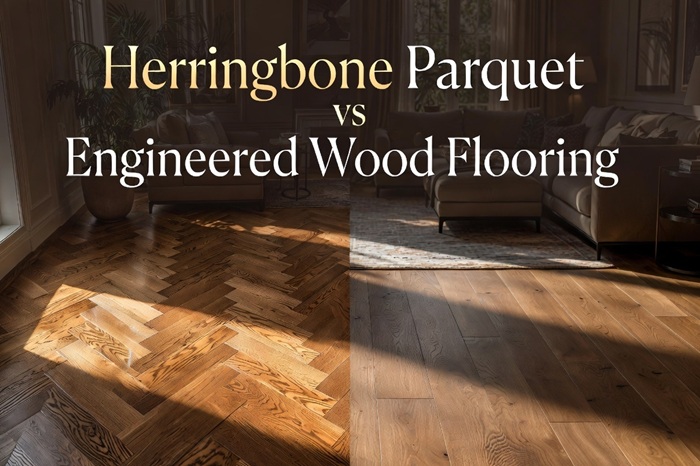
When I began renovating my hallway two years ago, I honestly believed that selecting wood flooring would be the simplest task. Pick oak, pick a finish, and done. What I didn’t expect was the unending rabbit hole that opens up the moment you start actually looking for the wood flooring options. Herringbone parquet flooring or wide plank engineered boards, which one do you think will be the right choice? Both have real oakwood. Both are beautiful. But they are both completely different in ways that took me far too long to properly understand.
If you are currently at the same crossroads, this article will significantly help you. This is the article, I wish I had found before I started. It is just a clear, self-analysed and honest breakdown of what each floor actually does, where it works best, and how to make the right call for your dream home.
What Is the Difference Between Herringbone Parquet Flooring and Engineered Oak Flooring?
Most guides either skip this information or bury it in some deeply technical language, tough for people like me and you to understand. So, here’s the easy-to-understand version of the same technical explanation.
Both herringbone parquet flooring and wide plank engineered wood flooring are made from real oak with a multi-layer engineered core beneath. The material is largely the same. What changes is how that material is cut, how it is laid, and, most importantly, how it makes a room feel once it’s installed.
What Is Herringbone Parquet Flooring?
Herringbone parquet uses shorter, narrower oak blocks which typically range from 80mm to 150mm in width and are arranged in a precise interlocking zigzag. The end of each plank meets the side of the next, creating the signature broken V pattern that has defined elegant European interiors for centuries.
The result is a floor with genuine visual depth and movement. It’s decorative by design, as the pattern becomes a significant part of the room’s character rather than simply a surface to walk on. Be it the Georgian townhouses, Victorian terraces, or Parisian apartments, herringbone has always belonged in spaces with personality and intention. And as I discovered when I finally had it laid in my hallway, it photographs beautifully, but it lives even better.
What Is Engineered Wood Flooring?
Engineered wood flooring uses longer, wider oak planks, which commonly range anywhere from 125mm to 220mm wide, and are laid in a straight linear direction. Each board reveals a generous sweep of natural oak grain, colour variation, and character. The floor feels open, warm, and unforced.
A friend of mine went this route for her open-plan kitchen and living area, and the difference it made to the sense of space was immediate. The floor didn’t compete with anything. All it did was just quietly hold the room together. Wide plank engineered oak is the most versatile wood flooring format you can buy, and it works in almost any interior style without asking too much of the space around it.
How Does Each Floor Change the Feel of a Room?
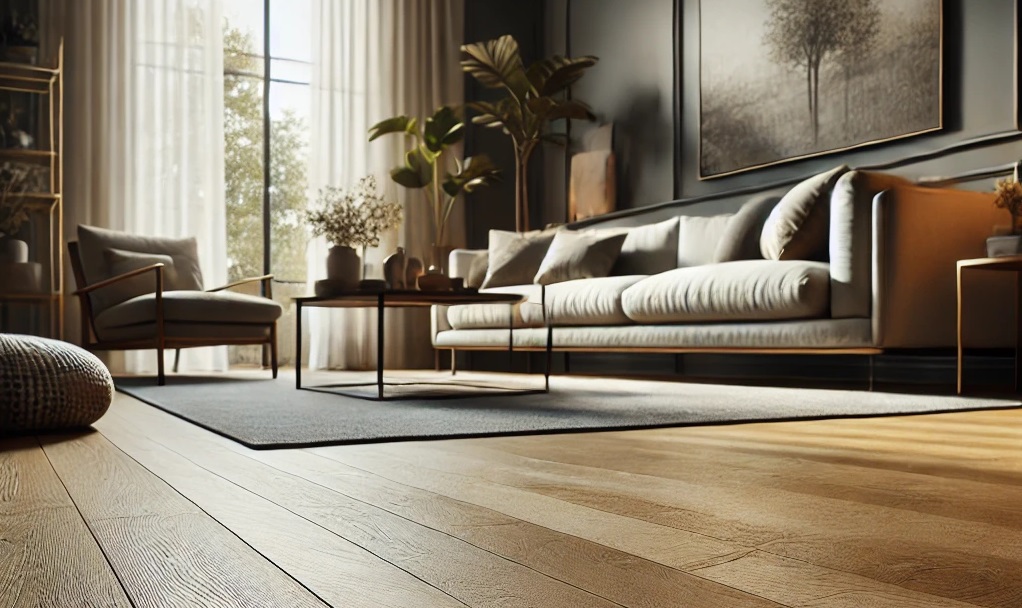
This is the question that truly matters. When choosing the flooring, pay attention to not merely the specifications of the floor but the atmosphere each floor creates the moment someone walks through the door.
What Does Herringbone Parquet Do to a Room?
Herringbone adds energy, personality, and a sense of considered design. The zigzag pattern draws the eye inward and across the room at the same time, creating warmth and texture that a flat, linear floor simply doesn’t produce.
It’s also one of the best tools available for making a narrow space feel wider. The diagonal movement of herringbone pulls the eye across the width of the room rather than straight along its length. My hallway is not large, but with herringbone down, it feels quite deliberate rather than awkward. That shift in perception was worth every penny of the installation cost.
What Does Wide Plank Engineered Wood Do to a Room?
Wide plank engineered wood flooring does something different and equally powerful. It actually opens a room up. The long horizontal lines of wide boards extend the eye across the length of the space, making rooms feel bigger, lighter, and more generous than they might actually be.
There’s also a relaxed, organic quality to wide plank oak that herringbone doesn’t quite have. The natural grain across a 190mm or 220mm board is genuinely beautiful in a way that feels effortless rather than curated. It’s a floor that’s easy to live with, uncomplicated, warm, and never out of place.
Which Rooms Are Best Suited to Herringbone Parquet Flooring?
Hallways
Herringbone flooring shines brightest in a hallway. The pattern adds perceived width to a typically narrow space and creates a first impression that carries through the rest of the home. If there’s one room in the house to invest in herringbone parquetry, this is it.
Dining Rooms
A dining room has four clear walls and a defined purpose. Now, this setting is the one which gives herringbone room to breathe and settle. The pattern adds a decorative layer that makes even an ordinary Tuesday dinner feel a little more considered.
Home Offices and Studies
Herringbone brings focus and character to a working space. It’s grounding without being distracting. A kind of flooring that makes a room feel purposeful rather than just furnished.
Period Properties
Victorian, Edwardian, and Georgian homes have a natural affinity with herringbone parquet. It’s historically authentic. In short, it’s the kind of floor that belongs in a building with original cornicing, sash windows, and ceiling roses. Rather than fighting against the character of an older home, it leans into it.
Square Rooms
A square room without a strong directional axis can feel static and undefined. Herringbone’s multidirectional energy gives the space a visual anchor and a sense of movement that a straight-lay floor often struggles to provide.
Which Rooms Are Best Suited to Wide Plank Engineered Wood Flooring?
Open-Plan Living and Kitchen Areas
Wide planks are the natural choice for large, flowing spaces. The long boards keep the floor looking continuous and unified across a big footprint. Where a patterned floor like herringbone might fragment the visual field, wide planks hold everything together and let the space breathe.
Bedrooms
The warmth and simplicity of wide-plank oak make it a genuinely lovely choice for a bedroom. It’s restful and feels luxurious underfoot in the morning, and that too without the visual intensity that herringbone brings to a space.
Contemporary New Builds
Clean architectural lines and minimal interiors pair beautifully with the straightforward elegance of wide plank oak laid in a straight line. The floor steps back and lets the space speak, which is exactly what contemporary design asks for.
Large Rectangular Living Rooms
In a long rectangular room, wide planks laid along the length of the space enhance the natural proportions beautifully. The horizontal lines extend the eye and make the room feel as generous as it actually is, rather than working against its shape.
Herringbone Parquet Flooring or Engineered Wood Flooring: Which is Easier to Install?
Herringbone parquet requires more precision. The starting point, the angle, and the alignment all need careful planning before a single plank touches the floor. A skilled installer will spend considerably more time setting out a herringbone floor than a straight lay. That extra care is what makes the result so satisfying, but it does mean installation costs can be slightly higher, and you’ll want to budget for 10–15% extra material to account for off-cuts at room edges, which is standard for any patterned lay.
Wide plank engineered flooring is more forgiving. Wider boards mean faster progress, and the straight lay requires less complex setting out. The main practical consideration is acclimatisation, which means wider boards need 48–72 hours in the room before fitting to properly adjust to the temperature and humidity of the space.
Both formats are available in tongue and groove and click system options, which gives you flexibility depending on whether you’re using a professional fitter or approaching it as a confident DIY project.
Which Floor Works Better with Underfloor Heating?
Both work well with underfloor heating when the top layer is engineered oak rather than solid oak flooring. The multi-layer construction of engineered boards handles the gentle heat cycling of water-based UFH systems far better than solid timber, which tends to move too much with temperature changes to be reliable over underfloor heating.
A few things that apply to both formats:
- Keep the floor surface temperature at or below 27°C.
- Allow 48–72 hours of acclimatisation before fitting
- Choose an engineered wear layer of at least 3 mm for the best long-term performance over heat
For herringbone parquet specifically, fully adhering the floor rather than floating it over underfloor heating tends to give better results. It is something worth discussing with your installer before the job starts.
How Much Does Each Floor Typically Cost?
Both herringbone parquet and wide-plank engineered oak span a broad price range depending on board width, wear layer thickness, grade, and finish. Neither format is inherently pricier than the other. Actually, it’s the specification within each range that drives the price.
As a general guide for the UK market, engineered herringbone parquet in oak typically starts from around £22–£25 per m² at the entry level, moving upward with wider boards, thicker wear layers, and more involved finishes. Wide plank engineered oak generally starts slightly lower. somewhere around £18–£22 per m², with the premium end driven primarily by board width and wear layer depth.
Regardless of which format you choose, always order samples before committing to a full purchase. What looks right on a screen or even in a showroom can read very differently in your actual space, under your actual light, against your actual wall colours. This is the step most people skip and the one most people wish they hadn’t.
So, Which One Should You Actually Choose?
If you’re still sitting on the fence after all of that, here’s the most honest way to frame it:
Choose herringbone parquet if:
- Your room has clear boundaries and defined walls for the pattern to work within.
- You want the floor to be part of the design story rather than just the backdrop.
- You’re renovating a hallway, dining room, study, or period property.
- You want to add visual width to a narrower space or give a square room a focal point.
Choose wide plank engineered wood if:
- You’re flooring a large open-plan area, bedroom, or contemporary living space.
- You want the floor to feel expansive and easy rather than decorative and curated.
- You want the natural grain of the oak to speak for itself across wide, beautiful boards.
- You want a floor that holds the room together without competing with anything in it.
Neither choice is wrong. Both are real oak. Both are built to last decades with proper care. The decision comes down to what you want your home to feel like, and that’s ultimately a question only you can answer.
Quick Comparison — Herringbone Parquet vs Engineered Wide Plank
| Herringbone Parquet | Engineered Wide Plank | |
| Pattern | Zigzag, decorative | Straight linear lay |
| Visual effect | Texture, warmth, movement | Open, expansive, relaxed |
| Best for hallways | Ideal | Good |
| Best for open plan | Good | Ideal |
| Best for bedrooms | Works well | Excellent |
| Best for period homes | Natural fit | Works in all styles |
| Best for square rooms | Excellent | Works well |
| Contemporary interiors | Works beautifully | Natural fit |
| Underfloor heating | Compatible | Compatible |
Summing Up
To sum up, neither flooring can be considered to be a good or a bad choice. It totally depends on the area where you are planning to get the flooring done, and this article might have so far provided you with clarity regarding which flooring will be the best choice for a certain area of your home.






















Leave a Reply