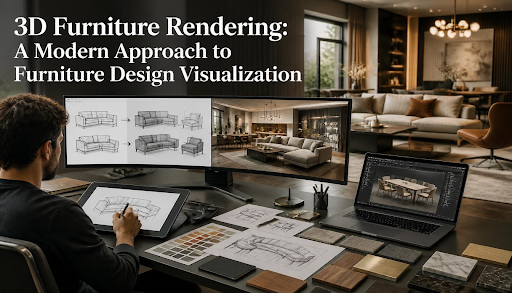
3D furniture rendering is the process of building photorealistic digital images of furniture before manufacturing starts. It visually depicts actual products before the start of the production process.
This technology is being used by furniture manufacturers to reduce prototype costs and speed up the design approval process. Also, to market products online because customers can view the furniture from all sides and make a quick purchase decision.
What is 3D Furniture Rendering?
This is the process that transforms a 2D design software image into a 3D image using multiple rendering techniques. In other words, a designer takes a 3D model of a piece of furniture, then:
- Applies certain materials to it.
- Sets the lighting.
- Makes a realistic image from this so that it appears like a photograph.
The main reason why furniture companies are opting for this method is cost. A sample piece of furniture, for example, a chair, can often cost hundreds of dollars. Compared to that, rendering removes the need for manufacturing samples.
Furniture brands rely on 3D furniture rendering services for these common tasks:
- E-commerce product page images and catalogues
- Client approval drawings before manufacturing
- Photographic content replacement for product launches
- Visualization of custom furniture orders
- Showroom presentation images and 3D models
Where is This Technology Being Used Most Often Now?
Some applications of this technology are rather different, and their importance is evident to different furniture companies.
Both large furniture retailers and small manufacturers use this technology for various purposes. Examples of applications:
- Retail e-commerce (product page images and configurators)
- Manufacturing process (prototyping, specification)
- Interior design and architecture visualization (sales presentations)
- Trade magazines and advertising agencies
How Does 3D Furniture Rendering Work?
Most rendering studios use the same process when producing their outputs.
- Gather all the relevant technical sketches and data indicating needed parameters.
- Prepare a digital model.
- Use proper textures.
- Adjust the lighting.
- Render the final image.
Getting 3D Furniture Rendering right depends on the accuracy of material information. Skipping this stage is the biggest error of most companies.
3D Furniture Rendering vs. Traditional Photography: What’s the Difference?
| Factor | Traditional Photography | 3D Furniture Rendering |
| Requires a physical sample | Yes | No |
| Editable after the shoot | No | Yes |
| Cost per new color variant | High | Low |
| Available before production | No | Yes |
Photographing captures only what is already present in the physical world. Furniture design visualization can represent that which is still to be produced.
What Prompts Furniture Brands To Invest In This Technology?
According to Global Growth Insights, the value of the Designer category in the 3D rendering market, specifically in furniture design and digital prototypes, is valued at $0.73 billion in 2025, growing at 18.7% yearly through 2034.
However, this growth belongs to a much wider pattern. This is because, according to the research done by Grand View Research, the total global 3D rendering market is worth $4.85 billion in 2025. It is forecasted to reach $19.82 billion by 2033 at a 19.6% CAGR.
Together, these numbers point to the same conclusion: Furniture Rendering — sometimes called furniture CGI rendering has moved from a niche tool to a standard part of how furniture brands design, present, and sell their products. Companies that delay adoption risk falling behind competitors already using it.
Which Rendering Types Are Most Common?
| Rendering Type | Best For | Typical Turnaround |
| Static Product Render | E-commerce listings | Hours to 1 day |
| Lifestyle Scene Render | Catalogues and marketing | 1–3 days |
| 360-Degree Configurator | Custom order tools | Days to weeks |
| Animation or Walkthrough | Trade shows, video ads | 1–2 weeks |
Realistic furniture rendering serves a different stage of the sales funnel depending on type. Static renders update catalogues fastest. Configurators work best for made-to-order brands.
A Hypothetical Example: How a Small Furniture Brand Could Use This
Visualize a tiny furniture company that specializes in creating handcrafted dining tables. They have been spending days on one photoshoot for each finished product. Each time the company decides to offer a new stain color, it has to do another expensive photoshoot.
However, now it creates just one 3D model for every product to get all possible finishes without spending on any photoshoot.
Studios like SMA Archviz specialize in this kind of furniture visualization for smaller manufacturers.
Conclusion
3D furniture rendering has become an essential element of any furniture sales. It reduces prototyping costs, shortens the product approval process, and convinces customers to buy with confidence. Market data analysis highlights the importance of 3D furniture rendering. It shows that this trend sets the stage for furniture companies to adopt it to gain a clear competitive advantage.