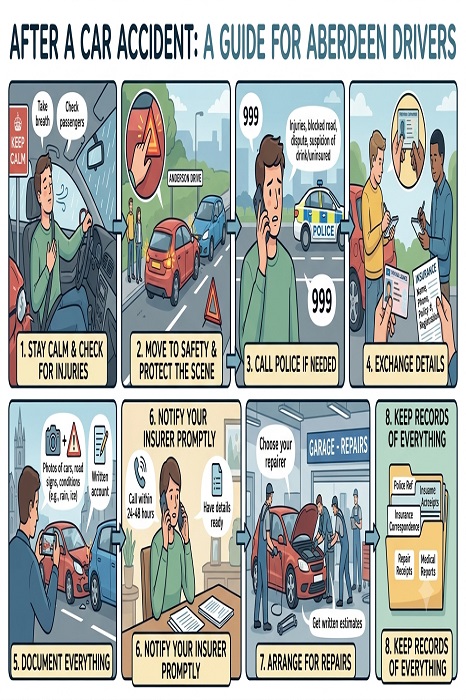
Getting into a car accident is stressful, even when it’s a minor bump on a quiet Aberdeen street. Your heart races, your hands shake, and it’s hard to think clearly about what needs to happen next. Whether you’ve just been in a collision or you simply want to be prepared in case it ever happens, knowing the right steps to take can save you time, money, and a lot of unnecessary stress. This guide walks you through exactly what to do, in the right order, so you can handle the situation calmly and protect yourself legally and financially, right down to sorting out your Car Accident Repair.
Stay Calm and Check for Injuries First
Before anything else, take a breath. It sounds simple, but panic makes people forget important steps or make mistakes that cause problems later. Once you’ve collected yourself, check on your own condition and then on your passengers. If anyone is hurt, even slightly, call 999 immediately and ask for an ambulance. Adrenaline can mask pain, so don’t assume you’re fine just because you don’t feel anything unusual right away. Some injuries, like whiplash, show up hours or even days after the crash.
If you’re on a busy road such as the AWPR or somewhere along Anderson Drive, try to move your vehicle to the hard shoulder or a safe spot if it’s drivable and safe to do so. Turn on your hazard lights right away so other drivers can see you and slow down.
Move to Safety and Protect the Scene
Once everyone’s safety is confirmed, think about the wider scene. Aberdeen’s roads can be busy at almost any hour, and a stationary car creates a hazard for everyone else. If you can move your vehicle without making injuries worse, do so. If not, stay put and wait for help while keeping hazard lights on. Placing a warning triangle behind your car, if you have one, gives other drivers extra warning distance, especially useful on faster roads outside the city centre.
Avoid standing in the road to inspect damage or exchange details. Step onto the pavement or verge whenever possible. It’s easy to focus on the car and forget that you’re standing in traffic.
Call the Police When Necessary
Not every accident requires a police report, but there are situations where calling Police Scotland is essential. You should always call if someone is injured, if the road is blocked, if you suspect the other driver is uninsured or has been drinking, or if there’s a dispute about what happened. Even for minor accidents, having an official record can protect you later if the other party changes their story or tries to claim more damage than actually occurred.
When the police arrive, give a clear and honest account of events. Stick to facts rather than assumptions, and avoid admitting fault at the scene, even if you think you might be partly responsible. Determining fault is something insurers and, if needed, legal processes handle properly, based on evidence rather than a stressed reaction in the moments after impact.
Exchange Details With the Other Driver
Whether or not police attend, you’ll need to exchange information with anyone else involved. Get the other driver’s full name, address, phone number, insurance company, and policy number. Note down their vehicle registration, make, and model too. It helps to take a photo of their driving licence and insurance documents if they’re willing, since handwriting can be misread later.
If there are witnesses nearby, ask if they’d be willing to share their contact details. A neutral third-party account can be incredibly valuable if there’s ever a disagreement about how the accident happened. People are often happy to help but won’t wait around forever, so try to gather this information before they leave the scene.
Document Everything With Photos and Notes
Your phone camera is one of the most useful tools you have after a crash. Take photos from multiple angles showing the position of both vehicles, the damage to each, the road conditions, and any relevant road signs or traffic signals nearby. If it’s raining or there was ice on the road, that context matters too, and Aberdeen weather can change quickly, so capture the conditions as they were at the time.
Write down what happened while it’s still fresh in your mind. Include the time, location, direction of travel, and a brief description of the sequence of events. Memory fades faster than people expect, and a written account taken within the hour will be far more accurate than one written days later when you’re filling in a claim form.
Notify Your Insurance Company Promptly
Most UK insurers expect you to report an accident within 24 to 48 hours, even if you don’t plan to make a claim. Delaying this can complicate things if the other party reports it first or if damage turns out to be worse than it first appeared. Have your policy number, the other driver’s details, and your photos ready when you call, as this speeds up the process considerably.
Be honest and consistent in your account. Insurers cross-check details, and inconsistencies, even innocent ones caused by stress, can slow down your claim or raise unnecessary red flags.
Arrange for Vehicle Assessment and Repairs
Once the immediate aftermath is handled, it’s time to think about getting your car back on the road. Many drivers assume they have to use whichever garage their insurer suggests, but in most cases you have the right to choose your own repairer. Look for a local, reputable garage with good reviews from other Aberdeen drivers, particularly one experienced with the make and model of your car.
Ask for a written estimate before any work begins, and check whether the repair includes a warranty. A trustworthy garage will walk you through what needs fixing and why, rather than leaving you guessing. Taking your time here matters, since a rushed or poor-quality repair can lead to problems with your car’s safety and resale value down the line.
Keep Records of Everything
Throughout this whole process, hold onto every document, message, and receipt. This includes the police reference number if one was issued, your insurance correspondence, repair invoices, and any medical reports if you were injured. Keeping everything organised in one folder, whether physical or digital, makes life much easier if there’s ever a dispute or a delay in your claim.
Final Thoughts
Nobody plans to be in a car accident, but knowing what to do beforehand makes a genuinely stressful moment far more manageable. Staying calm, Choosing right Car Repair Centre, prioritising safety, gathering the right information, and following up promptly with your insurer are the steps that matter most. Aberdeen’s roads, like anywhere else, carry an element of unpredictability, but being prepared puts you back in control far sooner than you might expect.