

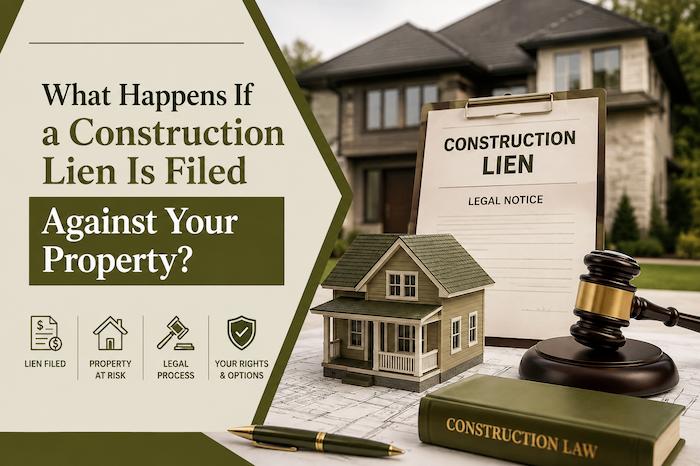
What if after getting all the home renovation work done, you get a letter out of nowhere saying there’s a lien on your house? This situation sounds so stressful, right? For most homeowners, that’s the point where the panic starts. They keep wondering why there’s a claim against their property, even if they paid for every bit of work done. And they don’t know what to do next.
Construction liens are confusing, especially when it’s the first time you are dealing with one. They don’t mean that you have done something intentionally wrong, but you cannot even ignore them. Let’s go through what a construction lien is and what your options are if you find yourself dealing with one.
What Exactly Is a Construction Lien?
A construction lien is a legal claim against a property owner when a person involved in a project claims that they haven’t been paid for the work or the materials they provided. It could be anyone: a contractor, electrician, plumber, or supplier. The lien remains in effect until the payment issue is resolved.
How Construction Liens Work in Ontario
In Ontario, the Construction Lien Act, now officially known as the Construction Act, governs construction liens. The law states who is eligible to make a claim, the deadlines, and the after-process once the lien is registered.
Here is something that might make you feel frustrated but is true: you can end up with a lien even if you paid your contractor in full. Yes, it is what it is. It happens in cases where a contractor hired a subcontractor and didn’t pay them. That subcontractor may still have lien rights against your property.
If you’ve received notice of a lien or aren’t sure whether one has been properly registered, speaking with a construction lien lawyer can help you understand your options before the issue gets more complicated.
What Happens After a Lien Gets Filed?
Once a lien is registered on title, a few things start moving pretty quickly.
- Your title gets flagged. The lien shows up in a title search, which means any sale, refinance, or mortgage renewal can get held up until it’s dealt with.
- A clock starts ticking. The person who filed the lien has a set window (usually 90 days from filing) to actually start a court action to enforce it. If they don’t, the lien can expire.
- You have options to remove it. You don’t have to wait around. You can pay it out, negotiate a settlement, or post security (often a bond or cash payment into court) to get the lien vacated from title while the dispute gets resolved separately.
None of these steps are automatic. You or your lawyer need to take action. A lien doesn’t just sit there quietly waiting for everyone to be reasonable.
How the Construction Lien Act Protects Everyone Involved
It’s easy to see liens as a headache for homeowners, but the Construction Lien Act was actually built to keep the whole industry fair. Contractors and suppliers put real time, labour, and materials into a project. Without lien rights, there’d be little pressure to pay promptly.
The Act also sets strict deadlines. Liens can’t sit on a property forever without action, and there are rules around holdbacks that require owners to keep back a percentage of the contract price for a set period, specifically to cover situations like this. So while a lien feels personal when it lands on your property, it’s really part of a system designed to keep money moving fairly through a construction chain.
A Few Real-Life Scenarios
Sometimes it helps to see how this actually plays out.
Scenario one: You hire a contractor to finish your basement. He subcontracts the electrical work but never pays the electrician. Two months later, the electrician files a lien against your home for the unpaid invoice, even though you already paid your contractor the full amount.
Scenario two: You’re mid-sale on your house and the buyer’s lawyer does a title search. A lien from a roofing company you thought was fully paid shows up, and now the closing date is at risk unless it gets resolved fast.
Scenario three: You’re renovating a rental property and a supplier who delivered materials never got their final payment from your general contractor. They file a lien, and suddenly your refinance application is stuck in limbo.
Scenario four: A homeowner pays their contractor in full and even gets a signed release. Months later, a lien still shows up because the contractor never actually passed that payment along to a supplier. The release didn’t matter much once the supplier’s own lien rights kicked in.
Notice a pattern? In almost every case, the property owner didn’t do anything “wrong” in the everyday sense. They just got caught in the middle of a payment dispute they weren’t part of.
What Should You Do If a Lien Shows Up on Your Property?
First, don’t panic, and don’t ignore it either. Both reactions tend to make things worse.
- Get a copy of the lien and check the details: amount, dates, and who filed it.
- Go back through your payment records to see where the breakdown happened.
- Talk to your contractor to understand why their subcontractor or supplier wasn’t paid.
- Reach out to a lawyer who handles this regularly, since timelines and paperwork matter a lot here.
This is exactly the kind of situation where working with experienced Toronto construction lien lawyers makes a real difference. Liens involve strict deadlines, and one missed step can cost you time, money, or leverage in negotiations. A construction lien lawyer can review your specific case, tell you whether the lien is even valid, and help you get it removed from title as quickly as possible.
Trying to handle it alone usually means learning the rules on the fly, under time pressure, with your closing date or refinance hanging in the balance. A lawyer who handles these cases regularly already knows the shortcuts: which liens are technically defective, how to negotiate a fair payout instead of an inflated one, and when posting security is faster than waiting out a court date.
Quick Answers to Common Questions
What happens if I ignore a construction lien
It stays on your title, which can block a sale or refinancing, and if the claimant files a lawsuit, you could end up dealing with a lawsuit on top of the original dispute.
Can a construction lien force the sale of my home?
In rare cases, yes. If the lien isn’t resolved and the claimant pursues it through the courts, a judge can order the property sold to satisfy the debt, though most disputes settle before it gets that far.
How long does a lien stay on title in Ontario
It depends on the stage. A lien preserved but not perfected through a court action within 90 days typically expires, but once you file a claim with the court, it can remain until the case is resolved.
If a lien just showed up on your property, or you’re not even sure whether the one you’re looking at is valid, isn’t it worth a quick conversation with someone who deals with this every day?


















Leave a Reply